

Deutsche Bank saw millions of dollars in suspicious payments flow into Colombia without alerting authorities. Leaked documents show the bank failed to act on red flags for potential money laundering, human trafficking, sexual exploitation, and other crimes. External monitors warned that the German banking giant was repeating the mistakes it made in the Epstein case, which had led to fines and compensation payments to victims. In Colombia, women working as webcam models were among the main recipients of the funds.
By Francisca Skoknic and María Fernanda Cruz
Additional reporting: Andrea Rincón and Tatiana Antolinez (Cuestión Pública), Juan David Ortiz and Vanessa Restrepo (El Armadillo), María Teresa Ronderos, Pablo Medina and Andrés Bermúdez (CLIP), Maria Christoph (Paper Trail Media), Hans Koberstein and Patricia Díaz (ZDF), and Timo Schober (Der Spiegel) and Cynthia O’Murchu (Financial Times).
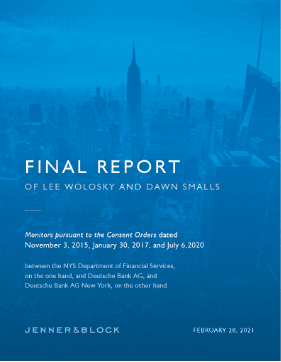
When American lawyers Lee Wolosky and Dawn Smalls began monitoring Deutsche Bank (DB) in 2020, the lessons of the Epstein scandal were still fresh. The New York Department of Financial Services (DFS) had fined the bank for handling funds belonging to convicted sex offender Jeffrey Epstein, and the external monitors were tasked with assessing the improvements Deutsche Bank’s executives had put in place.
The lawyers, who later joined the law firm Jenner & Block, were charged with determining, among other things, whether the German bank had introduced adequate safeguards to prevent its services from being used to conceal abuse. What they found suggested the opposite. “As with the Epstein matter, Bank personnel initially showed little interest in the possibility that trafficking and exploitation of adults was occurring,” they wrote.
The monitors were referring to an internal investigation, codenamed Project Cali, into transactions routed to Colombia through Deutsche Bank’s correspondent banking services. As a correspondent bank, Deutsche Bank acted as an intermediary for international payments. It was supposed to have strengthened its oversight of such transactions, but its own investigation exposed serious shortcomings in its internal controls.
Project Cali was launched following an order from Germany’s financial regulator, BaFin, to identify countries where Deutsche Bank handled more than half of all correspondent banking transactions in euros or dollars. The bank discovered that it controlled 60% to 80% of Colombia’s euro payment market. It then examined its transactions for 2019: 171,000 payments to nine Colombian banks, totalling more than €20 billion.
Alarm bells began ringing when investigators discovered that Deutsche Bank had filed fewer than ten suspicious activity reports (SARs) with U.S. authorities that year, and none with German authorities, despite classifying Colombia as a high-risk country because of drug trafficking. According to a 2018 report by the Financial Action Task Force of Latin America (GAFILAT), money laundering linked to cocaine exports accounted for an estimated 5.4% of Colombia’s GDP.
That initial finding prompted a retrospective review of just 4,800 of the 171,000 transactions. The exercise alone resulted in 230 suspicious activity reports.
The monitors’ reports and Deutsche Bank’s internal Project Cali files were obtained through a leak of more than 15 million documents from the German lender, now at the center of an international collaborative investigation led by Barracuda Media and coordinated in Latin America with the Latin American Center for Investigative Journalism (CLIP).
The documents reveal that the transactions Deutsche Bank failed to report at the time raised concerns about potentially serious crimes. “Project Cali highlights deficiencies in the Bank’s controls and risk sensitivity, including the potential for human trafficking and exploitation,” one report by the external monitors warned.
Among the transactions flagged by the bank’s internal investigators were hundreds of payments to Colombian women involved in the adult entertainment industry. For the monitors, these transfers suggested that Deutsche Bank had failed to learn the lessons of the Epstein scandal. They echoed the findings of the New York Department of Financial Services, which had concluded that “throughout the relationship [between Epstein and Deutsche Bank], very few problematic transactions were questioned, and when they were, they were usually cleared without satisfactory explanations.”
In the external lawyers’ assessment, Project Cali exposed strikingly similar weaknesses in the bank’s controls.
Faced with the sheer number of transactions that had gone unflagged, Deutsche Bank’s internal investigators began looking for patterns that might point to illicit activity. These included multiple small payments, such as those sent to Colombian women; money routed through offshore tax havens; and transfers involving sums unusually large relative to an account’s normal activity.
The Project Cali team ultimately identified 41 individuals and companies of interest whose transactions had raised suspicions. Deutsche Bank subsequently barred many of them from conducting any further transactions through its correspondent banking accounts.
In a written response, the bank described Project Cali as “a historical review that led to specific remedial measures and a broader reassessment of financial crime risks across Deutsche Bank’s correspondent banking portfolio.”
Addressing its correspondent banking operations, Deutsche Bank added: “Over the past decade, Deutsche Bank has substantially reduced its risk profile in this business, including by exiting high-risk clients and countries. At the same time, the bank has significantly strengthened its financial crime controls and expertise across the first and second lines of defense, through substantial investments, to manage the inherently elevated financial crime risks associated with correspondent banking.”
THE ADULT ENTERTAINMENT MONEY TRAIL
One finding in particular helps explain why the monitors drew parallels with the Epstein scandal: a series of payments, often for relatively small amounts, to women in Colombia.
Both the bank’s internal reports and those of its external monitors described the women’s work using the euphemism “adult entertainment.” But the monitors warned of the dangers of allowing such payments to pass through the banking system without scrutiny.
“Project Cali payments went to a large number of individual female customers of Colombian banks from at least one company operating in the adult entertainment industry, which could be an indication of trafficking or exploitation of women of any age,” noted a September 2020 report by the bank’s external monitors, which was sharply critical of Deutsche Bank’s handling of transactions involving Colombia.

One company that matches the monitors’ description and appears in Deutsche Bank’s records is Shoshoro N.V. Based in Curaçao, the company operates XLoveCam, a popular platform that streams live videos of so-called webcam models: women who perform sexually explicit acts in front of a camera for an online audience.

Colombia is now one of the world’s largest hubs for webcam modeling. Mauricio Rubiano, national coordinator of the National Federation of Adult E-Commerce (Fenalweb), estimates that the industry generates around $700 million a year. Beyond the platforms and the models themselves, the business also relies on local studios that act as intermediaries, providing the facilities and equipment needed for live broadcasts.
The industry employs tens of thousands of women in Colombia, with some media reports putting the figure at more than 150,000. But as Deutsche Bank and its monitors suspected, the conditions under which the industry operates exposed the bank to significant reputational and regulatory risks.
In 2024, Human Rights Watch (HRW) published a study documenting the working conditions of webcam models in Colombia. It uncovered serious labor and sexual abuses, along with appalling sanitary conditions, including poor ventilation, bodily fluids left in workspaces, and a lack of cleaning supplies.
The investigation also confirmed one of the monitors’ fears: some of the women working in the industry had started while they were still minors. HRW interviewed several who had begun webcam modeling before turning 18.
“When I started, two of us were underage with fake IDs. The platform found out two years later, and our accounts [registered under other people’s names] were blocked,” one woman recalled.
As her testimony illustrates, although platforms have rules prohibiting minors from working as webcam models, those recruiting them sometimes circumvent the restrictions by forging identification documents or using someone else’s identity.
HRW also found that the platforms take between 50% and 65% of what customers pay, while studios claim another 35% to 70% of the remaining amount, leaving models with only a small fraction of the revenue.
Consider a customer who pays $100 for a webcam performance. The platform might keep an average of $58, leaving $42. Of that remainder, the studio could take as much as $29, leaving the woman who performed the work with just $13.

Although Deutsche Bank singled out Shoshoro in Project Cali because of the volume of its transactions, the nature of its business, and the profile of the women receiving its payments, the leaked documents contain no evidence that investigators established that the company was involved in any specific instance of exploitation, human trafficking, or the use of underage models. Reporters working on this investigation contacted Shoshoro by email on October 12 but received no response.
The transactions identified in Project Cali show that Shoshoro sent more than $1 million to Colombia in 2019. That figure stands in stark contrast to a longstanding complaint among Colombian webcam models and studios: that the country’s financial system places obstacles in the industry’s way, sometimes even preventing those involved from opening bank accounts.
Yet almost all the transfers flagged by Project Cali, including Shoshoro’s payments, were routed through Colombian banks. Bancolombia, the country’s largest bank, received the highest number of transfers.
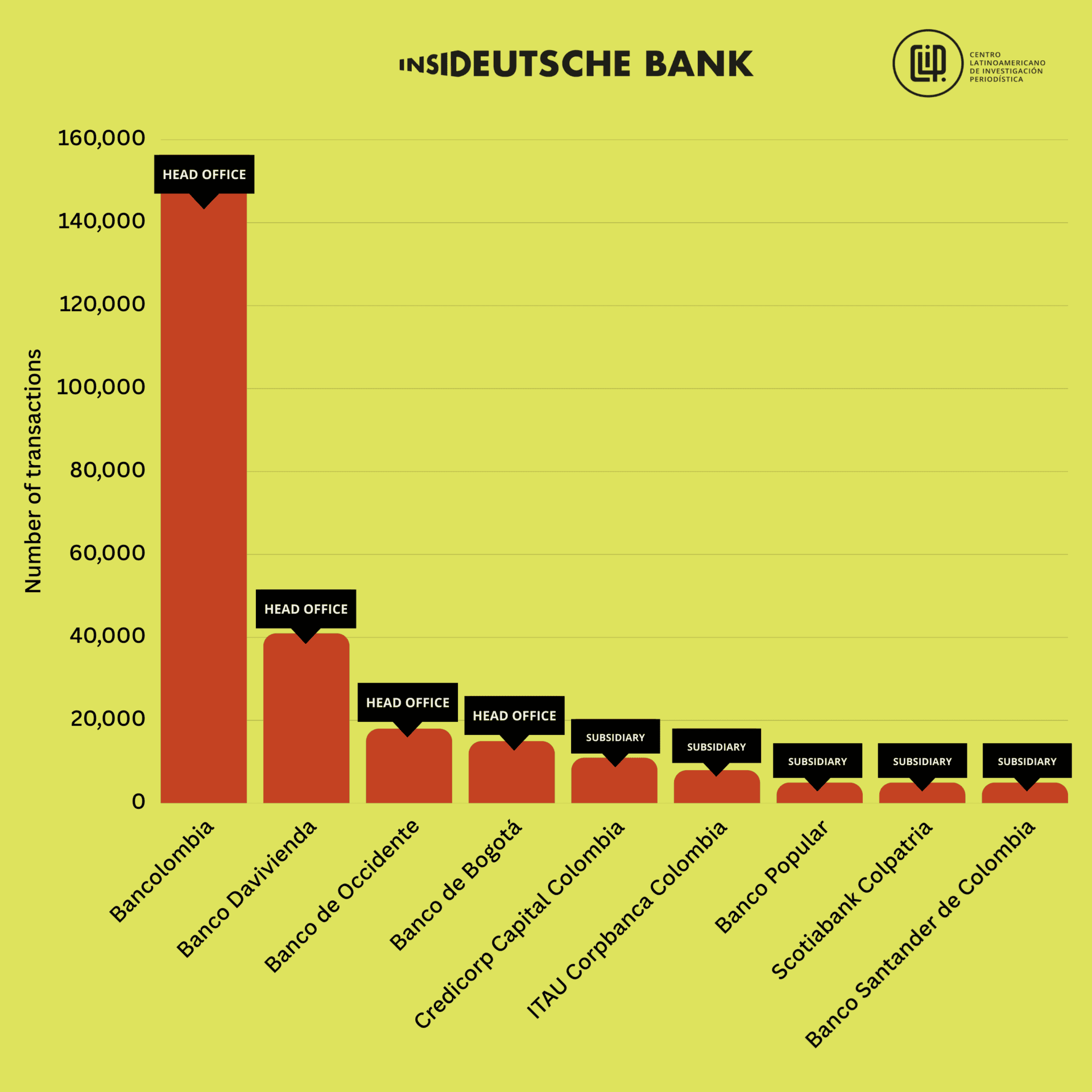
“Bancolombia is subject to legal obligations concerning banking secrecy, confidentiality, and data protection. Consequently, Bancolombia cannot comment on the existence or contents of suspicious activity reports, on specific client relationships or circumstances, or on any information protected by confidentiality or banking secrecy requirements,” Colombia’s largest bank said in a written response to questions.
Last October, reporters also sent questions to the eight other Colombian financial institutions that were Deutsche Bank clients. Only four responded, two of which had merged with other institutions since 2019. For the most part, they declined to address specific questions, citing banking secrecy laws, which do indeed apply to them, and instead outlined their compliance and anti-money-laundering procedures. Their responses are available at the end of this article.
One exception was Itaú Colombia, formerly Itaú Corpbanca, which addressed DEK-CO, an electronic payment platform flagged by Project Cali for sending transfers to Colombia.
“Before any inquiry from Deutsche Bank, transactions involving the payment gateway had already been identified through our monitoring process and subjected to the full range of anti-money-laundering procedures, including account closures,” the bank said.
Itaú also confirmed the banking sector’s reluctance to do business with the webcam modeling industry.
“Itaú Colombia does not serve the webcam modeling or adult entertainment sectors. These activities are not part of our target market and are entirely excluded from our operations because they fall outside our risk appetite and our policies on preventing money laundering and terrorist financing.”
In a written response, Liz Marcela Bejarano, chief financial and risk officer of the Colombian Banking and Financial Institutions Association (Asobancaria), explained that the National Federation of Adult E-Commerce (Fenalweb) had approached the association seeking greater access to financial services.
Asobancaria suggested that the industry seek an official economic activity code under the International Standard Industrial Classification (ISIC) system.
“This would make it possible to identify the activity as a distinct sector and facilitate the collection of information on the financial resources flowing through it, as well as an assessment of its size, its impact on the economy, and its potential contribution to GDP,” Bejarano said.
It was not until August 2026 that Colombia’s National Administrative Department of Statistics (DANE) formally assigned the webcam modeling and studio industry an economic activity code that broadly reflects what it does: live audiovisual content streaming activities.
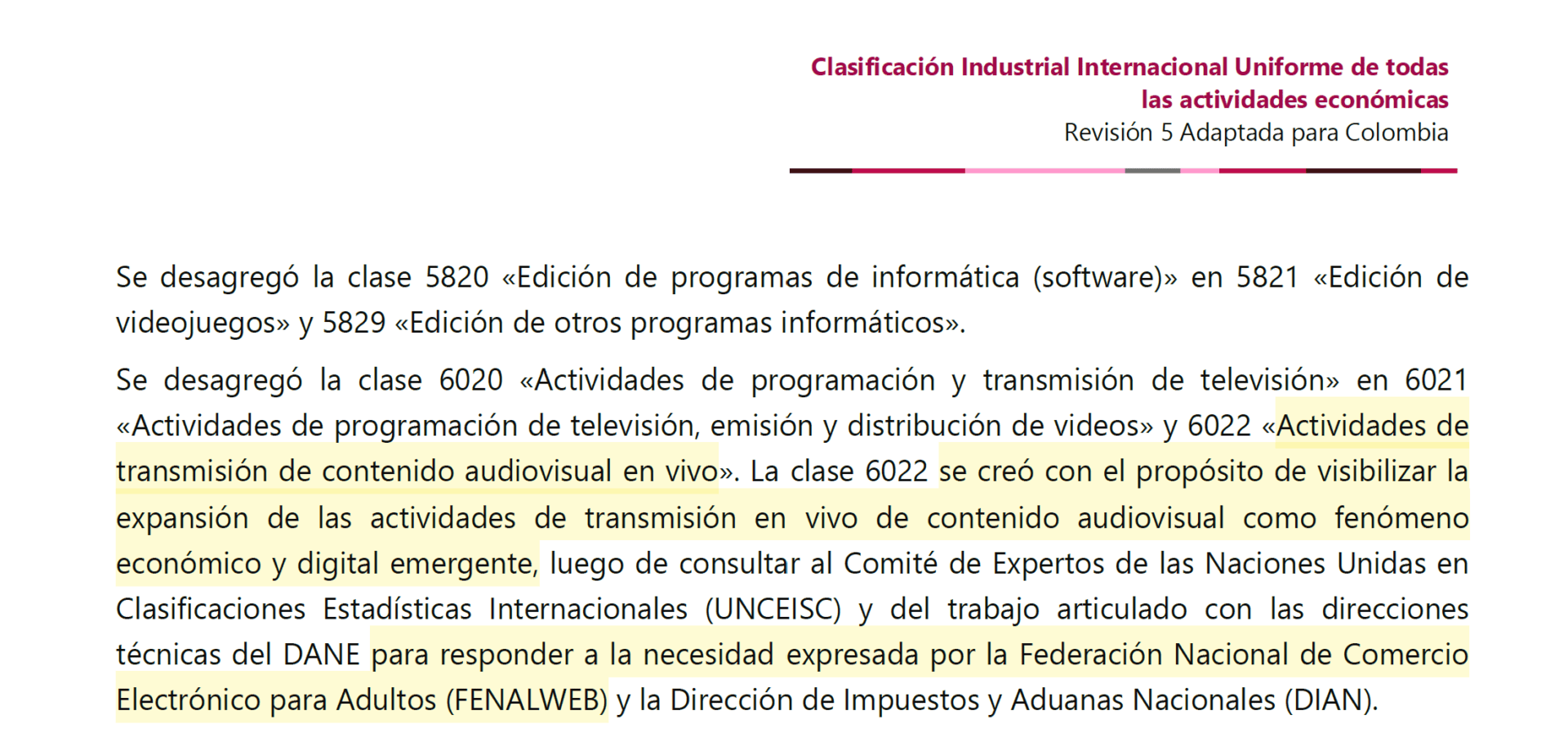
According to Mauricio Rubiano, institutional coordinator of Fenalweb, the absence of an official industry classification code sent a troubling message: that there was no regulatory framework through which authorities could investigate potential money laundering or monitor other possible crimes. “If an activity doesn’t have an ISIC code, it is a suspicious activity,” a banking executive told this reporting consortium on condition of anonymity.
Rubiano says that while some financial institutions quietly do business with the industry, none will acknowledge it publicly. In practice, he explains, webcam models often have to rely on digital wallets or payment conversion services, which turn the tokens they earn on streaming platforms into Colombian pesos. Banks sometimes block thousands of transfers at once, making it difficult for models and studios to predict whether they will receive their money.
The issue has also caught the attention of Colombia’s financial industry. In 2024, the Colombian Banking and Financial Institutions Association (Asobancaria) invited a webcam model to speak at its annual conference about how the business operates.
An article on Fenalweb’s website quotes an Asobancaria executive speaking at a 2022 event. She explained that international regulations require industries such as adult entertainment to undergo enhanced due diligence, meaning banks must conduct a more thorough examination of their customers’ business activities.
The risks, she said, include the production of sexual material involving minors, human trafficking, performances without the models’ consent, and money laundering.
“If any of these risks materializes, a bank would not want to find itself cut off by international banks because it had done business with a studio without carrying out the necessary due diligence,” the Asobancaria representative warned.
She was referring to correspondent banks such as Deutsche Bank, which rely on local financial institutions to facilitate international payments. A correspondent bank has no direct contact with either the sender or the recipient, but it does have access to the information recorded in each transaction, including the parties’ identities, addresses, account numbers, and details of the transfer itself.
In this arrangement, the Colombian banks are Deutsche Bank’s clients. As their correspondent bank, Deutsche Bank must apply the Know Your Customer (KYC) standard, which means understanding the Colombian institutions’ compliance procedures and, in some cases, conducting on-site visits.
Correspondent banks must also screen transactions against sanctions lists covering countries and individuals, and check whether payments match known patterns of money laundering or other crimes that can be identified from the available information.
“Correspondent banks often ask questions about specific transactions or particular clients. That’s perfectly normal,” a former compliance officer at Colombian financial institutions told the reporting consortium.
The U.S. monitors’ report expressed concern that Deutsche Bank had failed to introduce interim controls in its dealings with Colombian banks to prevent or identify suspicious transactions, describing this as “another parallel with the Epstein matter.”
Elsewhere, however, the report acknowledged Deutsche Bank’s cooperation with Colombian banks following Project Cali, particularly regarding local regulations designed to reduce human trafficking, including restrictions on international transactions involving minors.
In Shoshoro’s case, one internal Deutsche Bank document states that Bancolombia added the company to its transaction-screening system following Project Cali. It remains unclear, however, whether Deutsche Bank informed all the Colombian banks involved about every suspicious transaction it had identified.
This consortium sent Deutsche Bank two detailed questionnaires by email, on October 1 and October 19. The bank provided a general response about Project Cali. Asked how suspicious transactions had been reported, it stated that “decisions regarding the filing of suspicious activity reports are governed by jurisdiction-specific legal and confidentiality requirements, and therefore we cannot comment on individual reports, transactions, entities or counterparties.”
Nor was it possible to establish whether the Colombian banks had themselves filed suspicious transaction reports with Colombia’s Financial Information and Analysis Unit (UIAF). By law, banks must keep such reports confidential.
It is therefore possible that some of the transactions were reported promptly in Colombia, but that information is not publicly available. Filing a suspicious transaction report can help protect banks from potential penalties and reputational damage if a scandal subsequently emerges.
The UIAF receives approximately 3,000 suspicious transaction reports each month, according to an agency source who spoke to the consortium on condition of anonymity. Once a report is received, the unit looks for patterns of suspicious activity. If it identifies them, it refers the findings to the Prosecutor General’s Office, which is responsible for pursuing criminal proceedings.
As a former compliance officer at a Colombian bank explained, one common warning sign is pitufeo, the local term for breaking large sums into numerous smaller transactions to avoid detection, a practice known internationally as smurfing. Colombian banks risk sanctions or the loss of their overseas correspondent accounts if they fail to identify such activity.
The thousands of small payments to women in Colombia could therefore have been flagged and reported as possible smurfing. Alternatively, banks may simply have blocked them because they were associated with the webcam modeling industry.
In the case of Bancolombia, which received the largest number of transfers identified by Project Cali, the leaked files include minutes of an internal Deutsche Bank meeting noting that the Colombian institution appeared only as a recipient bank, not as the originator of the transactions, and that it had rejected many of the payments.
“As part of the Project Cali reviews and discussions, Bancolombia has been very open and transparent,” the document states, quoting a Deutsche Bank executive.
DANGEROUS CONNECTIONS
An examination of Deutsche Bank’s internal records reveals that other transactions flagged because of concerns about their origins were also linked to the webcam modeling industry. One such case involved DEK-CO UK Limited, a money services business (MSB) that operated an electronic money transfer platform. Based in London until April 2024, when it ceased operations following restrictions imposed by the Financial Conduct Authority (FCA), DEK-CO is owned by Russian-American businessman Anton Postolnikov.
Postolnikov is also one of the owners of Paxum Bank, a financial institution with an established presence in the online sex industry. In Colombia, Paxum is the main sponsor of Community Update, an event for webcam modeling studios, and maintains its own stand at Lalexpo, the industry’s largest conference.
According to an investigation by the International Consortium of Investigative Journalists (ICIJ), Paxum was used in the adult webcam business run by brothers Andrew and Tristan Tate. The brothers, currently detained in Florida awaiting extradition to the United Kingdom, have been accused of human trafficking and forcing women to perform sexual acts on camera, among other offenses. Both deny the allegations.
Postolnikov, meanwhile, came under investigation in the United States after providing an $8 million loan to rescue Trump Media. Authorities also suspected him of trading on inside information about the company, although no charges were filed against him. At the time of the transactions identified by Project Cali, Postolnikov was also wanted in Russia on tax fraud allegations.
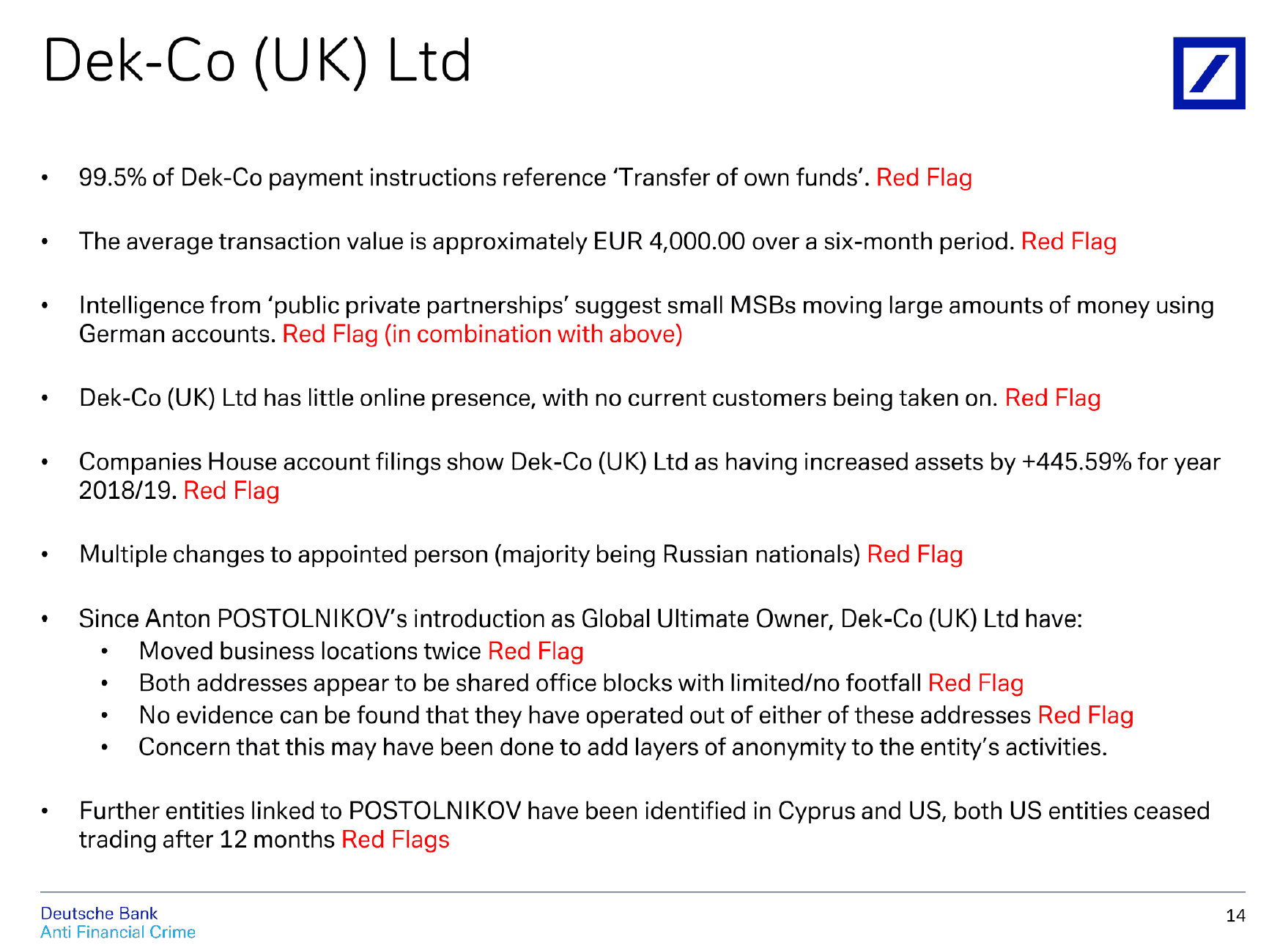
As part of Project Cali, Deutsche Bank investigators discovered that, over a six-month period in 2019, DEK-CO had carried out 2,158 transactions worth €8.4 million. The payments originated at Germany’s Wirecard Bank and were routed through Deutsche Bank in its role as a correspondent bank.
During the first phase of the investigation, Deutsche Bank found that 99.5% of the transfers listed their source of funds simply as “own funds.” This raised suspicions that the transactions could be benefiting Colombian drug cartels. Concerns about possible links to drug trafficking were heightened by other warning signs, including the fact that DEK-CO’s assets had surged by 445% in a single year.
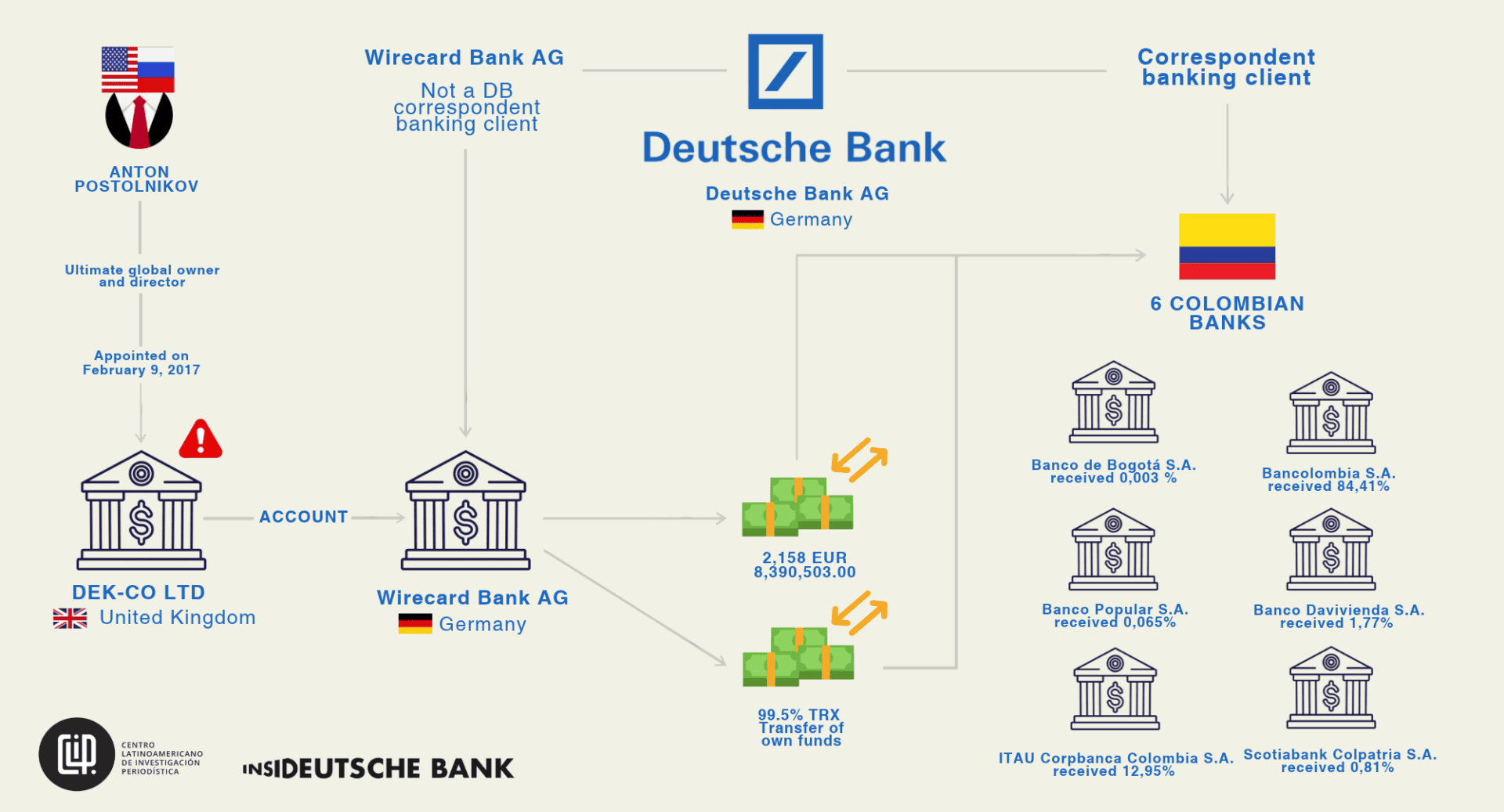
Another internal report identified one of the recipients as Colombian businesswoman Ivonne Puentes, who received 38 payments totaling more than $400,000. Official records in Villavicencio, a city of roughly 500,000 people in eastern Colombia, list Puentes as the owner of Ladiesroom, a business operating webcam modeling studios.
Contacted by the reporting consortium, Puentes explained that she no longer owns Ladiesroom and therefore has no access to its historical records to verify the amounts. Although she did not recognize the name DEK-CO, she said some of the platforms she worked with used Paxum, which shares an owner with DEK-CO, to pay their models.
“The payments I handled represented earnings generated by hundreds of models working with different studios in different locations,” she explained. “My role was to help receive those funds and distribute them to pay the models. I was paid a commission agreed upon with each studio.”
Puentes said her involvement in the industry had subsequently made it difficult for her to access banking services.
“Since leaving the industry, I have faced restrictions on access to financial services. According to what I have been told, there is a report or flag associated with SARLAFT risk controls [Colombia’s system for managing money laundering and terrorist financing risks], and I am currently unable to use banking products.”
Following Project Cali, DEK-CO established a subsidiary in Pereira in 2020 and another in Bogotá in 2023. Documents filed with the Bogotá Chamber of Commerce identify Postolnikov as the sole shareholder. The Pereira subsidiary closed in 2025, while the Bogotá company had been sold to Adamo SAS a year earlier.
DEK-CO’s legal representative in Colombia, Erick Rincón, also served as Adamo’s legal representative. Chamber of Commerce records show that Rincón signed documents on behalf of both companies during the sale. He told the reporting consortium that this arrangement was necessary to meet formal requirements and provided a sale document bearing the digital signature of the UK company’s representative. Rincón maintained that he had acted solely as legal counsel to both companies and had no involvement in their business operations.
The reporting consortium sent detailed questionnaires to DEK-CO and Postolnikov, which received a general response from a lawyer. In a letter, Eberhard Stabreit explained that data protection regulations prevented them from answering specific questions. He did, however, state that his clients had never been notified of Deutsche Bank’s internal investigation and denied that his client had been involved in any illegal transactions.
THE ONLY COMPANY FROM CALI
Skayenz SAS was among the companies whose transactions Deutsche Bank restricted following its internal Project Cali investigation. It is the only company specifically identified in the leaked documents that was actually based in Cali.
According to a note in the external monitors’ report, drawing on information supplied by the bank, Skayenz received 11 transfers totaling $29 million in 2019, despite reporting annual revenue of just $169,000. Records from the Cali Chamber of Commerce also show that the company had only been incorporated in October of that year.
Officially, Skayenz operated in “technology services, network administration and advertising.” But its incorporation documents reveal a connection to a company involved in the webcam modeling industry. The registration receipt shows that the paperwork was handled by TWL Group International SAS, part of a business empire built by the late Juan Carlos Rivera, owner of the AJ Studios webcam modeling chain and its support company, The Webcam Lab (TWL).
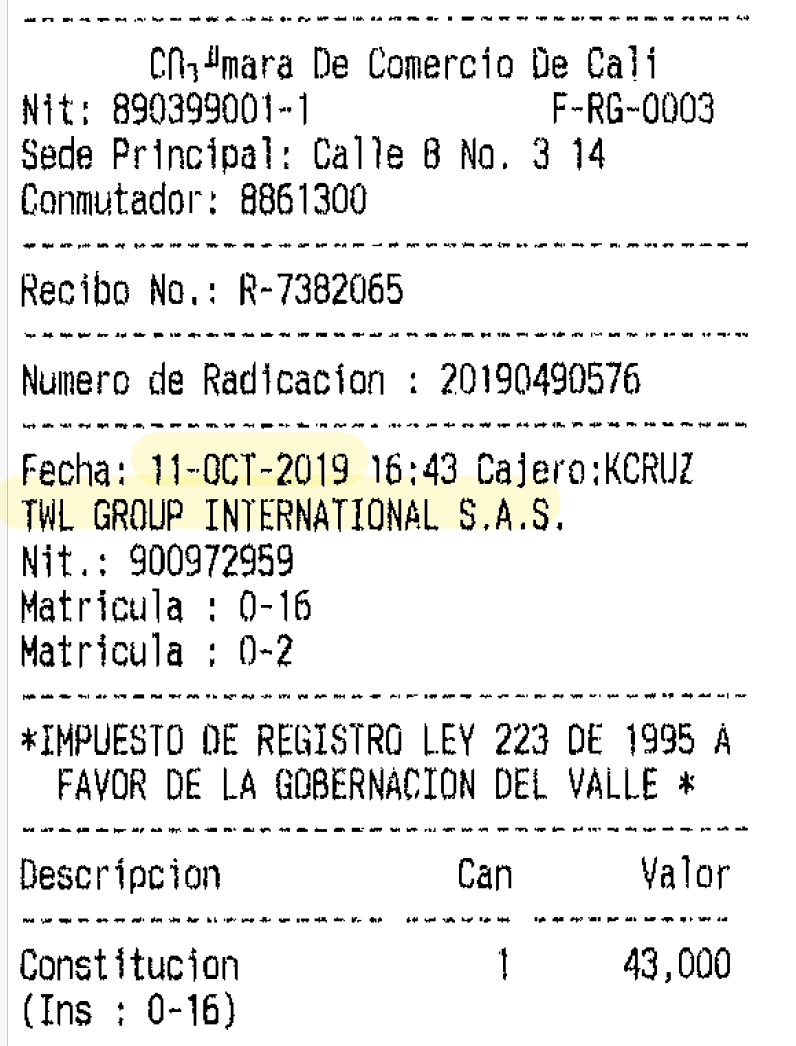
Héctor Patiño, listed as Skayenz’s sole owner when the company was founded, denied that it had any ownership ties to TWL or operated webcam studios, although he acknowledged that he was personally involved in a studio.
He explained that Skayenz was established as a fintech company to process payments for people without access to banking services, a group that could include webcam models, among others. “Skayenz was by no means opposed to provide payment processing services to individuals or companies connected to this sector,” he added in his written response.
Asked why TWL appeared on the company’s registration paperwork, Patiño suggested that it was because he had used the same company formation advisers as The Webcam Lab, which also shared offices with those advisers. He described Skayenz’s relationship with TWL as purely commercial, an account consistent with the response provided by TWL itself.
Patiño said he no longer had access to records that could explain the $29 million in transfers identified by Deutsche Bank. He stressed, however, that money received from international platforms was intended for third parties and did not constitute revenue for Skayenz itself.
His answers to the reporting consortium also revealed a significant new detail: DEK-CO played a central role in Skayenz’s business model as the originator of its payments.
“Skayenz developed a commercial and technological integration with DEK-CO (UK) Limited, a British payment services company associated with operations under the Paxum brand,” Patiño explained.
He defended the relationship, noting that DEK-CO was “a British company authorized by its financial regulator to provide payment services, with compliance documentation and due diligence procedures in place.”
Today, Paxum remains one of the payment systems used by numerous webcam modeling platforms, including XLoveCam.
Patiño sold Skayenz shortly after founding it. Another of its owners was Darío Sánchez González, president of the Colombian Adult Entertainment Association (Asocea), which he founded alongside Juan Carlos Rivera, who served as vice president. Sánchez was also the longtime accountant for the AJ Group and Rivera’s business partner in the Panamanian company Technology Services, according to Panama’s Public Registry.
However, when contacted for this investigation, Sánchez denied that Skayenz had any connection to webcam modeling or AJ Studios, and said the company had been inactive for some time.
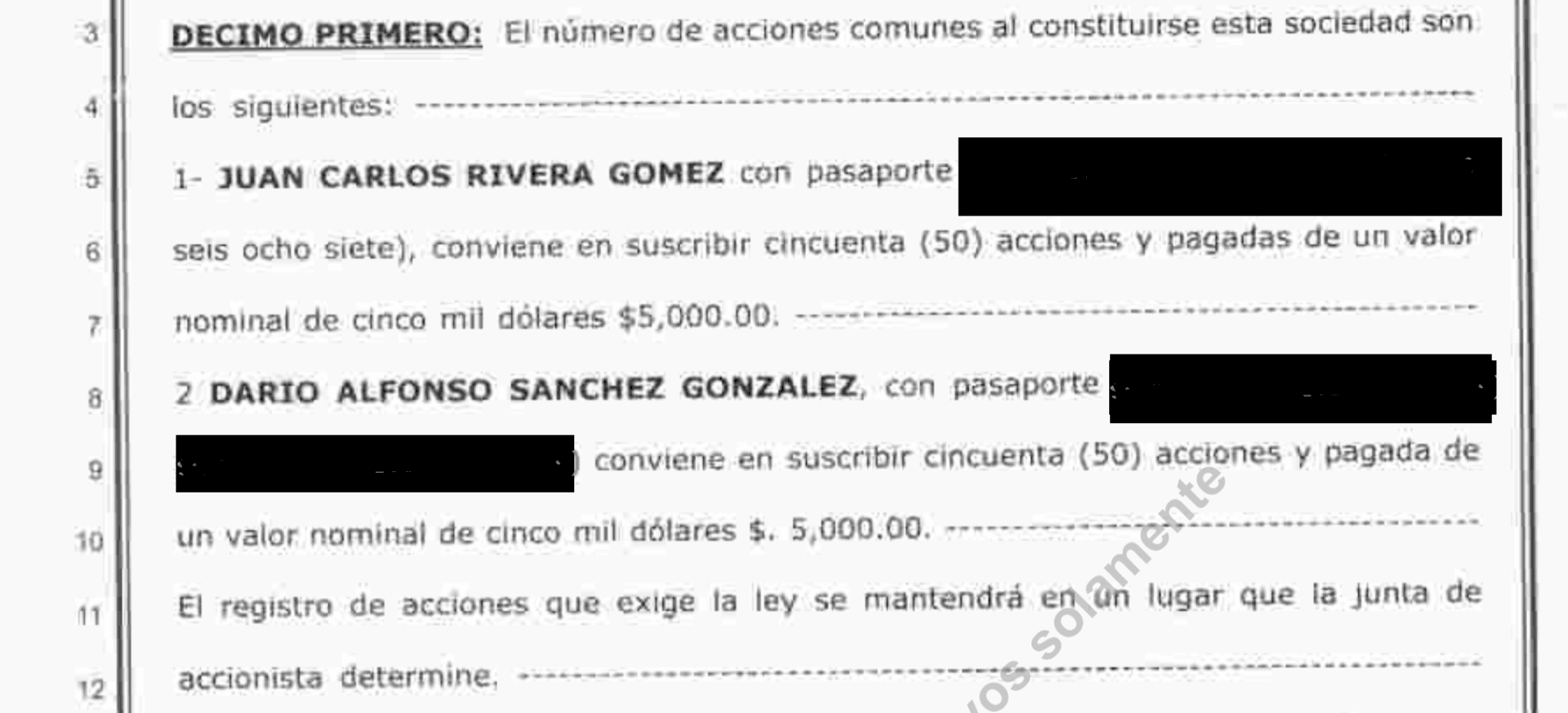
According to records filed with the Cali Chamber of Commerce, Skayenz’s current owner is Leonardo Estrada Hernández, who is also listed as the owner of TWL Group International SAS, the same company that handled Skayenz’s incorporation in 2019.
The reporting consortium tried unsuccessfully to reach Estrada through the company’s telephone numbers. At a number associated with a foundation run by the Rivera family, reporters were instructed to send their questions for Estrada. In the end, however, they received only responses from Anthony Rivera, Juan Carlos Rivera’s son. The foundation said it had no connection to Estrada, Skayenz, or TWL.
Some of the questions addressed to Anthony Rivera sought to untangle the ownership and relationships among the various companies in the group. His father, who founded the business empire, died in a boating accident in November 2025, and corporate records showed that changes had taken place following his death.
His son’s answers, however, shed little light on those changes. “These structures have evolved over time, as happens in any constantly changing industry. Some companies served specific purposes at particular stages, while others developed new lines of business,” he explained.
Another set of questions concerned documents obtained by Cuestión Pública, a partner in this investigation, indicating that in 2020 Colombia’s Financial Information and Analysis Unit (UIAF) suspected Juan Carlos Rivera and his companies of using dormant businesses and fictitious payments to webcam models in what could amount to money laundering. The agency reportedly referred its findings to the Prosecutor General’s Office, where the case remains under preliminary investigation.
UIAF financial intelligence report No. 9473, part of a leak of Colombian prosecutors’ emails that formed the basis of NarcoFiles, a 2023 investigation coordinated by the Organized Crime and Corruption Reporting Project (OCCRP), examines transfers from the United States to Colombia made by AJ Investments.
Anthony Rivera said he was unaware of the investigation and denied any connection to money laundering.
“The companies have conducted legitimate commercial activities in an industry that has faced difficulties accessing the financial system for years. The fact that some companies have changed their activities, altered their corporate structures, or ceased operations does not mean they were used to commit wrongdoing,” he emphasized.
UNLIKELY SUSPECTS
Not all the transactions that raised concerns were connected to the adult entertainment industry. Others should have attracted scrutiny from the outset because the money traveled along unusual routes.
Among the most unlikely subjects of suspicion was an elderly couple from Medellín: Enoris Restrepo, a columnist for a local newspaper, and her husband, Humberto Martínez, a respected physician.
The couple used a Panamanian company called Dale Trading, which had appeared in the Panama Papers, to move more than $18 million from Panama to Switzerland and then from Switzerland to Colombia, where the funds were transferred into their personal accounts and those of a family company, Venlijuf Martínez y Cía. Being named in the Panama Papers does not, in itself, imply any wrongdoing.

For Deutsche Bank’s analysts, the transactions bore multiple hallmarks of suspicious activity: the large sums involved, the unusual route taken by the money, the use of a tax haven, and the involvement of a shell company established by the Panamanian law firm Mossack Fonseca. One of the individuals involved was also classified by the bank as a politically exposed person or journalist.
There is no clear explanation for the transfers or the origin of the funds. However, this investigation uncovered a network of offshore companies linked to the couple and their children, particularly Francisco Martínez Restrepo, a prominent construction businessman from Colombia’s Antioquia region. The Martínez Restrepo family did not respond to the inquiries sent by this alliance. (See El Armadillo’s investigation.)
Read the written responses from individuals and companies mentioned in this investigation:
- Response from Erick Rincón
- Response from Héctor Patiño
- Response from Ivonne Puentes
- Response from DEK-CO/Postolnikov (in German)
- Response from Anthony Rivera
- Response from TWL (in English)
Read the written responses from the financial institutions mentioned in this investigation:
- Response from Bancolombia (in English)
- Response from Banco Popular
- Response from Credicorp
- Response from Davivienda (including Scotiabank Colpatria)
- Response from Itaú Colombia
The Inside Deutsche Bank leak was obtained by Indian author and journalist, Josy Joseph, and South African investigative journalist, Khadija Sharife.
It was coordinated globally by Barracuda Media in South Africa, and the Centro Latinoamericano de Investigación Periodística (CLIP) in Latin America, with technical support from the Data and Research Center (DARC) in Germany.

“Inside Deutsche Bank” is a transnational investigation that originated from the leak of more than 15 million documents from the German bank. It was led by Barracuda Media and coordinated in Latin America by the Centro Latinoamericano de Investigación Periodística (CLIP), with the participation of 56 media outlets in 53 countries. In Latin America, the collaborating partners were Armando.info (Venezuela), Concolón (Panama), IDL-Reporteros (Peru), El Universal (Mexico), No Ficción (Guatemala), Cuestión Pública and El Armadillo (Colombia), Agencia Pública (Brazil) and La Nación (Argentina). Legal review: El Veinte.


