

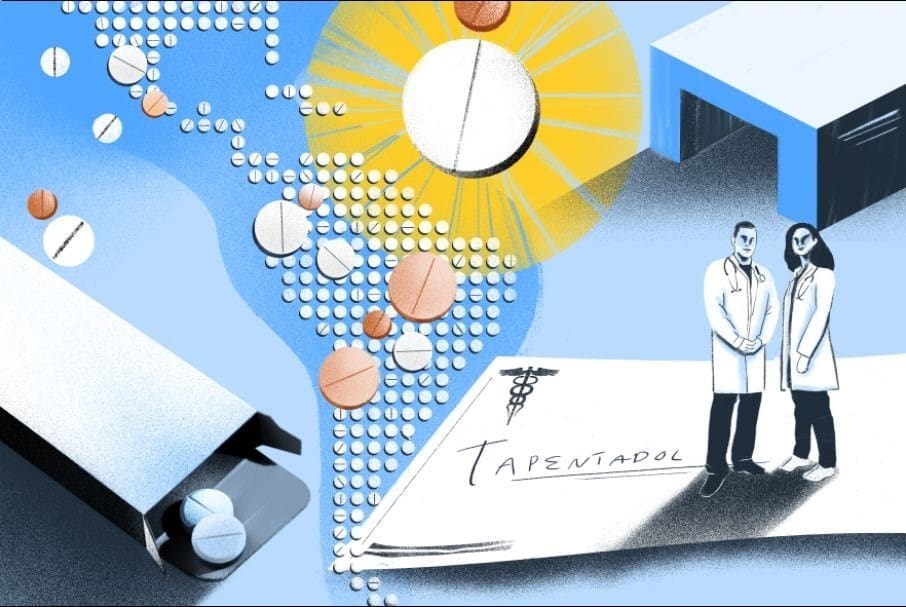
The German pharmaceutical company has seen a steep rise in sales of its opioid products across the region, particularly tapentadol. This surge has been accompanied by significant funding of medical associations, publications, and educational programs aimed at expanding the use of opioids in pain management.
By Salud con Lupa, The Examination, El Espectador, and CLIP
On July 19, 2021, Mexico’s Senate held a forum with the National Academy of Medicine to discuss public policies on chronic pain treatment and palliative care. María del Rocío Guillén Núñez, an anesthesiologist at the Pain Clinic of the National Cancer Institute, delivered a presentation. Due to COVID-19 restrictions, it was all online.
Guillén suggested to Mexican senators that in order to improve medical care for patients with chronic pain, it was necessary to “de-escalate the health regulation of drugs useful in pain control, so that there is greater accessibility to them”, as a video of the event shows. She specifically referred to opioid analgesics like tapentadol, buprenorphine, and tramadol, claiming they had a “proven efficacy and safety profile” to reduce pain.
Several of these opioid medications are manufactured and distributed in Mexico and throughout Latin America primarily by the German pharmaceutical company Grünenthal.
However, Guillén did not disclose that the Mexican Association for the Study and Treatment of Pain (AMEDT) —which represents 300 doctors, had convened the forum, and on whose behalf she spoke—has received funding from Grünenthal, as she acknowledged in an interview in December 2024. As a result, that policy recommendation could have financial benefits for its sponsor. AMETD has also received financial support for organizing conferences, training programs, and scholarships related to pain treatment, as confirmed by Ángel Juárez, the association’s director until late last year, in an interview for this investigation also carried out last December.
It isn’t the only Grünenthal-backed initiative in which Guillén has participated. Since 2012, she has been a member of the scientific advisory panel of Change Pain Latin America, a program created and funded by Grünenthal to train doctors in pain management across the region. As part of this group, she has co-authored four articles in medical journals advocating for a change in the way of treating pain that includes broader opioid use. According to another 2017 medical article, she has received speaking fees from the pharmaceutical company and served on its board. She also appears in training videos on Medical Beyond, a medical education platform publicly sponsored by Grünenthal.
Guillén is just one of many healthcare professionals involved in Grünenthal’s initiatives in Latin America, which help explain the company’s rapid sales growth in the region.
Over the past decade, the German company —which opened its first international office in Peru in 1968—has expanded its Latin American market presence on the back of opioid-based pain relievers, which until now have been subject to controlled use due to their addiction potential.
This investigative alliance, led by The Examination and coordinated in the region by the Latin American Center for Investigative Journalism (CLIP) in partnership with Salud con Lupa in Peru and El Espectador in Colombia, has documented how doctors who have had ties to Grünenthal have promoted the idea that these opioids should not only be prescribed to patients suffering from serious illnesses, but could also be given to other patients with chronic pain and less severe conditions. This investigation is part of World of Pain, a collaboration between journalists in more than 10 countries on how opioid companies worldwide are profiting as addiction and overdoses rise.
Seven public health experts consulted by this journalistic alliance agree that it is positive that people with terminal and serious illnesses have access to opioids to deal with unbearable pain. However, they expressed concern by tapentadol’s addictive potential and the fact that Grünenthal’s sustained growth in sales has occurred while providing financial incentives to physician groups.
Furthermore, the World Health Organization (WHO) has warned that prescribing opioids for chronic back pain has potential harms that likely outweigh the benefits and can lead to dependence.
In Latin America, this cross-border investigation has documented that Grünenthal has funded medical journal articles, medical association activities, specialized conferences, informational websites, pain management training programs, and scholarships, which highlight the benefits of its products.
Grünenthal’s narrative about chronic pain treatment appears to be working. Despite stating in a written response to this journalistic alliance in February 2025 that it is shifting its corporate strategy toward “researching, developing, and providing innovative, non-opioid solutions for chronic and acute pain,” opioids remain its flagship product in Latin America. Although opioid consumption in the region is lower than in other continents, Latin America accounted for 18% of Grünenthal’s global pain treatment sales in 2023 and contributed a third of its global revenue that year, according to the company’s annual reports. The region is now the company’s second-largest market for pain treatment, surpassed only by Europe.
A Star Product: Tapentadol
Grünenthal is a family-owned company founded by the Wirtz family in 1946 and headquartered in Aachen, Germany. Its mission—emphasized in capital letters in all its documents—is to achieve “A World Free of Pain.” In addition to contraceptives, the company has launched dozens of products for pain treatment, several of which are opioid-based, in Latin America. Access to these drugs, which can be addictive, depends on the regulatory framework and enforcement in each country.
Since the expiration of its tramadol patents, Grünenthal has made tapentadol -marketed under the brand names Palexia, Palexis and Nucynta- its main opioid. Tapentadol accounted for nearly 20% of its sales through 2022, though it dropped to 13% in 2023, according to its annual financial statements, when its generics were introduced in Europe. Meanwhile, in the US, Grünenthal and Teva Pharmaceuticals reached an agreement in December 2024 following a patent litigation, which will allow the latter to market a generic version of tapentadol in that country from July 2027. In its responses to this journalistic alliance, Grünenthal said that tapentadol has dropped to 9% of its sales.
The company promoted tapentadol as a less addictive opioid until several years ago, aiming to position it as a replacement for oxycodone (OxyContin), the drug at the center of the addiction and overdose crisis that swept the United States over the last decade. That opioid was the primary source of wealth for Purdue Pharma and its owners, the Sackler family.
Seven former Grünenthal employees in Germany and the United Kingdom interviewed by this journalistic alliance confirmed that the company marketed tapentadol as an opioid with lower addiction potential. A German pharmaceutical representative who left Grünenthal in 2023 after six years and did not want to be named out of fear for her career, said she marketed the drug to doctors as less likely to cause dependence. Grünenthal taught sales representatives to promote the drug this way using study data, written materials and seminars, she said.
Since 2020, Grünenthal claimed to have revised its promotional materials following an external audit that found “in a few instances and markets, we found that opioid medicines were inappropriately framed with regard to their abuse and addiction potential,” as stated in the company’s February 12 response to this investigative alliance’s questions.
“We found in some instances that tapentadol was characterized in such documents as having the potential to be less addictive than other strong opioids due to its dual mechanism of action (noradrenalin reuptake mechanism) while this claim was not backed up by sufficient scientific references,” the company explained.
“Grünenthal characterizes tapentadol as a strong opioid with no difference from other strong opioids regarding their abuse profile and addiction risk. We inform both the prescribing doctor and the patient with product information that is also included in every pack about the abuse and addiction risks. We do not promote any opioid medicines as less addictive, causing less dependence, or as less frequently abused than other opioids,” the German pharmaceutical company added. (You can read Grünenthal’s full responses here.)
However, this journalistic alliance found evidence that doctors who collaborate with Grünenthal, are members of medical associations that have received funding from the company, or have appeared on company-sponsored medical platforms or events have promoted tapentadol as less addictive than other opioids. They have done so in videos posted on the pharmaceutical company’s medical training platforms and at medical congresses, even after the review conducted by the company in 2020. In these settings, tapentadol was recommended not only for palliative care patients, but also for use in treatments for less severe chronic conditions, such as acute back pain or osteoarthritis, thus increasing the risk of potential addiction.
The WHO warned in 2014 that tapentadol’s positive subjective effects could encourage more frequent use. In 2023, the organization advised against using opioids for chronic back pain, citing overdose and dependence risks. Similarly, the U.S. Food and Drug Administration (FDA) cautioned that tapentadol “has a high abuse potential” when approving it for the U.S. market.
The Examination, which led this investigative alliance, spoke to 13 health professionals in five countries who described helping patients addicted to tapentadol in places like Australia, India, Germany, or the United Kingdom. This journalistic alliance found no cases of addicts in Latin America, but it did find that sales of the drug rose in Peru and Colombia; and prescriptions have grown in Mexico. (Read the global story ‘Grünenthal pushed its latest opioid as a safer option. People around the world got hooked’. here).
In addition, tapentadol continues to be promoted in medical settings specializing in pain treatment as a less addictive medication, despite the pharmaceutical company’s claim that this is not the case. Grünenthal created and operates a restricted-access website for Latin American doctors called ‘Medical Beyond,’ where -as this journalistic alliance saw- videos feature physicians discussing the benefits of several of its products.
A medical source provided this journalistic alliance with one of these videos, titled Tapentadol: Indications, Mechanism of Action, and Advantages Over Other Opioids. In the video, Mexican physician Silvia Allende Pérez, head of the Pain Clinic at the National Cancer Institute in Mexico City, recommends tapentadol over competitors such as oxycodone. She describes the medication as having a “tolerability profile that enhances treatment adherence, allows for high doses, and offers significant clinical utility.”
As Allende speaks, a slide appears in the video featuring Grünenthal’s logo, with the phrase “minimal abuse potential” in reference to tapentadol. The same slide also claims that the drug does not cause respiratory depression, a side effect common to all opioids.

Neither the video nor the Medical Beyond platform mention that before joining Mexico’s public healthcare system, Allende worked as Grünenthal’s medical manager in 2009, according to her professional profile on LinkedIn.

Claudia Rafful, an addiction specialist at the National Autonomous University of Mexico (UNAM), questioned this video featured on Medical Beyond. “The opioid epidemic in the United States was driven by prescriptions for chronic pain patients, as they required opioids for long periods or even for life. Ideally, opioids should only be prescribed for acute pain, in cases of surgery or in terminal phases of life for full sedation,” she told this journalistic alliance.
This investigative team reached out to Dr. Allende on February 11 and March 3 to ask about the video where she claims tapentadol has a ‘minimal abuse potential’ and whether she received funding from Grünenthal to produce it. The team also inquired whether she received any financial support from the German pharmaceutical company between 2020 and 2024 and, if so, whether she reported these payments in her conflict-of-interest declaration as a public hospital physician. As of the publication date, Allende had not answered.
This alliance also asked Grünenthal on February 19 about why these videos remained available on its medical portal. The company replied ten days later: “We have reviewed the video you pointed out and indeed found that the claims made on the slide shown in the video (with references to publications from 2011 and 2012) are incorrect. They do not reflect our current knowledge of tapentadol and are not in line with our policies. We take all incidents like these very seriously and have, therefore, removed the video from the website immediately and taken that website offline as a precautionary measure.” “Our medical teams are diligently reviewing all content on the website,” it added. Indeed, Grünenthal took Medical Beyond offline.
Grünenthal’s Sales in the Region
There is no recorded abuse of opioids such as tramadol and tapentadol in Latin America today, but this could change with increased consumption.
Grünenthal’s reports confirm the strategic importance of Latin America in its portfolio. In his ‘Letter from the CEO’ opening the company’s 2023 annual report, the most recent one published, Grünenthal CEO Gabriel Baertschi celebrated the company’s “exceptional business performance” and highlighted that “our business in Latin America achieved 10% growth driven by our pain brands.”
The pharmaceutical company had already celebrated its growth in the region. In its 2022 report, Grünenthal highlighted that one-third of its total revenue came from Latin America, amounting to 362 million euros. That figure, which was still preliminary, already indicated a 22% increase over six years and contributed to an 11% rise in global profits during the same period.
INSERTAR GIF
“In Latin America, we have adapted our strategy to focus more on innovation – and particularly on pain treatment, our core competency. This has paid off well, with strong growth across our key brands,” Grünenthal stated in its 2022 annual report. It also pointed to “a significant unmet need in the Latin American region and a lack of sufficient education about chronic pain for healthcare professionals.”
An Initiative to ‘Change Pain’
Another key strategy Grünenthal has used to address the lack of training among Latin American doctors is Change Pain Latin America (CPLA), a virtual training platform launched in 2012. Developed with Grünenthal’s funding, CPLA has established dozens of agreements with educational and healthcare institutions in ten Latin American countries, including Brazil, Chile, Ecuador, Peru, and Colombia. Over the past decade, Grünenthal claims that the program has trained 40,000 doctors and healthcare professionals in pain management.
Within Change Pain, a group of doctors has played the role of an advisory panel, acting as a visible authority towards the medical community. Comprising 17 doctors from eight countries in the region—primarily anesthesiologists specializing in palliative care and pain management—this Change Pain scientific advisory panel was created, in its own words, to “enhance chronic pain understanding” and “develop pain management improving strategies in this region.” Their vision has been in line with Grünenthal’s vision of expanding the possibilities of treating chronic pain with opioids.
“While suboptimal management of patients with chronic pain is a global issue, factors that contribute to this problem in Latin America include gaps in physicians’ understanding and associated pain management misconceptions,” wrote Brazilian doctor João Batista Santos Garcia in a 2013 letter to the editor of the Brazilian Journal of Anesthesiology, in which he introduced the Change Pain initiative whose advisory panel he forms part of.
Among the barriers identified by Santos Garcia—who is also a professor at the Federal University of Maranhão—were “inadequate knowledge of the advantages and disadvantages of opioids” and “restrictive government healthcare policies,” which result in “unmet medical needs of patients with chronic pain in Latin America.” The goal of the Change Pain advisory board, he explained, was “gaining a better understanding of the burden of chronic pain in the Latin American region” and address it with specific proposals.
This panel of doctors began advocating among their peers for a broader use of opioids in the region. In their 2016 paper “Use of Opioids in Latin America: The Need of an Evidence-Based Change”, published in Pain Medicine journal, they analyzed international guidelines on opioid use for chronic pain management before focusing on Latin America. “The expert panel has extensively reviewed regulatory barriers in every country that restrict adequate access, distribution and prescription of opioids in the region (…) resulting in misconceptions about treatment of chronic nonmalignant pain, mainly related to a fear of prescribing opioids due to their possible misuse and addiction (opiophobia), and a false perception of their lack of efficacy,” they wrote.
In a second paper published in Pain Management in February 2017, the same Change Pain Latin America advisory group revisited concerns about restricted opioid access and the lack of pain education in medical training. “It is imperative to develop and communicate clear guidelines, adapted to the Latin-American reality,” they proposed.
In a third publication, published in Current Medical Research and Opinion in July 2017, the group concluded that tramadol—Grünenthal’s flagship opioid until its patents expired—was “effective across a wide spectrum of acute and chronic pain conditions” while also having “fewer opioid-like side effects and a lower risk of abuse than classical opioids.” They also expressed concerns that “more stringent regulations” on its use could “lead to inadequate pain control and the unnecessary suffering of many patients with pain.” Later, in March 2018, the same group reviewed guidelines for managing neuropathic and chronic low back pain to determine which were most relevant in the region.
These Change Pain scientific advisory panel’s positions in international medical journals aligned closely with Grünenthal’s narrative about the need for a “world free of pain.” In fact, it was Grünenthal who directly financed their working space, as the panel itself disclosed, in compliance with academic journal requirements for financial transparency and potential conflict-of-interest disclosure.
In their first publication in 2017, the doctors thanked Grünenthal Latin America for its “unrestricted support in the logistics” for their 2015 meeting in Guatemala, which led to the paper. In the next three articles, they stated that the work was funded by Grünenthal through Change Pain Latin America. However, in the 2018 paper, they added the disclaimer that “Grünenthal Latin America, Inc., had no involvement or input into the guidelines’ selection methodology, analyses, or final interpretations and conclusions of the panel, or the development of the manuscript, its conclusions, or the decision to submit to Pain Medicine.” Additionally, they clarified that 11 of the 16 authors had “previously received honoraria from Grünenthal Latin America, Inc., for advisory board meeting attendance.”
In the first three Change Pain panel papers published in Latin America, Grünenthal also funded the writing process, providing “medical writing assistance” in one and “editorial assistance” in the other two.
Writing and editorial assistance

When asked about these findings, Grünenthal explained to this journalistic alliance that it “partners with Healthcare Professionals and Organizations to increase education about the benefit-risk profile of Opioids in accordance with the highest ethical standards.”
“We apply the principle of separation when working with HCPs and HCOs, i.e. we ensure that payments are only made for clearly defined services provided and that there are no expectations regarding prescribing behaviour or other considerations on the part of our partners,” the company stated.
Grünenthal’s Patronage of Medical Associations
Grünenthal has also funded various nonprofit medical associations that have promoted a narrative on chronic pain that partly aligns with the pharmaceutical company’s. This journalistic alliance documented such funding in interviews in three countries in the region.
In Mexico, the Mexican Association for the Study and Treatment of Pain (AMETD) received “financial impetus” and “accompaniment” from the pharmaceutical company for the forum it organized in the Senate in 2021, Dr. Rocío Guillén confirmed to this journalistic alliance. “As president of the association, we engaged with the Chamber of Deputies, the Senate, and the National Academy of Medicine, and organized several forums, for which we had support from Grünenthal in the form of financial impetus to carry them out. They provided us with this accompaniment,” Guillén said in December 2024 during an interview with our journalistic team at the National Cancer Institute (INCAN). She introduced herself as the director of the private clinic Alive – Vive sin Dolor, which she founded alongside her colleague Ángel Juárez. She clarified that, although she works at the pain clinic of the public research institute, she was prohibited from presenting herself as such. She did not disclose who had imposed this restriction.
Regarding her recommendation to lawmakers—mentioned at the beginning of this article—to loosen regulations on tapentadol, Guillén stood by her statement: “I do agree that some opioid medications should have greater accessibility, such as tapentadol, which is a molecule that has been proven to have an excellent efficacy profile and a very good safety profile.”
Prescriptions for tapentadol have seen continuous growth in Mexico over the past five years. While only 900 prescriptions for Palexia, the commercial name for tapentadol, were issued in 2015, that number exceeded 25,000 in 2023, according to official data from the Federal Commission for the Protection Against Health Risks (Cofepris) obtained through public information requests. At the National Cancer Institute, where Guillén and Juárez practice, prescriptions for oxycodone have declined, while those for tapentadol have risen, according to data provided by the institution to this journalistic alliance.
Ángel Juárez, who served as AMETD’s president until December 2024, stated in an interview that same month with The Examination that Grünenthal and other pharmaceutical companies had financed some of the association’s activities and even contributed funds to train medical and nursing staff. “To hold these types of conferences or events, we need to rent a venue, a space to host them. We need to bring in teachers—there were 150 teachers simultaneously and 800 attendees— all of that costs money, right? What we do is seek sponsorships. Some companies may invite a speaker who is affiliated with a lab, and we take the opportunity to have them give another talk. Others contribute financially,” he explained.
Neither Guillén nor Juárez reported their collaboration with Grünenthal in their conflict-of-interest declarations as required by Mexican law for public hospital employees. In their disclosures, they stated they had received income from private medical practice but did not specify its source.
Incan said that the contributions of Dr Allende, Dr Guillén and Dr Juárez are under their own responsibilities and are independent of the institute.
“Ultimately, This Generates Income for Everyone”
In Peru, the Peruvian Association for the Study of Pain (ASPED) has received financial backing from Grünenthal for multiple activities. Salud con Lupa, a media partner in this investigation, verified that since at least 2018, the pharmaceutical company has sponsored its annual conferences and the first pain study conducted in Lima, which explicitly acknowledged Grünenthal’s funding.
The relationship between ASPED and Grünenthal has remained consistent over time. In at least five of ASPED’s board terms (2008, 2010, 2017, 2019, and 2023), physicians who have worked as speakers for Grünenthal have held leadership roles. One such physician is neurologist Enrique Orrillo, who has served as both president and vice president of ASPED and has been an active Grünenthal speaker in Peru. The same is true for geriatrician Ian Falvy-Bockos, ASPED’s current vice president, who has been a Grünenthal lecturer on neuropathic pain since 2016, according to his LinkedIn profile.
Daniel Arbaiza Aldazabal and Carlos Vela Barba also served on ASPED’s board and received payments from the pharmaceutical company for their lectures when the first pain study in Lima was conducted, as disclosed in that study’s funding section. Currently, Vela Barba is ASPED’s president and the executive director of the National Health Council’s Coordination Office.
That study, titled Pain Prevalence and Chronicity in a Developing Country in Latin America: a Population-Based Survey in Lima, Peru, was published in 2022 in Pain Management, with Grünenthal’s sponsorship. Among the study’s co-authors, in addition to the aforementioned Peruvian doctors, were several Grünenthal employees, including Carolina Estrada, who served as the company’s medical manager from 2020 to 2023, and Jorge García Mostajo, who held the same position from 2023 until January 2025. Before joining the company, García Mostajo worked as the deputy manager for health research regulation and management at the Institute for Health Technology Assessment and Research Institute (IETSI) of EsSalud, a key entity in evaluating medicines and medical devices for Peru’s social security system. Another co-author, Héctor Valderrama Autaje, has been Grünenthal medical director in Peru since 2017 and the company’s legal representative in the country. Previously, Valderrama worked as a palliative care physician at the National Institute of Neoplastic Diseases (INEN).
Grünenthal’s support for ASPED was evident at the 20th Peruvian Congress on Pain, held in Lima in October 2024. During the event, Enrique Orrillo delivered a lecture attended by a journalist from this investigative alliance, in which he defended opioid prescriptions for pain management and specifically praised Grünenthal’s flagship product, tapentadol. He described it as “safer and less addictive than traditional opioids,” despite Grünenthal itself stating in its responses to this alliance, as mentioned earlier, that it does not “promote any opioid medicines as less addictive.”
Beyond the pharmacological arguments, Orrillo also highlighted the practical benefits for doctors who prescribe tapentadol. “If treatment with tapentadol is successful, the doctor also benefits,” he asserted. He then added, “Let’s not forget that marketing is everywhere: one dissatisfied patient can drive away 28 potential patients, while one satisfied patient can attract at least one more. Ultimately, this generates income for everyone.”
In a later interview with Salud con Lupa on March 5, Orrillo acknowledged that Grünenthal is “ASPED’s most collaborative strategic partner,” though he did not specify the amount of funding the association received from the company. He also stated that he has collaborated with Grünenthal for over 20 years to promote its products.
“When I give a lecture for Grünenthal, I have two products. The first is the one I was assigned to present and for which I receive an honorarium—tapentadol. We are not referring to the brand name, we are simply saying tapentadol. Right? Very well. But I also have another product, which is myself—Dr. Orrillo, the neurologist, with over 40 years of medical training and 20 years of speaking about pain. Right? That has led me to become ASPED’s president, to be part of Fedelat, and to earn recognition from the international community,” he explained.
The Peruvian doctor admitted that there is no scientific evidence to support the claim that tapentadol is less addictive than similar medications. However, he maintained that it is a “more refined or atypical opioid,” which, according to him, leads to fewer side effects and “fewer criteria for patients to perceive it as a life-saving drug.” Orrillo argued that Peru is experiencing “a crisis of non-prescription of opioids” because “medical professors tell students not to get involved with them because it will cause problems.” He believes this reluctance negatively impacts pain treatment for thousands of Peruvians.
For his part, Dr. Carlos Vela Barba told Salud con lupa that “We have established strategic alliances without contaminating ourselves. No pharmaceutical industry sets the guidelines for us. What we share is a common horizon, nothing more.” He added that his working relationship with the company has been on hiatus since he took public office.
This pattern of funding pain studies is also evident in Colombia, where the Colombian Association for the Study of Pain (ACED) has similarly benefited from Grünenthal’s patronage.
At least the two most recent national pain surveys conducted by ACED over the past two decades have been sponsored or promoted by the pharmaceutical company. ACED’s 2015 survey, carried out by the polling firm Cifras & Conceptos in 12 cities across Colombia, concluded that one in four people experienced pain lasting more than three months. The survey was sponsored by the German company, as shown in a presentation available on ACED’s website.

In 2023, ACED again hired Cifras & Conceptos for a new survey. Although no presentations are available on its website, the results were publicly presented jointly by ACED and Grünenthal. ACED president and anesthesiologist Juan Diego Londoño told this investigative alliance that he could not share the survey’s detailed findings because it was pending publication in a medical journal. He did not respond to questions about whether Grünenthal had financed the study.
Felipe Mejía Sánchez, former president of ACED, confirmed to El Espectador—a media partner in this investigation—that Grünenthal had financed several of ACED’s pain surveys. “It’s not that this was their initiative; it’s very clear that what these surveys show is the state of pain in Colombia (…) Funding is simply sought because a survey has a high economic cost. The questions are formulated by ACED members; they are not written by Grünenthal or anyone else,” he said.
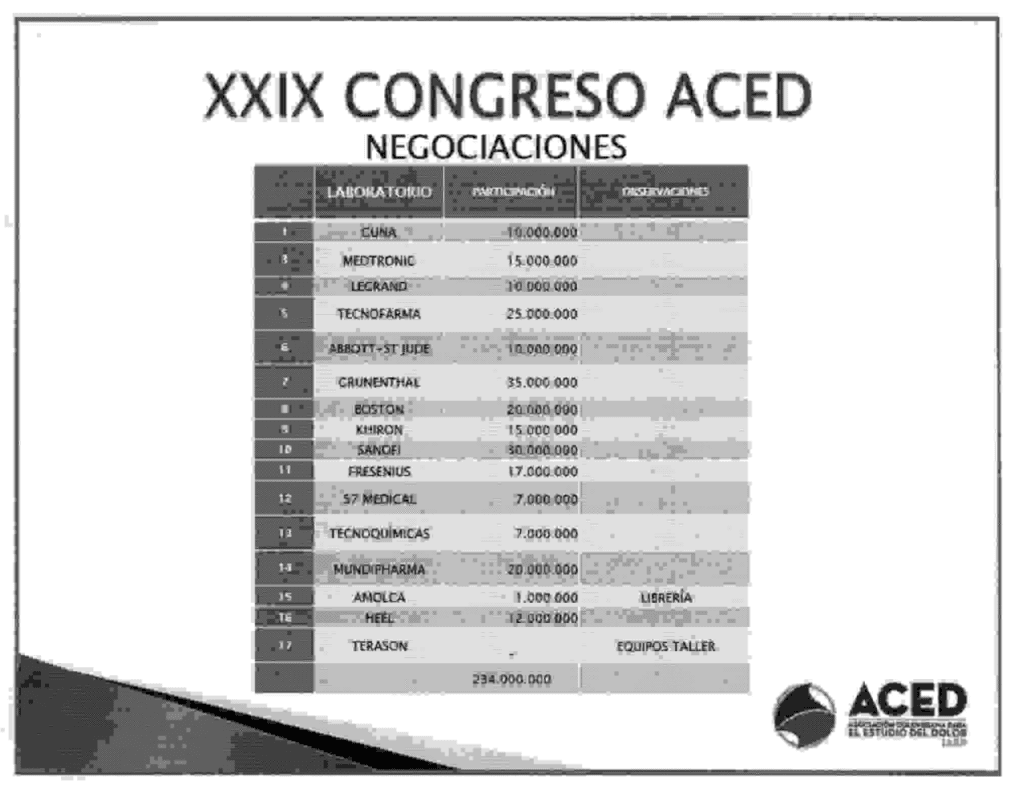
Additionally, Grünenthal was the largest patron among the twelve sponsors of ACED’s annual congress in 2021, pledging to contribute 35 million pesos (approximately $9,000 at the time), according to ACED meeting records registered in the chamber of commerce. Grünenthal’s logo once again appeared prominently among the sponsors of ACED’s most recent annual congress in September 2024, alongside a dozen other pharmaceutical and medical equipment companies, as seen in the event’s official program.
Mejía Sánchez explained that ACED “does not have a close relationship with Grünenthal” and that companies pay sponsorship fees to have a booth at the congresses. In his view, this commercial relationship does not influence opioid prescriptions. “Fifteen or twenty years ago, the pharmaceutical industry was overly generous, but now, there are no all-expenses-paid conference trips anymore; those days are gone,” he said, acknowledging that he had been a speaker for Grünenthal but clarifying that he resigned from that role when he assumed the ACED presidency in 2018.
His colleague Londoño, ACED’s current president, also admitted in an interview with El Espectador that the association receives money from various pharmaceutical companies. However, he emphasized that industry compliance standards allow for a “healthy relationship” that does not interfere with their work. He did not disclose the amount contributed by the German company.
When asked about payments to doctors and medical associations, Grünenthal added that “We transparently publish payments to healthcare professionals and healthcare organizations on our website.”
Indeed, the section of Grünenthal’s website titled «Disclosure at Grünenthal» contains detailed information on what it calls “value transfers” to healthcare professionals and organizations in various European countries, sometimes through downloadable reports and in other cases via links to national transparency registries. However, the section covering non-European countries is nearly empty. It includes a link to Brazil’s transparency registry and another to Colombia’s general information platform for the social protection system. There is no data on Peru, Mexico, or other countries in Grünenthal’s second-largest market.
The Latin American Medical Union Against Pain
The Latin American Federation of Associations for the Study of Pain (Fedelat), a Bolivia-based entity that brings together 20 national medical organizations from across the region, has also maintained a close relationship with the German pharmaceutical company.
“Grünenthal is a very important supporter of both Fedelat and the International Association for the Study of Pain (IASP) and its national chapters. [The company] has always been known for supporting Fedelat’s activities,” said its president, Bolivian physician Marco Narváez Tamayo, in a telephone interview with CLIP on January 8.
“In October 2022, we held the Latin American Congress on Pain in Lima, and Grünenthal was the most important sponsor. At that meeting, they asked us to work with all of Fedelat’s chapters to disseminate and assess the impact of the ICD-11 in Latin America,” he added.
The ICD-11 is the 11th edition of the International Classification of Diseases, periodically issued by the World Health Organization (WHO). Grünenthal sustains its pain treatment narrative on this latest classification, in which the WHO recognized chronic pain as a disease in its own right in 2019.
“As a result of the support we received from Grünenthal in Lima, we were able to bring together all 21 Latin American chapter presidents to conduct an in-depth study and produce a global publication. Writing and publishing this document took us a year of work, and the financial support for this endeavor was provided by Grünenthal,” Narváez stated. The Bolivian doctor was referring to the Lima Declaration on Chronic Pain Treatment, which emerged from that meeting.
Fedelat’s headquarters are in La Paz, but the entity does not have its own office: it operates in the private Pain Clinic of its president, physician Narváez. The organization is also not officially registered as a civil association in that country, according to official records consulted by CLIP.
The total amount of financial support provided by Grünenthal remains unknown, as Fedelat does not disclose its financial statements to the authorities. A doctor who worked with the organization told The Examination that funds from the German pharmaceutical company and other sponsors were sent directly to the personal accounts of its leadership. This alliance reached out to Grünenthal and director Narváez Tamayo for clarification, but neither responded. They also did not disclose the amount of funding received by Fedelat and the previously mentioned local organizations.

Pressure on the State
Some medical sectors have attempted to influence public health policies regarding pain treatment. In Peru, hospitals within EsSalud—the public health insurance system that operates hospitals and clinics funded by employer and worker contributions—have sought to expand opioid use for different types of chronic pain, including conditions less severe than those recommended by the WHO for such treatments.
This proposal has faced resistance from the General Directorate of Medicines, Supplies, and Drugs (Digemid), the agency responsible for approving the use of such medications. Digemid has twice rejected EsSalud’s request to expand the therapeutic use of opioids such as tapentadol. In its first report, it stated that “this drug does not offer significant advantages over opioids already listed in the national formulary, such as tramadol, oxycodone, and morphine,” also highlighting that it is not included in the WHO’s list of essential medicines. A second report again dismissed its inclusion, arguing that “its indication is limited to a very specific and infrequent group of patients with severe chronic neuropathic pain.”
The National Essential Medicines List (PNUME), which sets the criteria for public-sector drug purchases in Peru, currently includes seven opioids: morphine, fentanyl, tramadol, buprenorphine, codeine, methadone, and oxycodone. However, since 2018, some public hospitals have also acquired tapentadol, a Grünenthal product that is not on the formulary. These acquisitions were initially made through public tenders but later expanded via direct purchase orders.
EsSalud was the first institution to authorize tapentadol use in 2018, limiting it to patients with severe chronic neuropathic pain that was unresponsive or intolerant to conventional treatments. In 2020, the social security system twice attempted to have tapentadol included in the PNUME, but Digemid rejected both requests, as confirmed by Salud con Lupa.
Despite these therapeutic restrictions, public purchases of tapentadol have increased considerably. Between 2019 and 2024, Peru’s public healthcare system acquired this opioid for a total of S/1,385,998.82 (more than US$353,000), distributed across tenders and direct purchase orders. In 2024, acquisitions reached their highest level, totaling S/520,143.82 (over US$141,000), solidifying EsSalud as one of the largest buyers.
The relationship between the German laboratory and EsSalud, a public institution, is close. Dr. Jorge García Mostajo, who served as Grünenthal’s medical manager in Peru from 2020 to January 2025, previously worked as the deputy manager for health research regulation and management at IETSI, EsSalud’s agency responsible for reviewing scientific evidence to recommend or reject drug purchases.
The relationship between the pharmaceutical company and this public entity became evident again in the negotiations for buprenorphine patch purchases—products exclusively marketed by Grünenthal in Peru under the brands Norspan and Transtec. Although their inclusion in the PNUME had been rejected in 2015, EsSalud authorized its use in 2016 for patients with moderate to severe chronic cancer pain who could not tolerate other analgesics. In 2017, its use was expanded to patients with neuropathic pain. Following another request from EsSalud, authorities approved its inclusion in the PNUME the following year, but only for adult patients with severe cancer-related pain.
In 2020, EsSalud submitted new requests to expand the indications for these patches. The first proposal sought to include them for patients with moderate to severe non-cancer neuropathic pain who had not responded to conventional treatments, while the second was intended for patients with renal insufficiency and similar non-cancer related neuropathic pain conditions. Both were rejected due to insufficient scientific evidence demonstrating effectiveness in these patient groups.
Driven by EsSalud and other state institutions, purchases of these patches increased by nearly 700% between 2019 and 2024, according to an analysis of contracts in the State Procurement and Contracting Electronic System (SEACE) conducted by Salud con Lupa. In the past five years alone, Grünenthal has earned US$7.7 million from buprenorphine alone.
Tapentadol Joins Colombia’s Health Benefits Plan
In Colombia, a state monopoly controls the purchase of certain opioids: the National Narcotics Fund buys the products and then sells them to the Departmental Health Offices, which in turn distribute them to hospitals and health insurers (EPS). However, gaps in access caused by this state-managed chain have begun to be filled by the pharmaceutical industry.
Grünenthal leads the country’s market with three top-selling pain treatment products: Versatis, a transdermal patch with lidocaine; Sinalgen, a combination of hydrocodone and acetaminophen; and Palexis, whose active ingredient is tapentadol, according to Grünenthal Colombia’s corporate assembly data available at the Chamber of Commerce. In total, sales of these medications amounted to US$52 million in 2023, four times more than the previous year, generating US$12 million in profits, according to the company’s published data.
Tapentadol was included for the first time in Colombia’s Health Benefits Plan (PBS)—which lists all medications covered by the state—in December 2021. This followed an assessment of cost-effectiveness conducted by the Institute for Health Technology Assessment (IETS), which reviewed the available evidence. In one of its studies, which involved twenty experts, the IETS concluded that tapentadol could be considered a second-line treatment for chronic musculoskeletal mechanical pain of non-cancerous origin.
Dr. Felipe Mejía Sánchez, who participated in this evaluation as a clinical expert, confirmed to El Espectador in March 2025 that it was the Colombian Association for the Study of Pain (ACED) that nominated tapentadol for inclusion in the PBS. However, he described the process as “evidence-based.”
Among the medical studies reviewed for this evaluation was one led by German anesthesiologist Rainer Freynhagen, published in Current Medical Research and Opinion in 2020. This article concluded that “can be a useful treatment option for patients suffering from chronic pain,” that it causes less nausea than other opioids like oxycodone, and that patients treated with it have a lower probability of experiencing adverse effects compared to other opioids. In its transparency statements, the article disclosed that Grünenthal funded the study and that at least four of its authors were employees of the pharmaceutical company. A second document cited by the Colombian evaluator was a letter written by three German doctors, published in Advances in Therapy in 2018, which was also funded by Grünenthal.
Among the experts who evaluated tapentadol (as well as other anti-inflammatory drugs) were Mejía and Londoño, both members of ACED. While all participants in this evaluation declared having no conflicts of interest that would prevent them from participating, Claudia Vaca, a pharmacoepidemiologist and director of the Medicines, Information, and Power think tank at the National University of Colombia, argues that doctors from associations receiving pharmaceutical industry funding should explicitly disclose this when participating in such assessments. Mejía Sánchez, for his part, told this alliance that his participation as an expert has been transparent. Londoño did not respond to questions on the subject.
Beyond this, for Vaca, who has closely followed the relationships between the pharmaceutical industry and the healthcare sector, Grünenthal’s presence in various spaces, both medical and academic, illustrates how the pharmaceutical industry operates. “It creates ties that are very subtle and sometimes show a sense of professional solidarity, but underneath, they have deep connections that are linked to the positioning of products and laboratories on specific issues,” she says, adding that it also reflects the absence of an independent research agenda that ensures a critical analysis of the information.
In her view, “these multiple relationships are not harmless. Any type of connection that creates ties influences behavior, and that impact determines how medications are used, how they are prescribed, and, ultimately, patient outcomes. It’s a relationship that we’ve come to normalize, but it has a real impact.”
A Pharmaceutical Company at San Marcos University
Grünenthal has also signed agreements with educational institutions as part of a strategy to expand medical training in palliative care, thus promoting its vision of pain treatment. This has included scholarships for the specialization of medical students and even for master’s degrees for graduated doctors.
In Peru, the German pharmaceutical company provided at least US$265,000 to the National University of San Marcos, a major public university, to establish and finance the country’s first master’s degree in Palliative Care and Pain Management, which launched in 2019 and continues to this day.
At a May 2018 session, then-dean of the university’s Faculty of Medicine, Sergio Ronceros, explained: “This is a master’s program fully funded by a German organization (Grünenthal).”
As a result of this Grünenthal-San Marcos partnership, 226 students have graduated from this master’s program, according to the company’s 2023–24 annual report. Grünenthal highlighted this investment in one of its annual reports. About 30% of graduates now work in EsSalud, Peru’s public health insurance system, including many doctors who received full scholarships funded by Grünenthal in the program’s first cohort, according to reporting by Salud con Lupa.
The relationship between the university and the company has been so close that in February 2020, the institution awarded an Honorary Doctorate (Doctor Honoris Causa) to Michael Wirtz, president of the Grünenthal Foundation, the pharmaceutical company’s social arm. “To provide better quality of life for patients in need of these treatments, public policies and proposals are needed to expand academic training opportunities and create specialized palliative care units,” said Dean Ronceros during the ceremony.
Wirtz is a member of the family that owns Grünenthal and, in November 2021, publicly apologized on behalf of the company for the damage caused by its drug thalidomide, that was prescribed to pregnant women in the 1960s for nausea but caused thousands of birth defects worldwide. Grünenthal describes this global scandal as “tragedy (that) will always remain a part of our company’s history.”

In 2020, Grünenthal signed another agreement with the University of Piura in northern Peru to promote research projects and train healthcare professionals through its virtual program Pain Education.
The strategies documented by this journalistic alliance of filling gaps in university curricula, providing scholarships to students, funding professional networks and associations, offering online medical education platforms to physicians, among others, have paid off for Grünenthal. In just three years, Grünenthal has significantly increased its opioid product sales in Latin America, which now accounts for 18% of the company’s total global pain sales.
This regional expansion strategy mirrors Grünenthal’s approach in other continents. In its investor-facing annual filings, the company reports that it has invested more than twice as much globally in “marketing, sales, and medical costs” as in “core research and development” over the past five years. In 2022 and 2023, that difference was almost triple.
This confirms that one of Grünenthal’s seven biggest “transformation milestones” since 2017—as stated by its 2023 annual report—has been its focus on Latin America for “the promotion on innovative products in pain for better profitability and sustainable growth.”
As this market expands and more doctors prescribe opioids more widely, the risks continue to rise.
Reporting: Rafael Cabrera (The Examination), Fabiola Torres, Pamela Huerta, Jason Martínez and Brayan Ramos (Salud con Lupa), Sergio Silva Numa (El Espectador), Andrés Bermúdez Liévano, Iván Ruiz and Iván Paredes Tamayo (CLIP).
Word of Pain is an investigative collaboration involving reporting by The Examination (US), Paper Trail Media (Germany),
the Latin American Center for Investigative Journalism (CLIP), PlatôBr (Brazil), Salud Con Lupa (Peru),
El Espectador (Colombia), y Der Spiegel (Germany).
