


Environmental defenders in Latin America—the region where they are killed more than anywhere else in the world—face widespread persecution on social media and other digital platforms. Yet their countries still lack clear legal frameworks that they can rely on to protect themselves from online attacks designed to undermine their legitimacy.
By Pablo Medina (CLIP)
In September 2025, the environmental and human rights organization Global Witness published a report containing grim figures for Latin America. The report found that 146 environmental defenders were killed or forcibly disappeared worldwide in 2024. Of those, 82%—117 people—were killed in Latin America. Five of the six countries recording the highest number of killings were in the region: Colombia, Guatemala, Mexico, Brazil, and Honduras.
Through Digital Poachers, a collaborative investigation led by the Latin American Center for Investigative Journalism (CLIP) with the participation of seven partner news organizations across the region, we set out to investigate one of the risk factors that can precede other forms of violence: digital attacks. These include smear campaigns—such as defamatory accusations and false allegations—privacy violations such as doxing attacks, and, in some cases, direct threats of violence or death disseminated through platforms such as Facebook, Instagram, and X. Among the posts documented during this investigation were racist and sexist insults, hate speech, and messages intended to undermine the leadership of environmental defenders by criminalizing their protests or casting doubt on their integrity.
Not every killing of an environmental defender is preceded by online attacks, and not every digital attack escalates into physical violence. What this investigation does show, however, is that these attacks form part of a growing pattern aimed at minimizing the real environmental and social impacts of mining, real estate, and other large-scale development projects, while seizing control of the public narrative surrounding them.
Our social media monitoring also found that, as part of broader climate disinformation campaigns, environmental defenders were repeatedly labeled “fake environmentalists,” accused of being “criminals,” and blamed for “holding back progress.” These messages often form part of broader narratives that, in some cases, have been used to justify legal proceedings against—or even physical attacks on—those who oppose such projects.
Journalists involved in this investigation traveled to the territories where several of the featured environmental defenders carry out their work. As the stories in this collaborative project demonstrate, activists subjected to these intimidation campaigns not only bear the burden of confronting powerful companies—often multinational corporations—to defend the environment and their communities; they must also endure sustained campaigns of insults, defamation, and even death threats over long periods. Moreover, in the countries covered by this investigation (the five already mentioned, plus Panama), the activists featured in these stories generally lack the financial resources to confront this form of digital violence. Worse still, the legal frameworks available to protect them are either inadequate or insufficiently tailored to these types of attacks.
Some of the six countries examined have incorporated certain forms of digital abuse into broader legislation. This is the case in Panama, where Law 678 of 2025 amended the Criminal Code to criminalize offenses such as the non-consensual dissemination of intimate content, online harassment and cyberbullying (including against minors), identity theft, unlawful interception of data, and sextortion. Under this law, victims may file criminal complaints, leading to investigations and penalties—including prison sentences ranging from three to six years.
However, the law does not cover other forms of online attacks. Nor does Panama have a specialized preventive protection mechanism that can provide physical protection through risk assessments and emergency measures, such as Colombia’s National Protection Unit. As a result, environmental defenders remain especially vulnerable to coordinated or sustained campaigns of harassment.
In Guatemala, legislation addressing digital violence is limited to the Law Against Sexual Violence, Exploitation and Human Trafficking. In Mexico, federal laws criminalize technology-facilitated sexual violence against women, girls, boys, and adolescents. Although the country lacks a nationwide law specifically addressing cyberharassment, several states have incorporated related offenses into their criminal codes. For example, the state of Puebla’s Cybersecurity Law created the offense of cyber harassment, which penalizes individuals who repeatedly insult, abuse, or harass another person through social media or other digital platforms.
In recent years, Mexico has also seen several legislative initiatives aimed at strengthening the legal framework for preventing and punishing cyberharassment and other forms of digital violence. These proposals include amendments to the Federal Criminal Code that would create a specific criminal offense for cyberharassment and establish penalties for the use of digital technologies to intimidate, harass, or impersonate others.
Other countries—including Brazil, Colombia, and Honduras—have general criminal provisions addressing offenses such as libel, slander, and defamation, although the legal definitions vary from country to country. The criminal codes of Colombia and Honduras also impose enhanced penalties when these offenses are committed through digital means. When the laws of these three countries address cybercrime more broadly, however, they tend to focus on offenses such as unauthorized access to computer systems, data breaches, and the misuse of technological tools or software to facilitate criminal activity.
Guatemala faces an additional obstacle. Because there is no specific law addressing digital attacks, offenses such as libel, slander, and defamation are treated as private criminal actions. This means the Public Prosecutor’s Office is not required to investigate them. Instead, individuals who believe they have been defamed must bring a private criminal complaint before a court and pay for their own legal representation.
Jovita Tzul, a human rights lawyer, told this reporting collaboration: “There should be a protection mechanism, a specific criminal offense, and appropriate investigative tools. These private offenses have to be stretched far beyond what they were designed for because they do not provide the kind of protection that is actually needed. They were created for interpersonal disputes, not for the complex situations faced by human rights defenders.”
Tzul also explained that the absence of legislation specifically addressing digital attacks creates an additional layer of complexity when attempting to investigate these crimes. Many perpetrators conceal their identities behind anonymous online accounts, making it unclear how authorities can determine who is actually responsible.
“As long as there is no criminal offense specifically regulating digital threats, new investigative tools are not developed either, and that unquestionably makes these cases much harder to investigate.”
Guatemala attempted to address this issue in 2022 through the Law on the Prevention of and Protection Against Cybercrime, which sought to regulate online activities. The bill was ultimately shelved and never became law. It would have created new cybercrime offenses and adapted existing criminal provisions to address digital crimes, but it also contained elements that civil society organizations argued could threaten freedom of expression.
This highlights another challenge: providing victims of digital attacks with effective legal tools to defend themselves without creating mechanisms that powerful interests—or even governments—could use to censor critics and political opponents. The legislation mentioned above in Honduras and in the Mexican state of Puebla, for example, has also been criticized by digital rights organizations, which argue that it lacks sufficient safeguards to prevent misuse for censorship.
An additional obstacle, according to Tzul, is that “there are very few cases in which platforms such as Meta or X have been willing to provide information about specific accounts or pages.” Digital attacks occur on private online platforms and, as our investigation The Invisible Hand of Big Tech demonstrated, these companies are willing to invest substantial resources in lobbying to limit their legal liability and reduce the scope of regulations governing their operations.
Because these platforms are so large and influential, there is relatively little that any single Latin American country can do on its own. Within the region, Brazil has taken the most significant steps in this area. In 2025, the Brazilian Supreme Federal Court established legal standards under which digital platforms may be held liable for third-party content.
According to Rafael Maldonado, a Guatemalan environmental lawyer interviewed for this reporting collaboration, one possible solution is the ratification and implementation of the Escazú Agreement. Article 9 of the treaty, drafted by the United Nations Economic Commission for Latin America and the Caribbean (ECLAC) in 2018, provides that:
Each Party shall take appropriate, effective and timely measures to recognize, protect and promote all the rights of human rights defenders in environmental matters, including their rights to life, personal integrity, freedom of opinion and expression, peaceful assembly and association, freedom of movement, and their ability to exercise the access rights recognized in this Agreement, taking into account that Party’s international human rights obligations, constitutional principles and the basic elements of its legal system.
Each Party shall take appropriate, effective and timely measures to prevent, investigate and punish attacks, threats or intimidation that human rights defenders in environmental matters may suffer while exercising the rights established under this Agreement.
Five of the six countries included in this investigation signed the Escazú Agreement. Honduras has not signed it, while Guatemala and Brazil have signed but not ratified it. And, as this investigation makes clear, the other countries have yet to develop legal frameworks capable of providing meaningful protection for environmental defenders against digital attacks.
Tzul concludes: “The absence of regulation and legislation contributes to impunity. For environmental defenders, these attacks become almost normalized. You know you’re being threatened, you know you’re receiving these kinds of attacks, but you can’t do anything about them. It creates a sense of resignation because complaints go nowhere precisely due to the absence of a criminal offense that specifically addresses this type of conduct.”
With few legal avenues to stop online persecution and limited financial resources to respond to it, environmental and land defenders are left with few effective tools to confront these sustained campaigns of harassment and discredit.
About Digital Poachers
Digital Poachers (Taladores Digitales) is an investigative project aimed at uncovering the interests behind online smear campaigns targeting environmental activists in six Latin American countries. The project is coordinated by the Latin American Center for Investigative Journalism (CLIP) in partnership with AFP (Brazil), Colombiacheck (Colombia), Agencia Ocote (Guatemala), Contracorriente (Honduras), Animal Político and Mongabay Latam (Mexico), and Concolón (Panama). It was carried out with support from the Global Initiative for Information Integrity on Climate Change and received legal review from El Veinte.
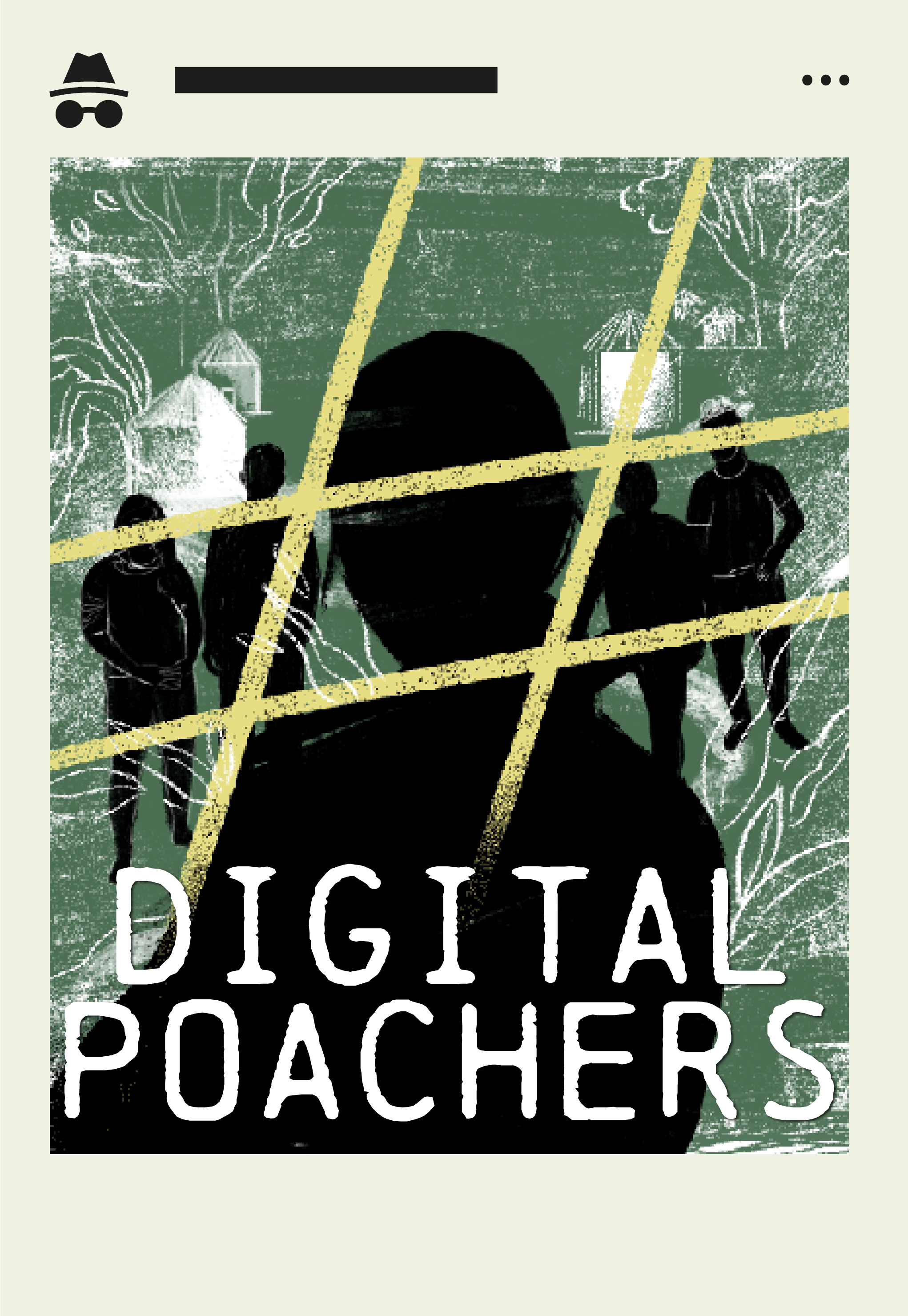
Digital Poachers (Taladores Digitales) is an investigative project aimed at uncovering the interests behind online smear campaigns targeting environmental activists in six Latin American countries. The project is coordinated by the Latin American Center for Investigative Journalism (CLIP) in partnership with AFP (Brazil), Colombiacheck (Colombia), Agencia Ocote (Guatemala), Contracorriente (Honduras), Animal Político and Mongabay Latam (Mexico), and Concolón (Panama). It was carried out with support from the Global Initiative for Information Integrity on Climate Change and received legal review from El Veinte.


