

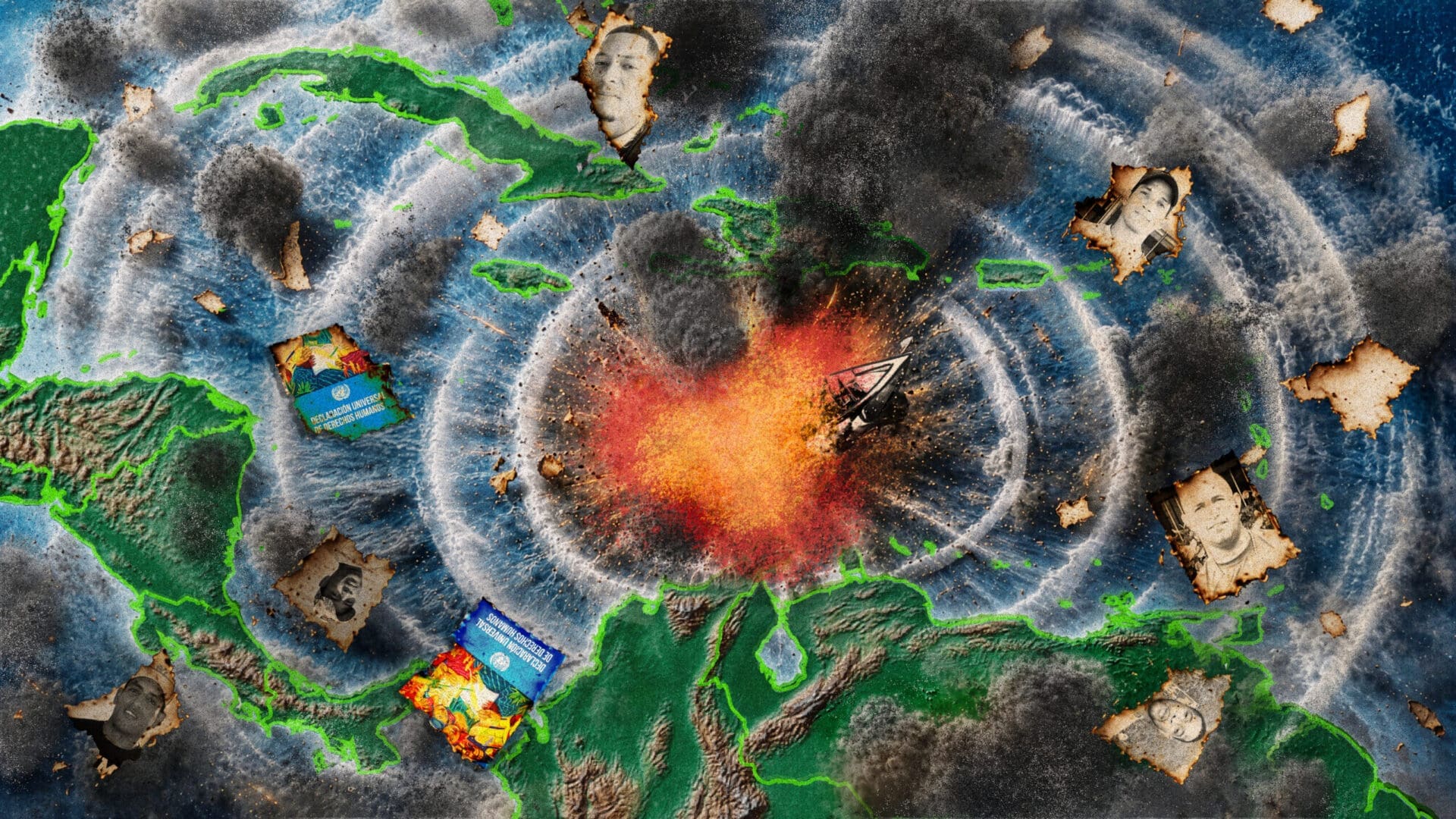
Between September 2 and May 5, the Trump administration had blown up 58 boats, killing 179 people. After five months of painstaking work piecing together scattered details, the cross-border, collaborative investigative report “Bombed, Without the Right to a Defense” was able to gather the names and some of the stories of 20 men, almost all of them humble coastal residents struggling to support their families as best they can. We also documented, through on-the-ground reporting in Colombia and Venezuela, the impact these missile strikes have had beyond the families—on commercial flights, anti-crime cooperation, and the flow of drugs. We discovered that, paradoxically, conventional anti-narcotics operations were more effective at stopping cocaine and left not a single person dead.
By María Teresa Ronderos, Jose Luis Peñarredonda, Ronna Rísquez, Lorena Meléndez, César Molinares, Giannina Segnini, Juan Pablo Barrientos, Sibylla Brodzinsky, Andrés García, and Asha Javeed
“Reports of the death of the beloved Pichirilo, a great sports talent from Valdez. Our condolences to his family,” posted @elshowderuben on October 15, 2025, a Facebook page for the radio program of the same name on Venezuela’s Radio Güiria Internacional. The post drew 483 reactions — crying emojis and messages from people mourning his death.
“Pichirilo, you have no idea how much this hurts. I’ll never forget you,” wrote one friend. “Rest in peace, Eduardo, our beloved Pichirilo.” “Such sad news, may his soul rest in peace.” “Rest easy, brother Pichirilo, an outstanding athlete. A tremendous talent in goal ,” wrote others.
The day before, on October 14, a missile fired by U.S. military forces had blown up a small boat off the Venezuelan coast near Güiria, a town in Valdez municipality in Sucre state and a departure point for crossings to Trinidad and Tobago. According to footage released by the U.S. government, the vessel was motionless when it was struck. It was the fifth attack the United States had carried out against boats in the Caribbean. With the six people killed there, the death toll had already reached 27.
U.S. President Donald Trump stated on his social media platform that Defense Secretary Pete Hegseth had ordered the strike along a known drug-trafficking route in international waters, and that U.S. intelligence had “confirmed that the boat was trafficking narcotics” and was linked to narco-terrorist networks.
The radio journalist behind @showderuben told reporters from this journalistic alliance that he posted the news about Pichirilo because he knew how well known he was in Güiria. “This is a small town, and everyone here knows each other,” he explained, though he denied knowing anything about the circumstances of his death.
Reporters from Alianza Rebelde Investiga (ARI) — a coalition of Venezuelan independent media outlets Runrunes, Tal Cual, and El Pitazo — working alongside this investigation, confirmed in Güiria that Pichirilo’s real name was Eduardo Jaime and that he had been a beloved indoor soccer player in the Venezuelan Caribbean town. A relative also confirmed to the alliance that Jaime had been aboard the boat destroyed on October 14.
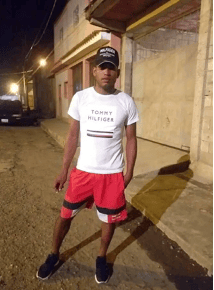

Since September 2025, and through the close of this investigation on April 26, in what has been dubbed Operation Southern Spear, U.S. military forces had destroyed 58 boats with missile strikes and caused the deaths of 172 people like Eduardo Jaime — as confirmed by U.S. Southern Command in an email answering questions by this journalistic team.
Since then and until last May 5th, when this story was closed, the U.S. government has publicly announced that it has struck two boats killing five more people. U.S. authorities also counts another 12 people as missing, now presumed dead. However, this journalistic alliance was able to determine that, of three presumed survivors from a March bombing off the coast of Costa Rica, two died before reaching land. The death toll therefore rises to 179 until May 5th.
In their written answers, SouthCom said: Every action taken during Operation Southern Spear is deliberate, lawful, and precise, aimed squarely at narco-terrorists and their enablers. We have full confidence in the operational and intelligence professionals who inform our missions”. (See full response here).
Nevertheless, days after the strike that killed Pichirilo, later that same October, Trump administration officials acknowledged in briefings to members of Congress and their staff that they do not know the identities or life stories of the people they are killing, as revealed by The Intercept.
“It’s a double tragedy — not only because of the unlawful killings, but because the victims are erased, reduced to anonymity,” John Walsh of WOLA, a Washington-based human rights organization focused on Latin America, told this reporting alliance.
In agreement with Walsh and many others—including experts on human rights, members of Congress, former officials of the U.S. government, and civil society organizations—they have questioned the legality of killing these men based solely on the suspicion that they might be transporting drugs, we forged a transnational reporting alliance that, since last December, has set out to give names to the killed men, convinced that by knowing their faces and stories, their humanity will emerge. The alliance, coordinated by the Latin American Center for Investigative Journalism (CLIP), brings together the Venezuelan outlets ARI; Colombia’s 360, Casa Macondo, and Verdad Abierta; The Guardian of Trinidad and Tobago; and freelance journalists in the Dominican Republic, Ecuador, Costa Rica, and Mexico, with technical and financial support from Airwars. Today, it publishes the first findings of Bombed Without the Right to Defend Themselves.
This collaborative investigation has required painstaking work, piecing together the scattered fragments of dozens of tragedies. To do it, we travelled to hamlets and fishing towns in La Guajira and Nariño in Colombia, and in Sucre state, Venezuela; interviewed relatives, friends, acquaintances of the victims, officials, and local reporters across five countries; tracked and verified hundreds of social media posts; filed dozens of public records requests; identified dozens of articles from well-known media outlets in multiple countries and languages; contacted prosecutors’ offices, hospitals, morgues, and embassies; and reviewed court files and public registries. From all of that material, we built a database that we hope will help raise awareness that these men were human beings who deserved to have been tried if they were suspected of committing a crime.
Most sources asked to remain anonymous because fear hangs over everyone involved. Some relatives of victims in Venezuela and in Santa Marta, Colombia, say they have received threats, as sources conformed to journalists in this alliance. Others refuse to speak because they fear retaliation from their governments or, worse, from the drug traffickers who effectively rule the places where they live. Authorities have remained largely opaque, and the officials willing to talk do so only off the record, wary of dragging their countries into conflict with Trump.
Combining the names uncovered by other news organizations and human rights groups with those identified by this reporting alliance, we have managed to identify only 16 victims by full name. Of two others, we know only their nationality; and of another one, just his nickname. Two more victims — whose bodies washed ashore on Colombia’s northern coast days after one of the attacks — have been partially identified, though we still cannot determine with certainty whether they died in that specific bombing. We also identified with full name another posible victim. We also identified three wounded survivors. It is like searching for needles in a haystack of 179 executions carried out between September 2 and May 5th. And the count is still growing.
Each explosion shatters the boat and everyone aboard — traffickers, passengers, fishermen alike — into a thousand pieces. Their identities are blown away over vast stretches of ocean.
This cross-border collaboration of journalists also found that the destruction does not end there. How on-the-ground reporting will show, Operation Southern Spear has teared apart communities already fractured and subdued by organized crime and state abandonment. It has terrorized fishermen and travellers to the point of bringing the economy of one town in Colombia’s Nariño region to a halt. We also confirmed that, in the Colombian Caribbean, the strikes disrupted at least 18 commercial flights. Beyond that, we documented how it has strained international cooperation in the fight against drug trafficking, as other democratic countries fear to be involved in actions that disregarded maritime agreements and international human rights law. Fear is spreading as the explosive wave among government officials and prosecutors about revealing details of the rescue operations or their locations, as the northern neighbour could retaliate with new tariffs or personal attacks on government leaders. Often, they don’t even respond to those asking about their dead.
The Bombed
On the same boat as “Pichirilo,” the soccer player, were Chad Joseph and Rishi Samaroo. According to their families in Trinidad and Tobago, they were on board the boat bombed on October 14th. They are now seeking accountability from the U.S. government for their extra judicial killings.
The world learned about Joseph and Samaroo because their families filed a legal complaint last January with a federal court in Massachusetts, seeking damages for their deaths.
According to a report last December by the Trinidad & Tobago Guardian, a member of this reporting alliance, in the town where Joseph was born—who was 26 years old at the time of the October 14 bombing—everyone had known him as a fisherman since he was a child. He had left his native Matelot, a fishing village on the Trinidadian coast, to live with an aunt in Las Cuevas, a community with longstanding ties to Venezuela.
“It was Joseph’s family, being one of the first to identify him out of over 100 people who have lost their lives in the strikes, which shed a human light on the people who were dying as a result of the US strikes in the Caribbean Sea. The human stories started to put pressure on the Trump administration by members of Congress who called for transparency on its strikes and have tried to challenge and curtail them”, said the Guardian, after two months of Chad’s presumed death.
The same local media outlet interviewed Lenore Burnley, Chad’s mother, who said “her life has been characterised by the conflicting turmoil of having faint hope and the harsh reality of Joseph’s sudden death with no body for a burial”. And when Guardian asked her why she thought Joseph had risked going out into the sea, she responded: “I know about the sea law; I know since I was young. If it’s a boat, whatever, you’re supposed to stop it, see. The law is not to kill people. Wherever you are, you are not to kill people like that. This is the first time in my life, and I am 51 years old; I have never heard about this kind of stuff”.
According to the Guardian, the common law wife of Chad Joseph said had called her from Venezuela to say he was coming back home. Sallycar Korasingh, Rishi Samaroo’s sister, said that he was a hardworking man who had paid his debt to society and was simply trying to get back on his feet and earn a decent living in Venezuela by raising cows and goats to help support his family, according to a statement released by the ACLU. “If the U.S. government believed that Rishi had done something wrong, it should have arrested, charged, and detained him—not killed him. They must be held accountable”.
The American Civil Liberties Union (ACLU), the Center for Constitutional Rights and Seton Hall law professor Jonathan Hafetz, the ACLU represents Joseph’s mother and Samaroo’s sister in their case before US justice.
They brought the case under U.S. admiralty law, which allows people to seek damages for wrongful death under the Death on the High Seas Act (DOHSA). They also invoked the Alien Tort Statute, which allows foreign nationals to bring claims in U.S. courts for extrajudicial killings prohibited under international human rights law.
“The deaths of Joseph and Samaroo were clearly extrajudicial killings,” Steven Watt, one of the American Civil Liberties Union lawyers handling the case, told this reporting alliance. The Trump administration’s argument — that a “war on drugs” justifies violent strikes like these — cannot legally excuse the killings, he said. Watt added that the legal team in a separate lawsuit brought under the Freedom of Information Act is seeking the legal memorandum produced by the Department of Justice Office of Legal Counsel, which lays out the government’s legal rationale for the attacks, because government has refused to produce it.
Their families insist that neither man was carrying drugs — that they were ordinary citizens returning home to Las Cuevas, Trinidad, after working in Venezuela.
Local sources in Sucre, Venezuela told ARI, the Venezuelan reporting coalition partnered in this investigation, that Dushak Milovcic would have been aboard the same boat destroyed on October 14. An Associated Press report said that the 24-year-old Milovcic had “started out as a lookout for smugglers,” according to sources who spoke to the agency’s reporter, had once attended Venezuela’s National Guard Academy and that he was now involved with drug transport networks.
The October 14 strike was not the only case in which doubts emerged about whether a targeted vessel was actually carrying drugs, given the large number of passengers aboard. Journalists and observers also questioned the very first boat bombed, on September 2, 2025, which was carrying 11 people. According to some people who are familiar with boat movements, interviewed on the ground by partners in this investigation in La Guajira, Colombia, and in Sucre, it is common for the same boats that carry drugs on the outward journey to bring passengers back. The capitanes, as the boat operators are known, take whatever work they can get.
“To all narcoterrorists threatening our homeland: if you want to stay alive, stop trafficking drugs. If you continue trafficking deadly narcotics, we will kill you,” U.S. Secretary of War Pete Hegseth declared on November 7, one day after a deadly strike on a boat carrying three people in the Caribbean off the Colombian coast. Language like that conjures images of multiple Pablo Escobars or Chapo Guzmáns being taken down.
The reporters in this alliance found a very different reality.
The remains of two people believed to have died in that November 6 strike washed ashore in Puerto López, Uribia, in Colombia’s La Guajira region. Multiple local sources said the bodies belonged to two men from Pedernales, a Dominican province bordering Haiti in the impoverished Enriquillo region, where 72 percent of households live in poverty. A reporter from the area confirmed to this alliance that dozens of young men leave there in search of work in Colombia or elsewhere, and that many are recruited to transport cocaine on speedboat runs.
Because no one came to claim the bodies that washed ashore on the Colombian coast — the dead had no relatives there — the local Wayúu Indigenous community buried them, according to reporting at the time by The New York Times. A month later, forensic technicians from Colombia’s National Institute of Legal Medicine arrived and exhumed the remains. Colombian outlet 360-grados.co, a partner in this reporting collaboration, confirmed that the exhumations took place between December 12 and 13 and that, as of publication, the bodies remain refrigerated at the forensic institute in Barranquilla.
Sources in Colombia’s Attorney General’s Office said that one of the bodies unearthed in La Guajira most probably had not come from the attacked boats, given its state of decomposition. Local sources said they knew that remains of the body of another Dominican man killed on the November 6th boat were not found in Colombia. The body had drifted beyond Castilletes, some 20 kilometers inland in Venezuelan territory, where members of the Wayúu community are believed to have buried them. We were not able to confirm this version. (See “The Southern Command Victims Buried in La Guajira.”)
Those young Dominicans are not very different from the young men of Uribia, in Colombia’s La Guajira region, where they had gone looking for work. Uribia is the poorest municipality in Colombia: 92 percent of its residents lack adequate education, healthcare, or basic public services. In those conditions, recruiting young men to transport cocaine is easy work — and the pay can be good, according to a boat operator interviewed by 360.
“Most people here aren’t the owners,” the boatman told this reporting alliance. “The people who own the cargo are almost always outsiders — even international players. They buy the merchandise here and wait for it at its destination.”
Through that narrow opening of hope — the dream of building a better life — dozens of Dominicans have disappeared. Now the uncertainty tormenting their families is even worse: they do not know whether their loved ones were blown apart by U.S. missiles. That is what one Dominican woman fears about her brother Francisco, though she asked that her name not be used. Francisco worked odd jobs in the tourism sector and had agreed to transport a shipment of drugs. She has not heard from him since he called her from a speedboat preparing to depart for home. It was sometime in mid-November, and he was speaking on a satellite phone. The conversation was brief. He asked about their parents and said he would soon return. He never did.
The bombings have also discouraged many families from reporting disappearances. According to Dominican journalist Manuel González Feliz, the reason is a mix of fear and shame among relatives.
As in Pedernales or Colombia’s La Guajira region, for many communities along Colombia’s Pacific coast, working as transporters is less a criminal choice than a survival strategy. The isolation of this vast region of jungle and mangroves — stretching 1,300 kilometers from north to south — has helped keep it desperately poor. In Tumaco, Colombia’s second-largest Pacific port and a major departure point for drug couriers, poverty levels are staggering: 84 percent of the population lives in multidimensional poverty. Drug trafficking groups exploit that desperation, offering jobs in cocaine laboratories, boatyards, and transport operations.
“It’s the only source of work keeping these communities alive. I know it’s illegal, but it’s what there is,” says Duván Caicedo, a community leader in the tiny settlement of Pital de Costa, tucked between the river and the jungle on Colombia’s Pacific coast. The village’s 1,200 residents live without potable water or even a health clinic, two hours by boat from Tumaco and the nearest hospital. A cocaine-processing lab is the only source of employment.
In Sucre, the Venezuelan state where Güiria is located, 90% of the people suffer from food insecurity. ARI found that very few people make a living exclusively by transporting cocaine. Those speedboats are woven into everyday life along the coast: they carry food, fish, medicine. They ferry workers back and forth between Venezuela and Trinidad, take fishermen out to sea for the day’s catch, transport migrants fleeing authoritarianism — and sometimes move traffickers as well. (See story All the “errands” in Güiria)
When the boats are carrying drugs, there are usually only two or three people aboard: a pilot and one or two helpers. This investigation found that victims of the U.S. strikes from Güiria were fishermen, motorcycle taxi or bus drivers, and in some cases, a few of them had agreed to transport cocaine as they could not support their families.
Thus, Juan Carlos Fuentes, 43, a driver “all his life,” and Luis Ramón Amundaraín, a fisherman and motorcycle taxi driver, 36, had been in Trinidad and Tobago since September 28, 2025. Juan Carlos, his wife says, was desperate for money. The Yutong bus with which he earned a living, broke down, and he couldn’t repair it. He called her from Trinidad the day before the October 3rd bombing in which presumably he fell, and told her he was about to leave; that he wasn’t carrying drugs.
Ramón, his partner says, “left to find more income” because the earnings from fishing and motorcycle rides had stopped being enough for his family of seven. She told ARI reporters that her husband worked as a fisherman. “They say he’s a narco-terrorist,” she said, but she insists that if he were, they would have assets, and they don’t even own their own home. His family believes Ramón was also killed with Juan Carlos on October 3rd.
What the women say makes sense because their husbands were traveling from Trinidad and Tobago to Venezuela, and drugs flow in the opposite direction
Another one: Eduard Hidalgo, 46, had been a skilled fisherman and had left for the United States in late 2024. He was deported a year later. A friend claims that although he had transported various goods for the criminal bosses in the area, he didn’t want to make any more trips, “but they forced him.” She believes he was killed in a bombing on February 23rd. (See story Guiria-2 The Victims)
Fear and hunger
The families of the dead are not the only ones mourning. The shockwaves from the bombings have also rippled through communities. For example, for several days, fishermen in the rural areas around Buenaventura — Colombia’s main Pacific port — suspended their work out of fear they would never return home, according to several sources who spoke to Verdad Abierta, a partner of this reporting alliance. Eventually, some gradually went back to sea.
The municipality of Olaya Herrera, in Nariño, was hit especially hard. A humanitarian worker in the region, who asked not to be identified, told this alliance that many local families depend on the money brought back by transporters after completing a run. “When they return, money flows into the community, businesses move, everybody benefits,” the source said to VerdadAbierta. Once fear stopped people from taking those trips, that money disappeared as well.
“We’re living through an extremely difficult situation,” says Father Luis Carrillo. “People started feeling it in November, but by February it had become critical.” Working with the local mayor’s office, the priest appealed to the Food Bank in Bogotá for help. In March, a boat arrived from Buenaventura carrying 700 boxes of food, which were distributed in the municipal center of Bocas de Satinga and nearby rural communities. “Obviously, that doesn’t alleviate even one percent of the need,” Carrillo says.
Who Is Investigating?
Authorities in none of the countries involved — from the United States to Colombia and Mexico — have disclosed how much cocaine was sunk, how many of the 179 dead were allegedly transporting it, or even the victims’ names. Nor have they explained how the intelligence was gathered that led them to designate those people as military targets.
This reporting alliance sent a detailed questionnaire raising those and other questions to U.S. Southern Command. “For operational security and force protection reasons, we do not discuss intelligence or details about our operational processes and planning”, they said. They also stated that “The threat narco-terrorists and cartels pose to human life cannot be ignored. They have escalated their violence to unprecedented levels, going beyond mere criminal conduct by engaging in unspeakable acts of terror. It is not just criminal rivals who are in their crosshairs; they are waging war on law-abiding citizens, entire communities, and government institutions, carrying out heinous acts to impose their will and satisfy their insatiable lust for criminal revenue”.
“The cartels and narco-terrorists fueling these unacceptable levels of death and suffering include a global network of criminal enablers with financial, legal, technical, logistical, political, commercial, cyber and other expertise, who share responsibility for the callous killing of so many people”, SouthCom also responded.
Sources at the Dominican Republic’s embassy in Colombia confirmed to this reporting team that the only information they had received regarding the possible deaths of two Dominican nationals came from a public statement by Colombian President Gustavo Petro. No formal steps toward identification, however, had been initiated. One embassy official described the matter as “politically sensitive.”
In Ecuador, the Coast Guard has disclosed no details about a rescue operation reportedly handed by the US to them, called after a February 9, 2026 bombing in the Pacific, according to a reporter supporting this investigation in Ecuador.
Off Costa Rica’s Pacific coast, authorities recovered two bodies and one survivor. The dead were both Ecuadorian. Reporters from this alliance confirmed through security sources in Ecuador that one of them, Pedro Ramón Holguín Holguín, owned a small fish retail business in Manta, the coastal city that has become a hub for Ecuador’s drug trafficking trade. The investigation also established that Ecuador’s embassy in Costa Rica assisted in identifying the remains, but that the bodies still lie in a morgue in San José, the Costa Rican capital.
Casa Macondo, one of the Colombian partners in this investigation, submitted freedom-of-information requests to multiple government agencies. DIMAR, Colombia’s maritime authority, replied that it had received no reports of bombings in Colombian territorial waters. Last November, Colombia’s Foreign Ministry convened a meeting with the Defense Ministry, the Navy, and the National Intelligence Directorate. The outcome was striking: every institution claimed to possess no official information beyond what had appeared in the press. The written conclusion, signed by Javier Pava Sánchez, Director of Territorial Sovereignty, stated that “our sovereignty has not been violated.”
Thirteen days later, Colombia’s ambassador to the Organization of American States addressed the Permanent Council to denounce those same attacks as violations of international law. On December 23, Colombia repeated the accusation during an emergency session of the United Nations Security Council.
Colombian President Gustavo Petro himself publicly said he had visited the home of a fisherman killed in a September 15 strike — Alejandro Andrés Carranza, in Santa Marta — and had seen firsthand the poverty in which he lived. Petro condemned the attacks as extrajudicial executions. He also facilitated a meeting between Carranza’s relatives and an American lawyer, Daniel Kovalik, so the family could consider legal action claiming damages, Kovalik told reporters from this alliance. Kovalik later filed a petition before the Inter-American Commission on Human Rights of the OAS, arguing that the extrajudicial killing of Carranza violated the American Declaration of the Rights and Duties of Man.
The verbal clashes between Trump and Petro, which had been escalating for months, intensified after those statements. Eventually, however, Petro met with Trump at the White House, and the denunciations fell silent. Sources within Colombia’s Foreign Ministry now say the matter has become so politically sensitive that officials no longer mention it publicly or provide information about it.
One of Casa Macondo’s information requests did bear fruit: coinciding with the beginning of air airstrikes on suspected vessels, the number of disruptions to commercial flights in Colombia rose in 2025. Using data obtained from Colombia’s civil aviation authority, Aerocivil, Casa Macondo found that between January and July 2025, commercial aircraft reported an average of four to five monthly GPS incidents — a level considered normal for any airspace. But beginning in August, just before the bombing campaign began, the number of reports increased fivefold. That year, the company recorded a total of 251 reports of GPS malfunctions and classified them as unrelated to its systems. It closed the case without investigating the causes of such problems.
Aerocivil reported that during 18 commercial flights crossing the northern Caribbean, pilots experienced GPS failures while passing through AMBAS — the name given to a waypoint over the Caribbean Sea north of Colombia, where routes connecting Bogotá and Medellín with Miami, New York, Santo Domingo, and Curaçao converge. The signal would disappear for anywhere from eight minutes to an hour while aircraft cruised between 30,000 and 40,000 feet — roughly 9 to 12 kilometers above sea level — and would recover only after leaving Colombian airspace. The GPS always failed in the same location. It always returned once the aircraft moved away.
In one of the cases reported by Aerocivil, a pilot’s GPS systems failed, and then, due to another malfunction, the transponder—the device that tells ground radar where the plane is—stopped transmitting. In the cockpit, the anti-collision system alarms went off, as if the ground were nearby, when in reality the plane was flying thousands of feet above the ground. The aircraft’s pilot, who spoke with this journalistic alliance on condition of anonymity, said he was frightened because this had never happened to him before, but that airplanes have at least three redundant navigation systems, and there is always a backup when one fails. “There was no danger to the passengers,” he said.
In providing these records, the aviation authority acknowledged that these incidents constitute an “impact on civil air navigation” and officially classified them under its “hazard identification” protocol for airspace safety. (See Story Aviones comericales volaron con interferencias coincidentes con los bombardeos de EE.UU. a las lanchas)
[MR1]Link to story: Airplanes
Attacks That Undermine the Fight Against Drug Trafficking
The missile strikes may be more spectacular and violent than the quiet interdiction operations president Trump has dismissed as ineffective, but that does not make them more successful.
So while Trump celebrated the September 2 strike on the boat carrying 11 people as an attack against Tren de Aragua terrorists “identified with certainty,” claiming the vessel was transporting “massive quantities of drugs,” the vice president hailed it as the “best and highest use” of American military power. Secretary of State Marco Rubio echoed the next day that the traditional policy of intercepting drug carrying vessels had not worked. “Instead of interdicting it, on the president’s orders, we blew it up. And it will happen again”, he said.
What senior U.S. officials did not mention was that, on that very same day, another operation unfolded in the Caribbean: Operation Zeus. But Zeus did not rain fire from the sky like the missile strike that killed the 11 passengers. During Operation Zeus, the Colombian Aerospace Force detected a suspicious vessel in those same Caribbean waters and shared its coordinates with the Dominican Air Force. Working in coordination with the Joint Interagency Task Force South (JIATF-S), based at the Naval Air Station in Key West, Florida, Dominican naval units intercepted the boat. They detained its two crew members, seized 448 kilograms of cocaine, handed over evidence for criminal prosecution — and not a single person died.
It was not an isolated case. A CLIP investigation tracked routine anti-drug interdictions in the Caribbean and the Pacific carried out by U.S. agencies in cooperation with European and Latin American countries between September 2025 and February 2026, drawing on information from law enforcement and the press in various languages and countries, and consulted public records available via the Global Fishing Watch API v3 and VesselTracker. The investigation found that thanks to this international cooperation, authorities were able to seize, without firing a single fatal shot, 140 tons of cocaine and arrested 160 crew members who were subsequently brought to justice.
This follow-up found that the tugboat Little Girls, with Tasmanian flag, the Greek fishing vessel Ourania A, and the cargo old Turkish-owned ship United S — moved through the Atlantic carrying narcotics during that same period, which coincided with the bombing operation. None of them was attacked by missiles. Authorities waited until the vessels reached safer waters, then immobilized them, confiscated the drugs, and arrested their crews. Moreover, the Ourania A seizure later led to the arrest of a known Greek narco.
The regular counter-narcotics operations and lethal attacks unfolded in the same waters, during the same weeks, and with intelligence coordination that, in several cases, passed through the very same institutional nodes: the Maritime Analysis and Operations Centre–Narcotics (MAOC-N) in Lisbon, the Joint Interagency Task Force South in Key West, and the DEA. (See full story Justice for the big shipments, bombs for the small ones.)
Who makes the decisions?
Who decided which boats would be blown out of the water and which would be allowed to continue on, only to be intercepted later through conventional law enforcement operations? We asked this to SouthCom. They did not answer the question precisely, but send the following statement: Operation Southern Spear is conducted at the direction of our Commander in Chief to defend the U.S. homeland, protect regional partners, and uphold law and order by denying narco-terrorists, cartels, and their network of enablers any foothold in the Western Hemisphere with overwhelming presence. The objective of the operation is to detect, disrupt, and dismantle the networks of cartels and other transnational organizations the U.S. President, through executive order, designated as Designated Terrorist Organizations”.
Legal experts have already raised concerns about the meaning of the term ‘narco-terrorist’, but senior adviser with the U.S. Program at the International Crisis Group and former attorney in the Office of the Legal Adviser at the U.S. Department of State, Brian Finucane told this alliance that comments by the US military in response to this story take these concerns one step further. “The law of war permits violence otherwise prohibited, but only during genuine armed conflict — a threshold the Trump administration has failed to meet, as it has not even identified who the US is supposedly fighting”, he said. “Beyond that foundational problem, the administration’s suggestion that vaguely defined ‘enablers’ may be targetable raises further concerns that it is violating the rules of its own bogus legal paradigm.”
While international cooperation in the Caribbean continued operating normally — and without leaving a trail of bodies — during those six months between September and February, the multiple attacks the U.S. government carried out left 140 people killed , without publicly seizing any known quantity of cocaine and while obliterating the very evidence that could have led investigators to the major traffickers who control the routes. In fact, the Colombian Attorney General’s Office only opened a preliminary inquiry against survivor Jonathan Obando Pérez, according to El País América, “but does not plan to turn it into a formal investigation, as it lacks evidence to suggest that Obando Pérez committed any crime in Colombia.” That is why, after being discharged from the hospital, he was released. A source cited by the AP from the Ecuadorian Prosecutor’s Office also stated that “it found insufficient evidence to take legal action” against Andrés Fernando Tufiño, a survivor of an attack in the Caribbean on October 16.
Amid concerns over possible violations of human rights and maritime law, authorities in the United Kingdom and Canada said they would no longer share intelligence with the United States for such operations, according to Time. British sources told the magazine last November that “British officials believe the U.S. military strikes that have killed 76 people violate international law,” and that, for that reason, intelligence cooperation connected to the attacks had been suspended since October. Canadian sources, meanwhile, said their government “does not want its intelligence helping identify boats as targets for lethal strikes.”
Last January, the Dutch defense minister said in Aruba that the Netherlands would continue interdiction operations in its territorial waters but would not allow its naval station there to be used for operations connected to Southern Spear, the U.S. bombing campaign.
“No European country, including France, will send operational intelligence to the Americans under the current circumstances if it could be used as the basis for a military strike against a vessel,” Dimitro Zoulas, head of the French police anti-narcotics service, told Radio Caraïbes International. Euractiv also confirmed through a French security source that “it is 100 percent clear that Europeans are not giving the United States any intelligence that could lead to a strike against boats.”
The Colombian government had announced a similar position, but a Foreign Ministry high source who asked that his name not be disclosed due to the sensitivity of the matter, said to this investigative alliance that today the Colombia government continues to share intelligence with his U.S. counterpart as usual, but did not specify for which operations.
In response to the investigative team of Bombardeados, sin derecho a la defensa, SouthCom stated: “U.S. forces operate under rules of engagement that are consistent with international maritime law against activities that pose a direct threat to U.S. security and the lives of American citizens. As a military organization entrusted with the defense of our homeland, we are fully committed to missions that directly support the health and safety on the American people.”
Last April, a coalition of 125 civil society organizations from around the world — including Airwars, which provided expert support to this reporting alliance, as well as Human Rights Watch and Amnesty International — issued an urgent public appeal calling on governments to “immediately cease or refrain from supporting U.S. extrajudicial executions in the Caribbean Sea and Pacific Ocean.”
“We must remember that all these individuals had names, families, and lives that will never be the same,” Jamil Dakwar, director of the ACLU’s Human Rights Program, said during a hearing before the Inter-American Commission on Human Rights of the Organization of American States on April 13.
In addition to representing the families of the two Trinidadian victims before a U.S. federal court, the organization asked the Inter-American Commission on Human Rights to declare that the missile strikes on the vessels violate international law and proposed the creation of a special body to investigate the broader impact those attacks have had across the hemisphere.
Paradoxically, Trump’s bloody campaign to halt the flow of drugs into the United States has achieved little beyond fracturing international cooperation against narcotics trafficking and undermining civil society’s trust in America’s democratic and moral leadership. And, as this investigation has shown, it has proved far less effective than the traditional interdiction strategies the administration so openly scorned.
Why Do They Do It, Then?
It is difficult to understand why the Trump administration remains determined to continue the bombings, despite the fact that they do not slow the flow of drugs. Even, Admiral Nathan Moore, commander of the U.S. Coast Guard’s Atlantic Are, in favour of using all methods, including bombings, recognized, they have seen a noticeable difference” in the flow of cocaine. Moore said, following 21 airstrikes in November 2025, there have been no major changes in traffickers’ routes or pace, or in drug purity.
They have likely succeeded in getting traffickers to stop using certain routes, particularly those used by go-fast boats—according to an analysis by InSight Crime, a media outlet specializing in organized crime—but they have not “prevented traffickers from moving cocaine by other means,” such as relying more heavily on the Amazon route. It is not difficult for major drug traffickers to replace those killed with other men driven into their networks by desperation, poverty, and unemployment, as such individuals abound along Latin American coasts.
Targeting the weakest link in the multibillion-dollar drug trade is nothing new. Our countries have been doing it for more than half a century without solving the problem. This new strategy of exploding boats and killing unknown suspects simply pushes that policy to an extreme. The missile strikes have inflicted enormous suffering, plunging already poor families and communities into even deeper deprivation — people who have no way to defend themselves against the overwhelming power of the U.S. military or its omnipresent rhetoric.
As we have seen, the campaign has also alienated international partners and left the United States more vulnerable in its fight against organized crime.
So why persist down such a risky and barren path for more than eight months?
“People in the Trump administration believe in spectacles of force for reasons that have very little to do with effective interdiction,” says Walsh of WOLA. “They want to impress the public, to make Americans believe that they, unlike previous governments, are finally ending the terrible problem of drug trafficking. The profound cruelty and indifference with which they order these systematic and intentional killings allows them to project this menacing image of faceless ‘narco-terrorists.’ In doing so, they shock many Americans while numbing their sense that the U.S. officials responsible for these murders should be held accountable.”
President Trump and his top military and State Department officials, accompanying their airstrikes with sensational videos and triumphant social media posts, are staging a spectacle of disproportionate power against humble men—most of whom are poor—who, at worst, are suspected of trafficking drugs.—
As the Venezuelan woman, wife of a one man killed by one of the bombings, said, “Donald Trump didn’t stop to think; he’s killing a family man and doesn’t even know why this man got on that boat.”
Los bombardeados: sin derecho a la defensa es una investigación sobre las víctimas civiles de los ataques de Estados Unidos en Latinoamérica, coordinada por el Centro Latinoamericano de Investigación Periodística (CLIP) en alianza con Casa Macondo, Verdad Abierta y 360 grados (Colombia); la Alianza Rebelde Investiga (Venezuela); The Guardian (Trinidad y Tobago) y con el apoyo técnico de Airwars (Reino Unido) y El Veinte.


