


How poor planning and underinvestment in green spaces worsen the climate crisis and threaten biodiversity in the capital of Amazonas
By Nicoly Ambrosio (Amazônia Real)
On any given day in Manaus, the capital of Amazonas, by noon commuters at bus stops are already crowding together, seeking shade from narrow lamppost shadows. With makeshift cardboard fans or umbrellas opened against the sun, those waiting for buses endure intense heat. “It’s so hot that birds lay omelettes in Manaus,” goes a popular expression describing the city’s scorching climate.
Para quem é de fora, pode ser difícil imaginar Manaus como uma cidade que não foi construída para se harmonizar com a floresta ao redor. Ocupada e urbanizada sob uma lógica colonial que tentou adaptar à força o modelo europeu de cidade, — com ruas estreitas, calçadas ausentes e construções geminadas — Manaus herdou um traçado urbanístico que dificulta até hoje a presença de árvores de grande porte nas suas vias. Por outro lado, quem vive aqui, percebe as contradições do local que virou um emblema de contraste entre o natural e o concreto, e que por isso pouco lembra a Amazônia do imaginário brasileiro, formada por imagens de grandes porções de florestas cortadas por rios caudalosos.
To outsiders, it might be hard to picture Manaus as a city unsuited to harmonize with the surrounding rainforest. Built and expanded under a colonial logic that forced a European city model—narrow streets, missing sidewalks, row houses—Manaus inherited an urban layout that still makes planting mature trees along its streets challenging. Yet residents perceive the contradiction: a place symbolic of the clash between nature and concrete, offering little resemblance to the lush Amazon usually imagined as vast forests cut by mighty rivers.
Encircled by one of the planet’s most biodiverse biomes, the Amazon, Manaus has seen many native tree species vanish due to rapid urbanization – such as pink and yellow trumpet trees, crabwood trees, Brazil nut trees, kapoks and copaibas.
Today, some survive only in small urban nature refuges, like the Adolpho Ducke Forest Reserve – a 10,000?hectare protected area of Amazon forest on Manaus’s east side, in the Cidade de Deus district, – and UFAM’s Senador Arthur Virgílio Filho Campus, also in the eastern Coroado district, where around 700?hectares of preserved forest rank among the world’s largest urban green fragments. The urban forest shelters a spectrum of species – from trees to sloths, butterflies, agoutis, pacas, and monkeys – to rare wildlife like the harpy eagle and pied tamarin.
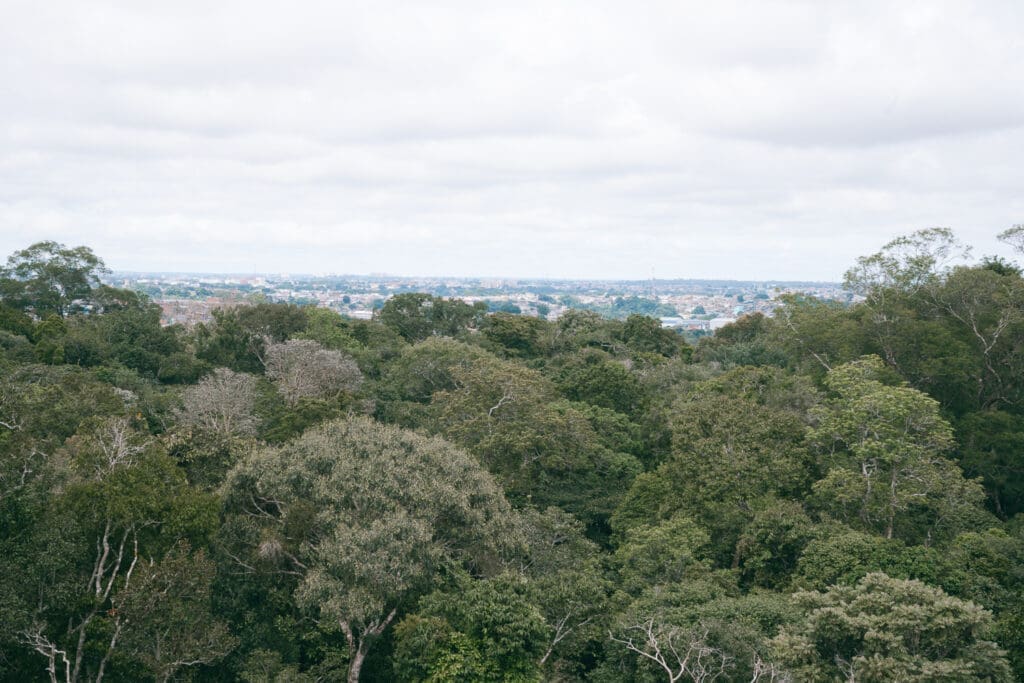
Like the UFAM forest and the Amazon Museum (MUSA), the few remaining green areas in Manaus mostly reflect isolated institutional initiatives. In these places, the air feels lighter, and tanagers, bananaquits, araçaris and macaws still find food before winging free across the sky. Yet beyond these green breathing spaces lies a city choked by asphalt and concrete – with no tree shade to ease the heat.

In recent years, life in Manaus has become more challenging amid extreme weather events – from two consecutive years of severe drought in 2023 and 2024, to toxic wildfire smoke blanketing a hundred?kilometer radius around the city. With no reprieve from the heat beneath trees, the city faces an anxious future.
But how exactly is this rapid, tree?scarce urbanization in South America’s largest Amazonian city affecting residents’ thermal comfort and threatening native flora and fauna? In this report, we sought data and concrete evidence to complement the lived stories of Manaus residents. The result is a collaboration between journalists and environmental scientists as part of an initiative by Instituto Serrapilheira and the Latin American Center for Investigative Journalism (CLIP), to explore the interrelationships between the biodiversity of the Amazon and the various environmental services it provides to the continent.
The Loss of Urban Forests
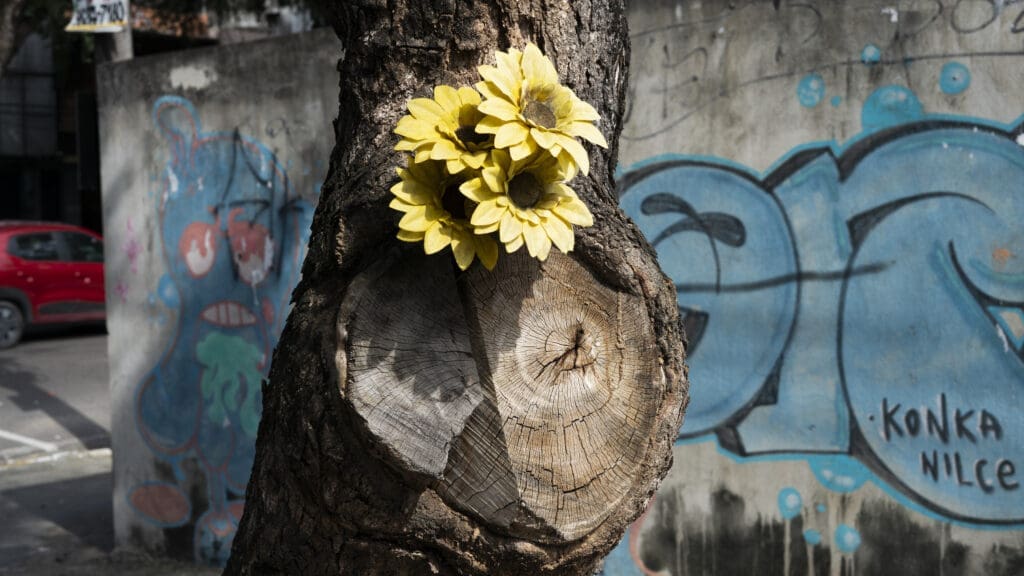
In Manaus, the city’s postcard image is a stretch of streets exposed to blistering sun, running through neighborhoods with not a single tree to provide shade. By 10?a.m., the pavement is already sizzling, making everyday tasks – like visiting a market or strolling around the Historic City Center near the Amazonas Theater – uncomfortably hot.
At noon, walking along avenues in the East, South, or North zones feels like trekking across a desert – often requiring physical effort. The felt temperature surges toward 104°F (about 40?°C) on cracked sidewalks, littered with cut stumps. Bus stops without coverings expose residents to a daily struggle battling the heat.
Only 44.8?% of Manaus’s urban area has tree canopy cover, according to IBGE’s (Brazilian Institute of Geography and Statistics) 2022 Census on household surroundings. That ranks the city as the seventh?least tree?lined capital in Brazil – trailing behind even agribusiness?driven capitals like Campo Grande (91.4?%), Goiânia (89.6?%), Palmas (88.7?%) and Cuiabá (74.5?%), with the largest tree cover rates among capitals in the country. In the Amazonian region, only Belém (44.6?%) and Rio Branco (39.9?%) register similarly low urban canopy rates.
The IBGE defines a “tree?lined street” as one with at least one 5.6?foot tall (1.7?m) tree. Still, only 13.9?% of Manaus homes sit on streets with five or more trees—proof that even in greener areas, coverage is patchy and insufficient for improving quality of life.
Coverage is also uneven: just 23.9?% of households in Manaus were on tree?lined streets in 2010, according to the first study by IBGE on Brazil’s urban Flora.
In the past 12 years, that indicator rose nearly 87?%, reaching today’s 44.8?% of urban streets covered by at least one tree. This gain is partly due to recent reforestation policies like the Urban Tree Master Plan (Plano Diretor de Arborização Urbana—PDAU) and the Arboriza Manaus program.
Agricultural engineer Heitor Liberato, former president of the Brazilian Society of Urban Arborization, praises Manaus’s PDAU for its technical approach and for prioritizing native species. “They’re best suited for our climate, soil, and local fauna,” he says.
Still, the data from the 2022 IBGE Census are not encouraging. The rates show that the lack of green areas in much of the city increases socio-environmental inequalities and does not reflect the actions taken by the government in recent years. More than half of the population of Manaus, which exceeds 2.2 million inhabitants, lives on streets without any trees.
In the state of Amazonas, the scenario is no less worrying, since more than half of the population (54.9%) also lives in urban areas without any trees. The specialist emphasizes that the success of urban tree planting programs depends, above all, on the city’s structure. “There is no point in planting a tree if the sidewalk does not have space or if the flowerbed cannot support the growth of the roots. In a short time, this tree will either cause damage or not even grow properly”, he explained. For the specialist, planting trees requires technical planning and respect for urban infrastructure.
Regarding the IBGE data, Liberato points out that the methodology used to measure urban reforestation does not consider the large fragments of forest present within the urban perimeter of Manaus. “Areas such as the Adolpho Ducke Reserve or the CIGS, in São Jorge, have an enormous density of vegetation, but this does not mean that it is accessible to the population. People spend the day at home, in their neighborhood, and need at least one tree in front of their residence to have a minimum of thermal comfort”, he emphasized.
The review and implementation of the Urban Greening Master Plan are urgently needed given the dissatisfaction of the majority of Manaus residents with urban greening. Three out of four residents rated the city’s forestry as poor or very poor, according to a survey published in 2022 in the magazine Lifestyle Journal and conducted by researchers from UFAM. Only 3% considered it very good.
While researching this report, we visited the southern part of Manaus in the City Center (Centro), one of the oldest and most populous neighborhoods in the capital, with approximately 39,228 inhabitants, according to the 2022 IBGE Census. According to data collected during the investigation by scientists from the Instituto Serrapilheira’s training program in quantitative ecology – who supported the data analysis for this story – this historic region, which should have consolidated infrastructure, still lacks proper urban greening. The data show that only 14.62% of Centro has tree coverage.
On many streets, we observed dead or severely pruned trees, reduced to stumps, exposed as remnants of greenery that didn’t survive. Trees knocked down during recent storms destroyed sidewalks, caused losses to shopkeepers, and created hazards for pedestrians and residents. Amid the intense heat, the collective effort of people looking for shade to protect themselves from the sun was visible.
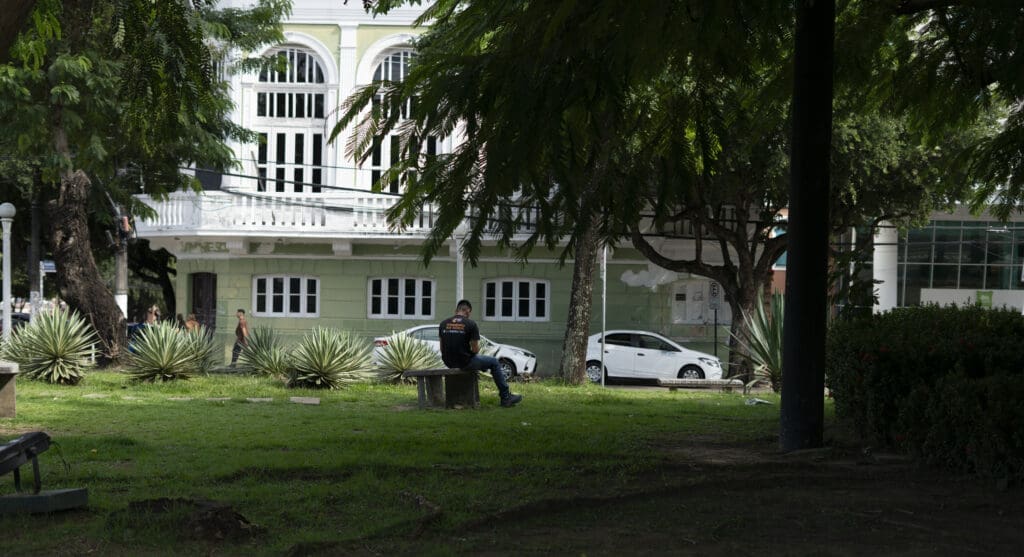
Even in public squares and parks – which should, in theory, concentrate vegetation and serve as leisure spaces – the tree coverage is irregular and insufficient. In places like Antônio Bittencourt Square, known as Praça do Congresso, decorative trees are common, but they offer only modest shade, not enough to cool the space during the hottest hours of the day. There are also some large trees, such as acacias.
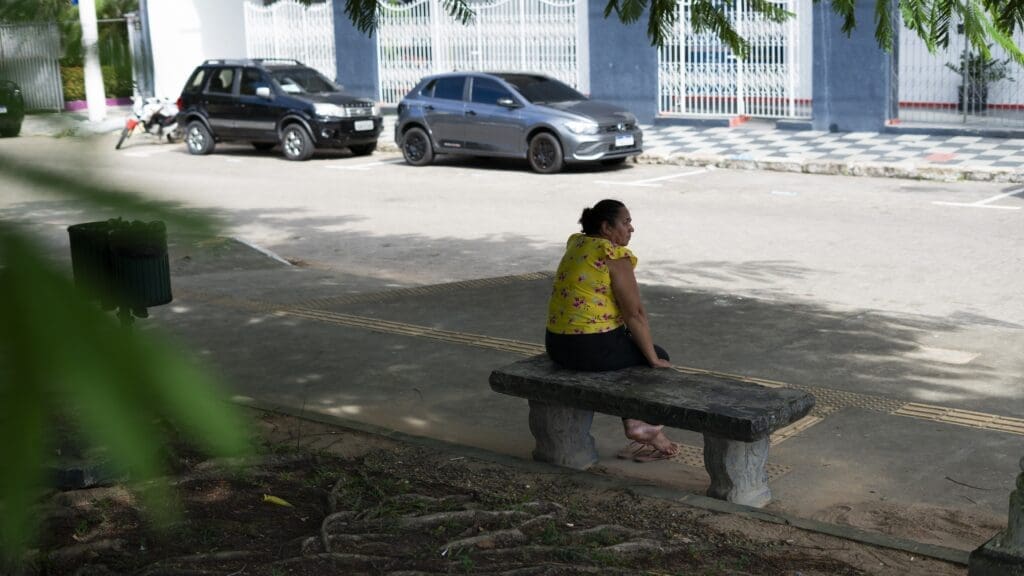
Seated on one of the square’s benches – part of city life since the early 20th century – was Celibete Catarina Dutra, a 57-year-old schoolteacher, taking a break in the shade. “The sun is so strong, and when we stop at a traffic light, we’re stuck under the burning sun. There isn’t a single tree, not one tree on these streets, on these sidewalks. There’s nothing,” she said while resting under a tree. “I was waiting for my husband, but I got here early, so I came to the square instead, to avoid waiting in the sun. I needed a bit of shade.”
Celibete shared that the heat affects her high blood pressure, so she avoids going out during the time of day when we spoke: 3 p.m. Asked about her hopes as a citizen for urban tree planting, she demanded more trees. “Alfredo Nascimento [former mayor of Manaus] ordered all the trees removed and planted those palms, which rotted and started falling over with the heat and rain. So we ended up with no trees at all,” she recalled, referring to the royal palms planted during his administration in 2004.
Out of 120 royal palms planted along Djalma Batista Avenue, 98 showed signs of atrophy and six died, leading to the removal of all of them in 2010. Specialists attributed these failures to the inappropriate choice of non-native species and the lack of proper care, such as watering and fertilization. Royal palms, native to the Caribbean, were once considered the “queens” of urban landscaping in Manaus and were planted along avenues like Djalma Batista, in the city’s Central-South Zone; Max Teixeira, in the North Zone; and Grande Circular, in the East Zone.
“The same thing is happening out in Iranduba – trees being broken, burned. We know it’s summer when the smoke starts to appear,” Celibete said.
The City Heating from Within
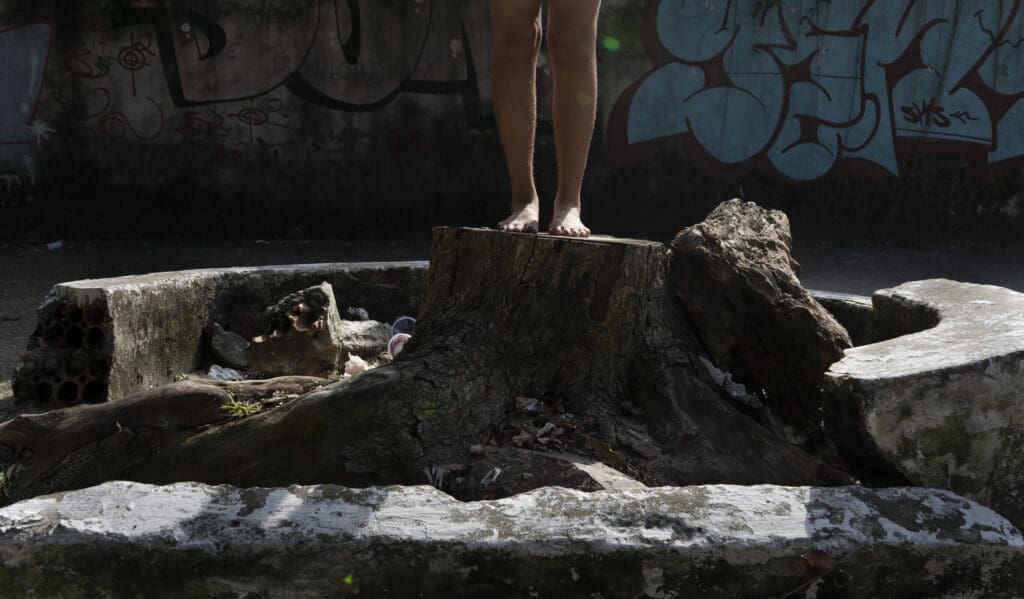
This quiet disappearance of trees is contributing to the worsening of what scientists call urban heat islands – areas where temperatures are significantly higher than in surrounding rural zones. This happens primarily due to the dominance of materials like asphalt and concrete, which absorb and slowly release heat throughout the day and night.
In Manaus, the heat is on the rise. In October 2023, the city recorded a temperature of 102.6°F (39.2°C), the highest in 32 years, according to Brazil’s National Institute of Meteorology (Inmet). That year, Manaus and the state of Amazonas experienced the worst drought in their recorded history. In September 2024, the city again saw its hottest days, reaching 39°C (102.2°F), with a heat index of 41°C (105.8°F). The peak was recorded by an automated Inmet station around 3 p.m. on September 18.
Urban vegetation, in addition to beautifying the city, serves as a natural thermal barrier, regulating humidity, softening climate extremes, and providing environmental comfort. When these areas are eliminated, the immediate effect is an intensification of heat islands.
“The lack of green areas reduces the environment’s natural cooling capacity, raising temperatures and decreasing relative humidity. This results in greater thermal discomfort, especially during heatwaves, affecting the population’s health and well-being,” explains climatologist Leonardo Vergasta.
According to Vergasta, a researcher at the Climate System Modeling Lab (LabClim) at the State University of Amazonas (UEA), the Amazon region is characterized by high temperatures and high relative humidity, and that dense vegetation plays a key role in thermoregulation.
“Losing that vegetation disrupts the balance, making the city more vulnerable to heat extremes and discomfort. Research shows that tree presence can reduce air temperatures by up to 2.5°C (4.5°F), depending on canopy density and tree distribution,” he adds.
Urban deforestation in Manaus directly interferes with airflow patterns, impacting natural ventilation and the dispersion of pollutants. These conclusions aren’t based solely on observation – scientific studies by LabClim confirm the seriousness of the climate situation in Manaus. The city is already undergoing major changes in energy balance and surface temperature due to urban sprawl and the loss of native vegetation, according to a study, published in 2024 in the Brazilian Journal of Meteorology, using climate modeling to simulate the effects of land-use and land-cover changes in Manaus between 2009 and 2019.
The temperature difference between green zones and densely built-up areas can exceed 10°C (18°F) during the day and 7.2°C (13°F) at night, according to another LabClim study published in 2016 in Geonorte Journal, which analyzed heat island formation in the city using both models and observational data. This was especially true in neighborhoods like Cidade Nova, Japiim, São José Operário, Zumbi dos Palmares, Petrópolis, Cachoeirinha, and Centro – areas with little vegetation. The study also emphasized the role of soil sealing, building verticalization, and biomass burning in intensifying urban heat islands.
“Tree cover lowers air and surface temperatures, reducing the felt heat. On the other hand, treeless areas tend to be hotter due to greater heat absorption by impermeable surfaces, worsening thermal discomfort for the population,” says Vergasta.
Em uma projeção de cenários futuros de emissões elevadas, a cidade pode enfrentar anomalias de temperatura superiores a +10?°C e uma redução de até 50% na precipitação em determinadas áreas. Vergasta reforça que diante deste cenário, a vegetação nativa da Amazônia tem vantagem sobre outras espécies exóticas quando o assunto é adaptação climática urbana. São mais adaptadas às condições climáticas locais, são mais eficazes na regulação térmica e na promoção da biodiversidade urbana e são mais resilientes a pragas e doenças locais, tornando-as opções sustentáveis para arborização urbana.
Under a scenario of high future emissions, the city could face temperature anomalies above +10°C (18°F) and up to a 50% decrease in rainfall in some areas. According to Vergasta, native Amazonian vegetation is better suited than exotic species for urban climate adaptation. It is more resilient to local pests and diseases, more effective at regulating temperature, and better at promoting urban biodiversity—making it a sustainable choice for urban greening.
To mitigate the effects of extreme heat, Vergasta advocates for integrated actions that place green infrastructure at the center of urban planning. One of the top priorities, he says, is the implementation of tree-planting programs focused on native species that thrive in local conditions and help create ecological corridors.
Another critical need is to rethink how the city is occupied, making green infrastructure a central axis of urban development. “That includes expanding permeable areas, creating interconnected green pockets, and adopting sustainable construction technologies,” he warns.
When Heat Makes You Sick

At Desembargador Paulo Jacob Square, located near the buildings of the Social and Environmental Program for the Streams of Manaus (Prosamim) and the Igarapé de Manaus Avenue, the scene is even more critical. The lack of large, leafy trees that could offer thermal comfort like shade and breeze is made worse by the presence of trash, bad odors, and clear signs of neglect by city authorities.
Living in Coroado, a neighborhood in the East Zone of Manaus that has almost no trees, Nédio Souza, a 38-year-old security guard, is among those especially vulnerable to the climate crisis, as he works outdoors all day long. “Those of us out on the street really feel the punch of the heat. Trees help provide shade,” he says.
Lidiane Pereira, a 38-year-old gardener, adds that the heat often causes her shortness of breath. “Like during the smoke and drought season, it got really hot to work. It was tough. I had trouble breathing many times,” she recalls.
The World Health Organization (WHO) recommends that cities provide at least 130 square feet (12 m²) of green space per resident. The Brazilian Society for Urban Arborization sets an even more ambitious goal: 160 square feet (15 m²) of green space per person.

The absence of vegetation directly affects thermal comfort and public health. According to Jesem Orellana, an epidemiologist and researcher at Fiocruz Amazônia, “Extreme heat is defined as abnormally high temperatures that pose a threat to human health. These risks are even greater in areas prone to becoming urban heat islands.”
He warns that during heatwaves, sunstroke becomes more likely and can lead to severe cases of heat exhaustion, which in turn increase the risk of other health problems such as dehydration, heart attacks, and strokes.
Elderly people, children, and individuals with chronic illnesses are among the most vulnerable groups. Symptoms can range from mild to severe, including excessive sweating, dizziness, confusion, seizures, and even heart failure or death. While Manaus hasn’t yet reported alarming statistics, Jesem stresses the importance of prevention: “We can’t ignore tragedies like the one that happened in France in 2003, when around 19,000 people died due to extreme summer heat.”
To adapt to extreme heat, he advocates for a cross-sector approach that involves meteorology, urban planning, and healthcare, such as implementing contingency plans to monitor risks, issue alerts, and ensure responsive public health measures. For individuals, the recommendations include avoiding intense physical activity, staying hydrated, wearing light and breathable clothing, seeking shaded areas, and ventilating indoor spaces.
According to him, tree-planting policies are central to combating extreme heat. “Urban planning must prioritize green infrastructure. Tree-lined areas with better ventilation and air quality reduce the negative impacts of heat extremes. On the other hand, neighborhoods with poor infrastructure – like slums and degraded areas – make those effects even worse.”
Heat and Inequality: What the Data Say
Neighborhoods with higher population density – such as Novo Aleixo, Cidade de Deus, Compensa, Colônia Terra Nova, and Gilberto Mestrinho – concentrate the largest total green areas in the city. But proportionally, these green spaces represent a much smaller share of their total land area, according to data gathered by scientists Carson Silveira (UFRJ), Luana Costa (UFLA), Weslley Cunha (UFAM), and Théo Arueira (UFRJ).
In other words, where more people live, there is less vegetation per square meter per person. The researchers reached this conclusion by analyzing the distribution of tree cover across Manaus neighborhoods and its relationship with variables such as income, population, and land surface temperature. Using urban vegetation maps, the researchers from the Serrapilheira Institute’s quantitative ecology program calculated the percentage and total area of tree cover per neighborhood.
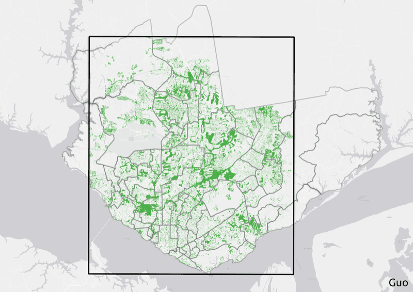
Using Landsat satellite images from 2018 to 2020, the scientists also calculated average surface temperature across the city. While average income showed little correlation with environmental variables, the data indicate a trend: higher-income neighborhoods tend to have higher temperatures and smaller populations. This pattern was also confirmed through the Municipal Human Development Index (IDHM), based on data from Atlas Brasil (UNDP), which breaks the city down into regions—the smallest scale available for this indicator.
Wealthy neighborhoods like Adrianópolis, Parque 10 de Novembro, Vieiralves, Aleixo, and Nossa Senhora das Graças, where the average monthly income ranges from R$3,000 to R$4,000, also experience intense heat, with average temperatures surpassing 36°C (96.8°F). While residents in these areas have more access to mitigation tools such as air conditioning, they are still not exempt from the impacts.

According to the data on tree counts by neighborhood, the areas with the highest estimated number of trees are São Jorge (45.57%), Chapada (40.31%), and Santa Etelvina (32.99%). These neighborhoods have a tree canopy significantly larger than most of the city, though that doesn’t necessarily mean equal access to green spaces for all residents.
The neighborhoods with the lowest number of trees are Vila Buriti (6.66%), in the South Zone, Tarumã (8.63%), in the West Zone, and Coroado (8.13%), in the East Zone.
In general, the distribution of vegetation and heat across the city is not strongly correlated with socioeconomic indicators, according to the researchers. This suggests that factors like land use and urban planning decisions may have a greater impact on tree coverage and local microclimates.
Some peripheral neighborhoods – like Tarumã-Açu, Puraquequara, Distrito Industrial II, Lago Azul, and Colônia Antônio Aleixo – though officially considered urban, were underrepresented in the mapping due to their low degree of land impermeabilization. In these areas, native vegetation still survives, reinforcing a pattern seen in many Amazonian cities.
Unlike cities in southeastern Brazil or in the Global North – where wealthier areas usually have more green space and poorer areas are deprived of it – in Manaus, low-income communities often live near forest fragments and water bodies such as streams, because they have been pushed to urban peripheries, where some forest still remains.

As biologist Weslley Cunha, a UFAM researcher, points out, there is also informal use of these forest fragments by vulnerable populations: “I’ve seen hunting spots inside the UFAM forest fragment, a makeshift home in the Sumaúma State Park, and a person clearly in a vulnerable state who had taken over space in the Sauim Castanheiras Refuge.” According to him, these areas serve as shelter, recreation, and survival zones, which further complicates the relationship between urban inequality and conservation.
Tight Budgets and Timid Programs
At Heliodoro Balbi Square, another traditional public space located at the intersection of Floriano Peixoto and Getúlio Vargas avenues, large trees like a century-old mulateiro still survive, providing shade in some areas. However, the lack of maintenance is evident. The iconic mulateiro, for example, has shown dry limbs for years, exposed and decaying roots, and termite infestations all over its trunk.
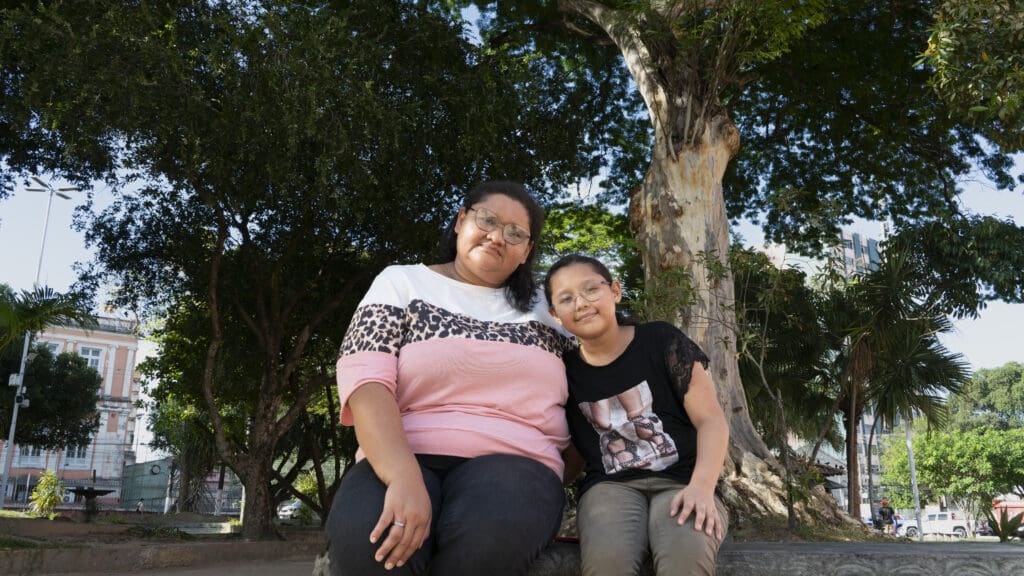
Leidiane Cordeiro, 42, lives in Tarumã, in the West Side of Manaus. “In my neighborhood, I still see a lot of trees, and the climate is more pleasant. But when I come downtown or to older neighborhoods with lots of buildings, there’s barely any vegetation,” she says.
Leidiane was looking for a shaded, breezy spot to rest with her 9-year-old daughter. According to her, the heat in Manaus is becoming unbearable: “The heat is overwhelming. You leave here and already feel the suffocation in other areas. The city is just too hot. And experts say it’s going to get worse. More drought, more smoke. We’re already feeling it. Imagine future generations?”
To her, the trees that still exist in central areas are mostly decorative, planted without ecological planning. “We know trees are our lungs. They breathe, do photosynthesis. But wherever I go, I see trees cut down, destroyed to make room for construction,” she says.
In February 2025, Amazônia Real filed a Freedom of Information Act (LAI) request for details on the City of Manaus’s investments in urban greening and the creation and maintenance of parks and public squares between 2010 and 2025.
In an official response dated March 21, Itamar de Oliveira Mar, Director of Administration and Finance at Semmasclima (the city’s Department of Environment, Sustainability, and Climate Change), stated that there is no specific budget line for urban greening or landscaping in parks and public squares. According to the department, resources are applied “as needed by the agency,” with no fixed budget projections for these purposes.
Regarding specific projects to expand urban greening, the department stated that the same procedure applies – that is, there are no detailed budget allocations or dedicated funding programs. A list of contracts for pruning, maintenance, and landscaping services was attached to the response, but no detailed information was provided about funding cuts. Semmasclima said any reductions follow general guidelines from city hall, as determined by the Municipal Finance Department (SEMEF).
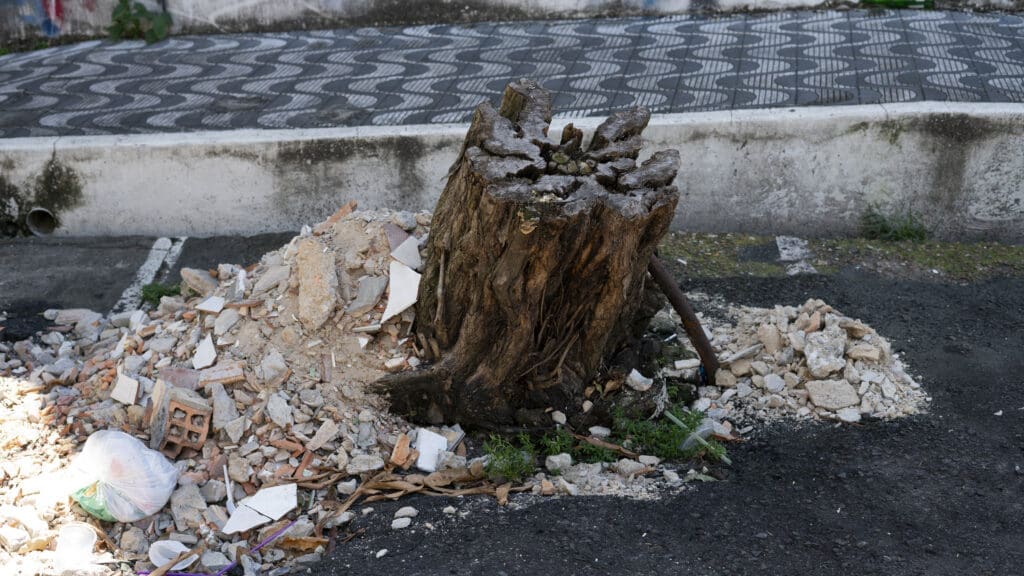
When asked about strategic plans to stop vegetation loss and combat rising temperatures, the department replied that such actions are part of its annual planning, which “has always prioritized urban greening actions,” but offered no concrete goals, deadlines, indicators, or measurable outcomes.
Between 2010 and 2025, total investment in “Urban Landscaping and Greening Implementation” reached approximately R$25 million in nominal values. Adjusted for inflation, this is equivalent to about R$60.2 million in 2025 currency, according to documents provided by Semmasclima and analyzed by the report. However, funding levels fluctuated sharply over the years: for example, in 2017, just R$4,000 was spent – equivalent to R$6,000 today. In contrast, 2021 saw investments exceeding R$2 million, which would be around R$3.8 million today.
In 2023 and 2024, about R$19 million were allocated for urban greening and landscaping. But Semmasclima did not clarify whether these funds were fully used for these purposes.

In 2023, around 53 trees from eight different species, including pink trumpet trees and royal palms, were cut down to build a pedestrian overpass and widen Avenida Efigênio Sales, in the Central-South Zone. The Amazonas State Environmental Protection Institute (IPAAM) authorized the Municipal Infrastructure Department (Seminf) to remove the trees, which were located near the Portal Asa Branca Ecological Corridor, a Special Control Zone (ZCE) created to protect the white-winged parakeet from road accidents.
Just one day after these trees were felled, the City of Manaus launched its Tree Planting and Forest Conservation Program, Manaus Verde. At the time, the city announced a goal to plant 20,000 saplings in the capital and invest around half a billion reais in cleaning up the city’s polluted igarapés (urban streams). Mayor David Almeida also announced the creation of a Municipal Climate Change Commission, which would be responsible for drafting Manaus’s Climate Action Plan – a plan that has yet to be delivered. The mayor himself was to chair the commission, which would include representatives from 15 city departments.
Since 2023, Semmas has been building a new headquarters inside the Ponte dos Bilhares Municipal Park, an urban park located along the Igarapé do Mindu, between Constantino Nery and Djalma Batista avenues. The construction sparked public concern among residents and park goers, who feared more trees would be cut down before the project was complete. To build the new Semmas headquarters, several trees had to be relocated within the park itself. According to the city government, no vegetation was lost in the process.
In April 2025, the City of Manaus announced the acquisition of new equipment to speed up tree planting, including a garden auger, concrete and asphalt cutter, and demolition hammer: “These tools will allow for greater speed and efficiency in preparing soil – even in areas with hardened asphalt and concrete layers, such as Avenida Constantino Nery, where more than 40 centimeters of obstacles had to be broken through to plant hundreds of saplings,” the city announced.
Biodiversity Under Siege
The pied tamarin (Saguinus bicolor) is a small monkey with striking fur: a white band stretches from its chest to its neck, forming the “collar” that gives the species its name.
These tiny primates live in groups of 2 to 13 individuals, feeding on fruits, flowers, nectar, insects, and occasionally bird eggs. At night, they often nest among the leaves of large palm trees, which provide natural shelter to raise their offspring – usually born in pairs after a gestation of just over five months.
Today, the pied tamarin’s range has shrunk to just 7,500 km² (2,900 mi²) in the municipalities of Manaus, Rio Preto da Eva, and Itacoatiara. Urban expansion in Manaus has reduced their habitat, leading to an 80% population decline since 1997. It is now considered one of the most endangered mammals in the Amazon biome, and is listed as Critically Endangered on the IUCN Red List of Threatened Species. It has also been included on the list of the 25 Most Endangered Primates, curated by over 100 scientists and conservationists since 2000.
The pied tamarin is a strictly forest-dependent species. While it can survive in disturbed forests, it still requires forest. “It’s no use having artificial vegetation with few species or vegetation that doesn’t suit the species,” says biologist Marcelo Gordo, a professor at UFAM and coordinator of the Projeto Sauim-de-Coleira (Pied Tamarin Project), which has been monitoring the species for decades.
According to him, these tamarins have two main types of movement: daily travel within their home range, searching for food and shelter, and dispersal, when individuals leave their groups in search of new territories.
“When they’re near homes with yards and gardens, they might use backyard vegetation to find food. Sometimes they grab a mango, eat a banana someone planted – whatever fruit they can find.”
But as the city expands and remaining forest fragments become more isolated, these movements grow more dangerous. The monkeys cross streets and avenues, following green patches in backyards or permanent preservation areas (APPs) – even if the vegetation is sparse – in an attempt to connect their routes. This exposes them to violence, traffic, electrocution, and attacks by domestic dogs.
Urban tree planting could function as a green bridge for these animals. “If we have good vegetation on streets, avenues, parks, squares, and yards… these places become connection points. If not continuous corridors, then at least stepping stones,” says Gordo. He advocates for ecological urban planning that includes fruiting and flowering trees in public spaces – not just for the pied tamarin, but for bats, birds, and rodents like agoutis as well.
Despite their partial adaptation to urban environments, the biologist warns of invisible losses: “We’re losing animals, we’re losing groups. Where there used to be 100-hectare forest fragments, now it’s 10. I’m certain we’ve lost several groups.”
Estimates suggest there are only about 1,000 pied tamarins left in the urban area of Manaus. In June 2024, a Wildlife Refuge (Revis) was created in Itacoatiara, spanning 15,000 hectares, to protect the tamarin’s remaining habitat. This category of protected area does not restrict private ownership within its boundaries, in accordance with Brazil’s National System of Conservation Units (SNUC).
Gordo proposes urgent reforms in urban policy, with stricter rules for green area conservation and converting forest fragments into official parks to avoid continued temperature rise in the city. “We’re turning Manaus into an oven. If we had more native forest groves, we’d have a more pleasant microclimate. But that requires planning and political will,” he concluded.
Between dry streets and abandoned squares, it’s clear that the lack of greenery is not just environmental – it’s social, historical, and systemic. If Manaus continues to ignore its roots, it risks ceasing to be a city of the forest, becoming nothing more than concrete under a smoky sky.

This story is the result of a collaboration between Latin American journalists and scientists, fostered by Instituto Serrapilheira of Brazil and the Latin American Center for Investigative Journalism (CLIP), exploring together how damage to the Amazon’s biodiversity disrupts the various environmental services it provides to the continent.


