

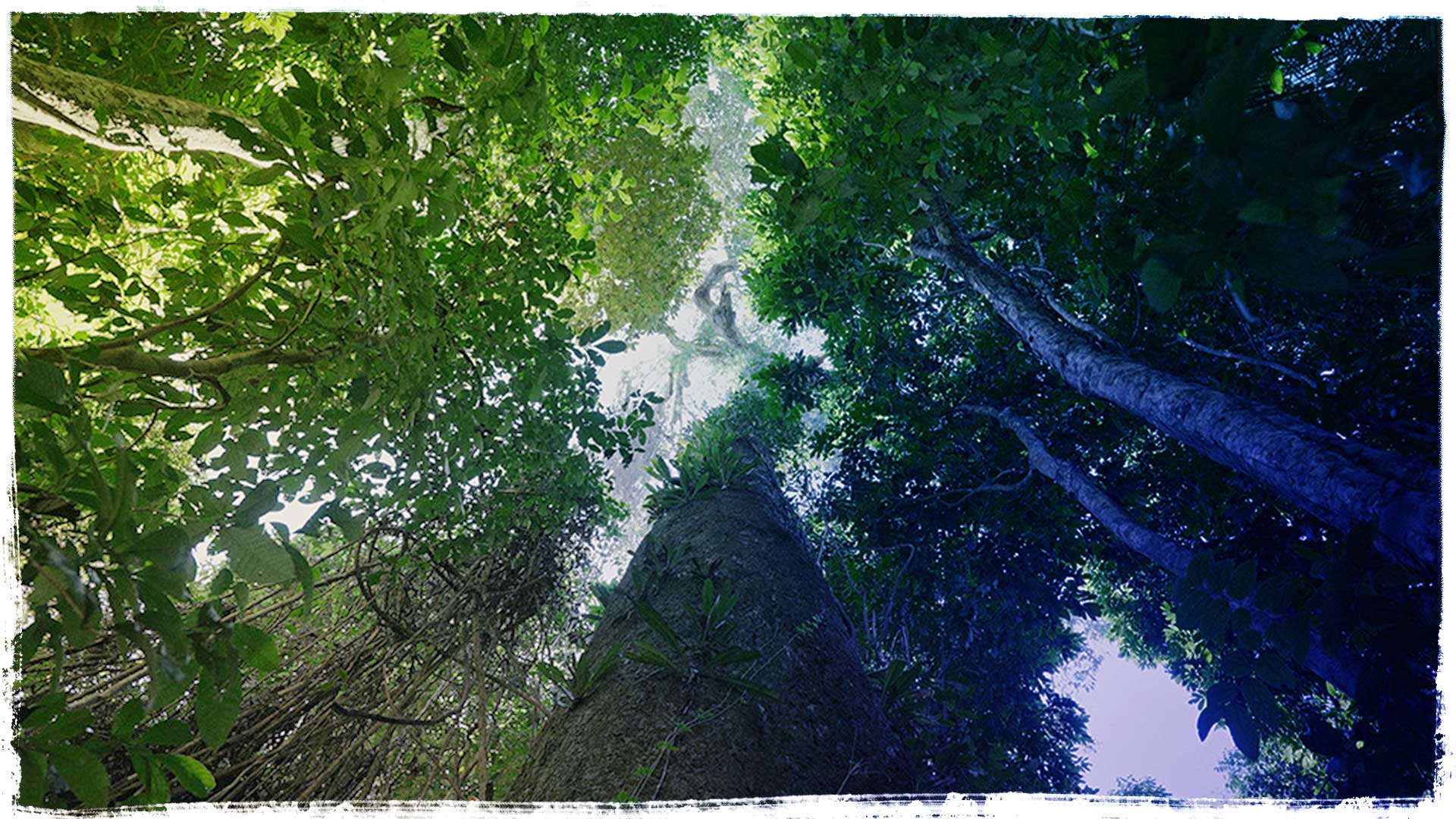
The search for this strategic mineral — vital to the tech industry — is driving a surge in prospecting across Brazil’s Legal Amazon. Of the 53 active mining applications, 29 lie within ten kilometers of Indigenous territories, conservation units, or agrarian reform settlements.
By Isabel Harari (Repórter Brasil)
The lithium rush in Brazil is moving into the country’s Legal Amazon — a region that shelters the largest number of traditional communities and the most extensive tracts of preserved tropical rainforest. Applications to explore this mineral, prized by the tech industry, have soared over the past four years, posing risks to at least 21 protected areas, including Indigenous territories, conservation units, and agrarian reform settlements.
According to the U.S. Geological Survey, Brazil ranks tenth in the world for lithium resources, with an estimated 1.3 million metric tons. Of that total, about 390,000 tons in reserves are currently considered economically viable to extract with existing technologies. But experts warn these numbers are likely underestimated, since much of Brazil’s subsoil remains unmapped.
At the moment, 53 exploration requests have been filed across the Amazon region — and 48 of them, or 90 percent, were submitted after 2022, according to data compiled by Repórter Brasil from the public databases at the National Mining Agency (ANM). Specialists interviewed caution that uncontrolled lithium extraction could deepen socio-environmental conflicts across the rainforest.
Lithium is seen as a strategic mineral for the global energy transition. It’s used to manufacture batteries for electric vehicles and to store electricity from solar panels and wind turbines — two of the planet’s biggest sources of greenhouse gas emissions. That dual role has triggered a boom in demand: since 1943, Brazil has registered about 4,400 lithium mining applications, 3,900 of them since 2022 alone, according to the database.
One of the key concerns is proximity to protected lands. Of the 53 active applications in the Legal Amazon, more than half — 29 — overlap with or are located less than ten kilometers away from 21 protected areas: five Indigenous territories, eight conservation units, and eight agrarian reform settlements.
Eighteen of those 29 already have ANM authorization for exploration, a stage that allows fieldwork and can carry immediate environmental and social impacts. Often, companies begin prospecting without ever consulting the local communities they may affect.
These findings come from an investigation by Repórter Brasil, supported by the Pulitzer Center’s Rainforest Investigations Network. The report is part of Lithium in Conflict, a collaborative project led by the Latin American Center for Investigative Journalism (CLIP), which brought together ten media outlets to examine the disputes surrounding Latin America’s growing lithium industry.

The Lithium Paradox
Mining lithium may worsen the very environmental crisis the mineral is supposed to help solve.
“There’s a violent scramble for strategic resources in the Amazon — lithium, nickel, and rare earth elements among them,” says sociologist and geographer Elaine Santos, a postdoctoral researcher at the Institute for Advanced Studies of the University of São Paulo. “Expanding mining in that region will inevitably intensify conflicts,” she warns.
“The surge in demand for this one mineral is troubling,” adds Pedro Igor Galvão Gomes, a master’s student in environmental sciences at the Federal University of Tocantins and a fellow at the Rights Lab at the University of Nottingham in the UK. “Lithium is essential to the energy transition, but its expansion is happening without any real assessment of social and environmental costs.”
Brazilian environmental law doesn’t forbid mining within ten kilometers of Indigenous territories, but it does consider that lands are affected within that distance. That means companies must conduct impact studies and hold prior, free, and informed consultations, as required by Convention 169 of the International Labour Organization (ILO), which Brazil has ratified.
“Devastation doesn’t stop at the border of Indigenous land — it spreads inward, even if the company is ten kilometers away,” says Alcebias Sapará, coordinator at the Coordination of Indigenous Organizations of the Brazilian Amazon (Coiab).
Conservation units — the country’s protected environmental areas — also have buffer zones that require specific studies before any mining can proceed. And for agrarian reform settlements, the National Institute for Colonization and Agrarian Reform (Incra) must establish compensatory measures to offset impacts on rural communities.

The recent surge in lithium exploration requests fits what U.S. researcher Thea Riofrancos calls “expanding extractive frontiers” in her new book, Extraction: The Frontiers of Green Capitalism, which traces the global lithium boom. “If deforestation of tropical forests is the number two cause of climate change after fossil fuel combustion, and we’re deforesting to build a mine, then lithium extraction could end up contributing to the climate change we say the lithium batteries are solving,” she said in an interview with the reporting alliance.
Across Brazil, the rapid advance of critical mineral extraction is already affecting 45 Indigenous groups in voluntary isolation, Repórter Brasil revealed last week.
Some of the lithium exploration sites are located in states where no confirmed lithium deposits have even been recorded — such as Roraima, Amazonas, and Pará.
“Not everyone who requests an exploration permit actually plans to mine,” explains Santos. “This opens the door to trading exploration rights and to speculative activity.”

Damage in the Jequitinhonha Valley
In Brazil, lithium is found in volcanic rock formations known as pegmatites — a geological context different from neighboring countries like Argentina, Bolivia, and Chile, where it’s extracted from brine pools high in the Andes.
The main production hub is in Minas Gerais, particularly the Jequitinhonha Valley, which the state government has rebranded as the “Valley of Lithium.” Yet the environmental and social problems triggered by mining there have increasingly alarmed residents and experts. The mineral boom has reshaped the landscape and disrupted the lives of Indigenous peoples, quilombola (Afro-descendant) communities, and other traditional populations.
“Everything has changed. The river has vanished; the water is contaminated,” says one Indigenous resident, who asked not to be named for security reasons.
“Our territory has become a sacrifice zone in the name of so-called energy transition,” laments historian Lauanda Lopes, from the Federal University of Minas Gerais (UFMG). Since 2024, she has been part of Liquit, an interdisciplinary group studying the impacts of lithium mining in the Jequitinhonha Valley.
Among the most severe consequences: water shortages, river pollution, dust and respiratory illnesses, and structural cracks in homes caused by mining-related tremors.
“The current lithium exploitation model in the Jequitinhonha Valley perpetuates a historic cycle of social exclusion, environmental degradation, and denial of traditional populations’ rights,” concludes a report by the Federal Public Prosecutor’s Office in Minas Gerais, obtained by Repórter Brasil.
“If the Amazon follows the same path as Jequitinhonha, we’ll soon face water scarcity, more conflicts, and disregard for the rights of local communities,” warns Lopes.
Atlas acknowledges the potential risks of mining Llithium in the Amazon
At least two companies currently operating in the Jequitinhonha Valley — Atlas and M4E — are now seeking to expand their lithium ventures into the Amazon.
Atlas Lítio Brasil, a subsidiary of the U.S.-based Atlas Lithium Corporation, counts the Japanese conglomerate Mitsui & Co. Ltd., one of the world’s largest investment groups, among its main shareholders. Another shareholder and board member is Roger Noriega, former U.S. ambassador to the Organization of American States and ex–Assistant Secretary of State under President George W. Bush.
Atlas has operated in Minas Gerais since 2018 and claims control over 797 square kilometers in lithium mining rights — one of the largest exploration areas in Brazil. Extraction has not yet begun, but several projects in the Jequitinhonha region are already in advanced stages of environmental licensing.
In the Amazon, the company submitted three exploration requests in 2024, targeting areas in southern Tocantins. The ANM is still reviewing the applications, which Repórter Brasil found are not located near protected areas. Even so, Atlas acknowledges the potential risks of operating in the region.
In its latest corporate report, the company notes that Brazil’s environmental policies — particularly those concerning Amazon protection — are “continuously scrutinized by the global media.” It warns that “if Brazil’s political environment, regulations or policies are, or are perceived to be, inadequate, unfavorable or hostile by foreign customers or investors, we may lose the interest of investor groups or potential buyers of our minerals, which will have a negative impact on us.”
Atlas also acknowledges in its financial statements that local communities and non-governmental organizations could slow down its business plans — something already unfolding in northern Minas Gerais.

On August 28, Brazil’s Federal Court suspended the environmental license for one of Atlas’s projects in Araçuaí (Minas Gerais), ruling that the company had failed to consult with the quilombola communities directly affected by the operation.
The judge stated that granting the license would “consolidate a violation of the right to prior consultation,” as established under the ILO Convention 169. The proposed project site lies just 5.5 kilometers from a quilombola settlement.
Back in April, the Federal Prosecutor’s Office had already warned of potential rights violations in the Araçuaí region and recommended canceling a planned public hearing between the company and local residents. The agency’s report highlighted the risk of “severe restrictions on water availability and access for the regional population.”

Atlas has yet to begin commercial extraction in Brazil but has already signed a supply agreement with Sichuan Yahua Industrial Group, part of China’s Yahua Group, one of the country’s oldest chemical conglomerates, according to a report submitted to the SEC, the body that regulates the US capital market.
The Chinese group manufactures civil explosives and operates across the global lithium supply chain — from extraction to processing. Yahua presents itself as a key player in “clean energy” and supplies automakers such as Tesla, BYD, and CATL, the world’s largest battery manufacturer.
Atlas did not respond to Repórter Brasil’s questions before publication. The company’s right to reply remains open.
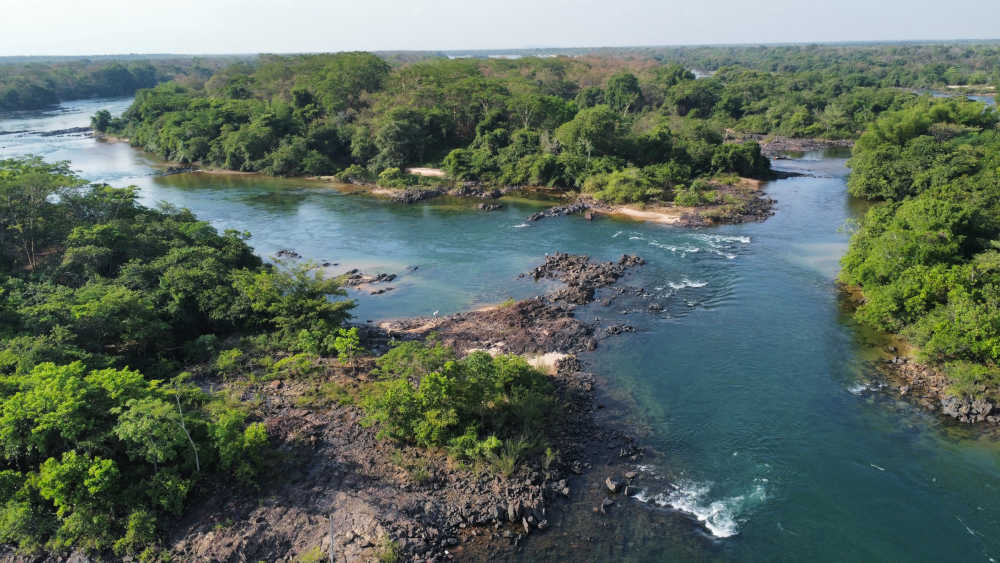
The most affected territory in the Amazon is now tTargeted by mining company M4E
Southern Tocantins has become the most sought-after area for lithium exploration within Brazil’s Legal Amazon, according to Repórter Brasil’s analysis, with 39 of the 53 active mining applications across the biome concentrated there.
This region also contains the Amazon’s most impacted environmental protection area: the Lago de Peixe/Angical Environmental Protection Area (APA), which stretches across the municipalities of Paranã, Peixe, and São Salvador do Tocantins.
Created in 2007 as compensation for a hydroelectric dam on the Tocantins River, the APA harbors a mosaic of ecosystems — from riparian forests to veredas (wetlands lined with buriti or Mauritia palms). It shelters native fauna and flora of the Cerrado biome, including endangered or vulnerable fish species such as the pacu-dente-seco, aracu-boca-pra-cima, and several types of catfish.
Traditional communities and smallholder farmers share this conservation zone with energy and agribusiness companies — and now face the encroachment of mining interests.
The APA is surrounded by 12 lithium exploration requests located within 10 kilometers of its boundaries, according to the data analysis carried out for this investigation. Five of them were filed in 2023 by the Brazilian firm M4E Lithium Ltda, covering a combined area of 9,400 hectares, all already authorized by the National Mining Agency (ANM).
On its website, M4E promotes Brazil as a favorable environment for lithium mining and asserts that the government — “whether from left- or right-wing parties” — supports the activity. The company also echoes Tesla founder Elon Musk’s famous line: “lithium is the new oil.”
The prospect of opening the Lago de Peixe APA to lithium mining alarms researchers working in the area. “It’s deeply concerning,” says Alice Ferreira Araújo, a biologist from the Federal University of Tocantins who has spent 15 years studying fisheries and socio-environmental impacts in the region.
Araújo notes that the APA is already under immense pressure: “Agriculture and cattle ranching, hydroelectric plants, climate change, massive deforestation — and now mining. When you consider conservation, mining here is almost unthinkable. If this continues, it’ll be yet another area lost.”
She also worries about aquatic life, since mining can contaminate rivers through leaching, a process in which water dissolves minerals and chemicals in the soil and carries them into waterways. “That contamination affects the entire food chain and disrupts the reproduction of migratory fish species,” she explains.
Beyond southern Tocantins and the Jequitinhonha Valley in Minas Gerais, M4E has submitted lithium exploration requests in five other states — Bahia, Ceará, Paraíba, Pernambuco, and Rio Grande do Norte — totaling 64 applications filed between 2021 and 2024, according to the ANM database.
Even without having started commercial extraction, M4E is already attracting foreign investment. In March 2024, the company received backing from the Canadian Lithium Royalty Corp (LRC), a firm active across the global electric-vehicle battery supply chain with operations in the United States, Argentina, Australia, and Brazil.
LRC, for its part, declined to comment on the case.
This investigation was supported by the Pulitzer Center’s Rainforest Investigations Network (RIN).
Lithium in Conflict is a project led by the Latin American Center for Investigative Journalism (CLIP) in partnership with Consenso (Paraguay), La Región (Bolivia), Quinto Elemento Lab (Mexico), Repórter Brasil (Brazil), Ruido (Argentina), Climate Tracker Latam, Dialogue Earth, Mongabay Latam, and Columbia Journalism Investigations (CJI), on how the lithium industry is operating in Latin America. With the support of the legal team El Veinte.


