
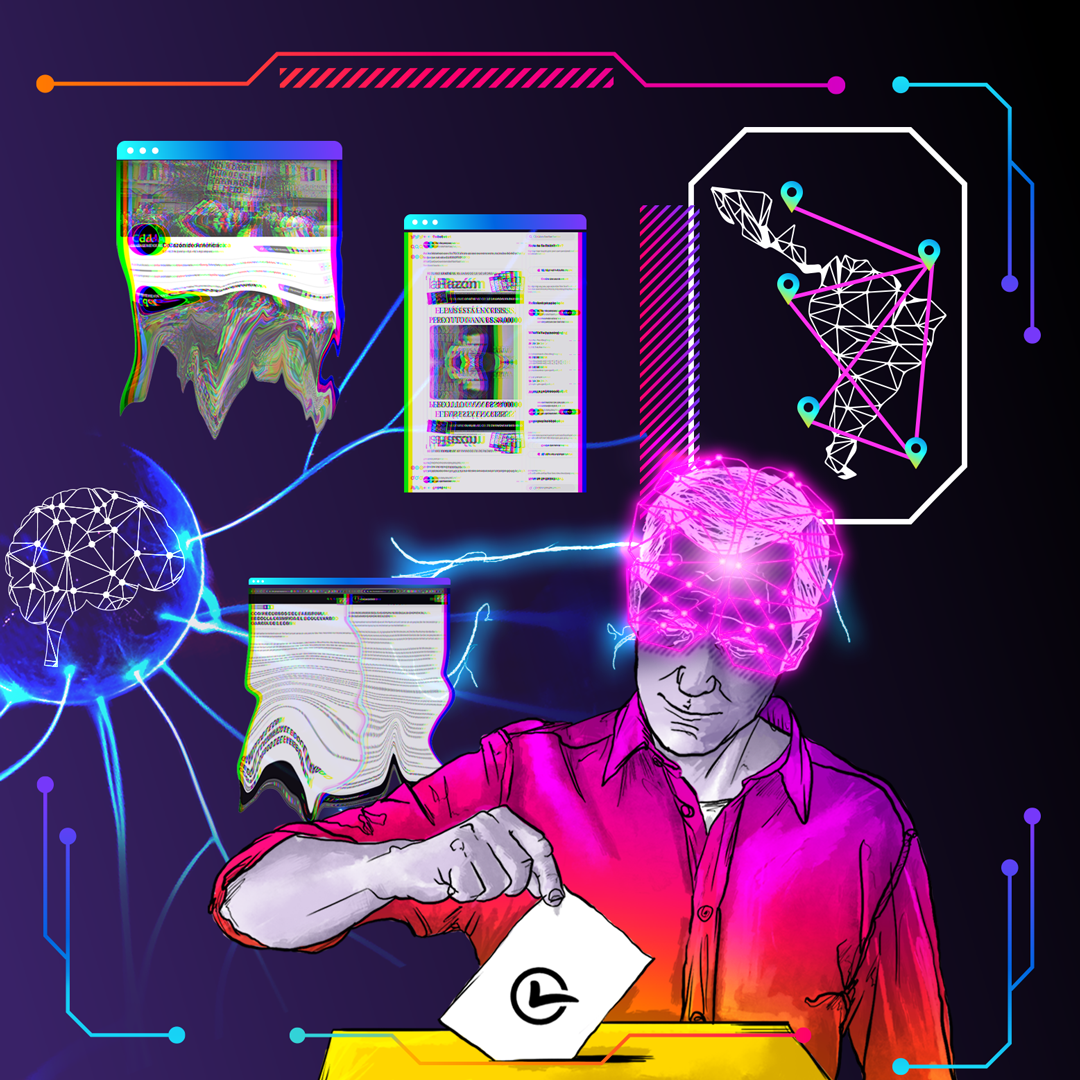
The consulting firm Neurona and its founder, the Mexican César Hernández, created and fed a network of at least 116 domains in various countries, 31 of which were media outlets that acted in an inauthentic way. With them, Hernández and the firm inflated the achievements of various governments and leftist parties that hired them. Although investigated in Spain, Ecuador, and Bolivia for alleged electoral and financial crimes, little is known about their practices aimed at manipulating hundreds of thousands of Internet users. This cross-border investigation unveils them and shows how they are still alive and busy promoting presidential candidate Adán Augusto López in Mexico and other political figures of Morena.
“We are not a consulting firm, we are a collective that wins elections”. This is the slogan on Neurona’s Vimeo profile, one of the favorite strategists of some of the political titans of the so-called new Latin American left of the last decade. Hundreds of ads promoting candidates and parties of the region still live in this account and are among the few traces left by Neurona on the internet. The rest of its profiles, including its website, have vanished. We also found digital traces of the web of propaganda portals and fake accounts that the firm used to strategically position governments and politicians at least since 2015.
After being involved in judicial investigations in Bolivia, Spain, and Ecuador for alleged irregularities in contracting and diversion of public funds, Neurona decreased its activity almost completely. “Now we are Plan B,” was the reply given to a journalist last May by Neurona’s founder and director, César Hernández Paredes, three years after it ended its public activity. This investigation by Animal Político and Mexicanos Contra la Corrupción y la Impunidad (MCCI) of Mexico, Efe Verifica of Latin America, Cazadores de Fake News of Venezuela, GK of Ecuador and independent journalists in Bolivia found evidence suggesting that Hernández and his associates are still involved in political consulting.
This story, which unravels the modus operandi of this propaganda factory, is part of the cross-border journalistic collaboration Digital Mercenaries, involving 20 media outlets in the region, five organizations specializing in digital investigations and the support of a class of master’s students at Columbia University, coordinated by the Latin American Center for Investigative Journalism (CLIP).
Since the race to represent Morena in the 2024 electoral process began, this alliance verified that the Facebook page of Pulso Ciudadano paid a sum equivalent to about US$20,000 for advertising content in favor of Adán Augusto López, former Secretary of the Interior and one of the Morenista presidential candidates. The outlet has more than 200,000 followers and shares an IP address with a website created by Hernández in the description of which there is a link to a portal registered by Gustavo Aguado Butanda, consultant of Neurona and director of Revolución 3. 0. Hernández, in turn, is promoting the campaign on his personal networks.
Hernández’s support for Morena is not random. The consultant’s flagship media outlet is the portal Revolución 3.0, founded in 2012 with the support of people in the circle closest to President Andrés Manuel López Obrador. The platform disseminates content favorable to Morena and the current government.
An open-source analysis shows that Revolución 3.0 coordinates a dozen websites that present themselves as news sites and disseminate content in favor of the Morenista government of Michoacán, Mexico. This system of interlinked portals copies Neurona’s previously unknown modus operandi: creating multiple domains and using some of them as news media. We were able to establish that, between 2016 and 2019, the consulting firm set up a network of at least 116 websites in different countries, some created within minutes of each other, and that 31 of these outlets acted in an inauthentic way.
By this we mean that most of these outlets were acting as empty shells, activating in times close to elections, with little production of their own. They tended to copy content from other media, selecting the material that best suited them, with the aim of favoring the political clients of Hernández’s consulting firms in Latin America. They had no visible management structure, yet our technical analysis reveals that they were registered by the same people. Despite this forensic evidence, they were presented as media acting independently and unrelatedly.
According to documents accessed by this alliance, at least since 2020, Meta has made multiple disclosures about coordinated political communication actions on its platform, and one of the most prominent techniques in what Meta calls “coordinated inauthentic operations” has been the use of media networks that appear to be journalistic or masquerade as such, to push propaganda or disinformation.
Just to give an example, Meta detected that Estraterra, a Canadian public relations company, used a network of fake accounts to “manage pages posing as independent news media”, which was activated in periods close to elections and then stopped its activity. The company verified that, although the people coordinating this network tried to hide both their identity and the interrelationship between pages, links were found to political consultants and former Estraterra employees and political officials.
Back to Neurona: the firm created content disseminated by fake accounts (which did not belong to real people) that simultaneously sponsored candidates from different countries. Such is the case of the seemingly Venezuelan Twitter accounts that, in 2017, while advocating for Maduro’s government, published information with misleading content against Ecuador’s then presidential candidate, Guillermo Lasso.
Neurona carried out these practices while working with more than 200 electoral campaigns, according to a company balance dossier, although it does not specify which ones. After almost nine years working with different governments and leftist parties, the consulting firm was involved in judicial investigations on alleged irregularities in contracting and diversion of public funds. In Bolivia, in 2021, the case that was investigating the direct awarding of millionaire contracts to Neurona during the last government of Evo Morales was dismissed. Now, in Spain and Ecuador, justice is trying to clarify whether there were anomalies in the contracts signed by Neurona with the political organizations Podemos and Unión por la Esperanza (UNES), of both countries respectively.
César Hernández’s networks of success
For the vast majority, César Hernández was unknown until his name began to make headlines due to his legal entanglements. The founder of Neurona and Revolución 3.0 was well known among political leaders of the left. Since 2012, the Mexican worked for presidents such as Andres Lopez Obrador in Mexico, Nicolas Maduro in Venezuela, Rafael Correa in Ecuador and Evo Morales in Bolivia, according to videos posted on their profiles and contracts to which this alliance had access.
Although Hernández entered the world of communications when he was just 11 years old, with his own column in the local newspaper El Sol de Morelia, in the Mexican state of Michoacán, he soon stopped working for the media and began creating his own outlets. He first joined the audiovisual mega-production company Argos Comunicaciones, which was owned by businessman Epigmenio Ibarra until last june, who is very close to President López Obrador. There he managed to consolidate his two major projects simultaneously: the consulting firm Neurona and the digital portal Revolución 3.0.
Although Revolución was born as a medium to be run by young activists, as Hernandez himself said in an interview he gave in 2016 to students of the Vasco de Quiroga University (Morelia, Michoacan), since its inception the list of names that make up its ranks are from Lopez Obrador’s circle and close to Morena. According to Hernández, among its promoters is Epigmenio Ibarra himself, who has the trust of the President. Also part of this group was Carlos Payán, the late founder of the newspaper La Jornada, and Jenaro Villamil, current president of the Public Broadcasting System of the Mexican State.
With the Wayback Machine portal, which collects historical versions of websites, we were able to verify that at least from November 2016 to June 2019, both Ibarra and Payán were on the advisory board of Revolución 3.0 as director and president, respectively. However, the files allow us to see that by mid-2020, when Neurona was being investigated by the justice system, the board of directors of Revolución 3.0 changed and both were replaced.

Alberto Escorcia, former employee of Argos TV, explained in an interview for this journalistic investigation that Revolución 3.0 was Hernández’s bait to land in Latin American countries and facilitate Neurona’s access to contracts with local governments. In Bolivia, Hernández opened a Revolución 3.0 branch in 2014 and Neurona produced videos Evo Morales campaign for that year’s presidential elections. After the president’s victory – the third in a row since 2006 – Neurona catapulted and managed to open doors in other countries to advise left-wing governments, according to a memoir. In Bolivia, moreover, it obtained, in the following years, eight contracts with Morales’ government, which, according to documents signed between May 2017 and August 2018, totaled 1.8 million dollars at the time.
This alliance contacted Mexico’s government, Morena party and Revolución 3.0 ex members mentioned above to know about their relationship with Hernández and Neurona, but as of the date of this publication, we have not had a reply.
??Serial media to position speeches
A Google search of the name Neurona Consulting SA offers dozens of results about its entanglements with justice. However, its corporate page was eliminated and only a few specific examples of its work remain scattered on the web. This alliance visited the addresses in Mexico that appear in several Neurona contracts to which it had access and found no evidence of active offices.
This investigation also identified a network of websites with an MO almost identical to the one used by Neurona in the past, but directed by Revolución 3.0. It consists of ten portals, eight of which present themselves as news outlets, which publish content in a coordinated manner and pay for Facebook ads to position a good image of Michoacán, Mexico and its Morena governor, Alfredo Ramírez Bedolla, as well as criticizing its former governor, Silvano Aureoles, of the Party of the Democratic Revolution (PRD).
These ten interconnected portals are not unrelated the network of sites discovered by this journalistic alliance which for years was managed by Neurona to position the Latin American lefts. A domain named larutachina.com is the nexus linking the new network to the old one.
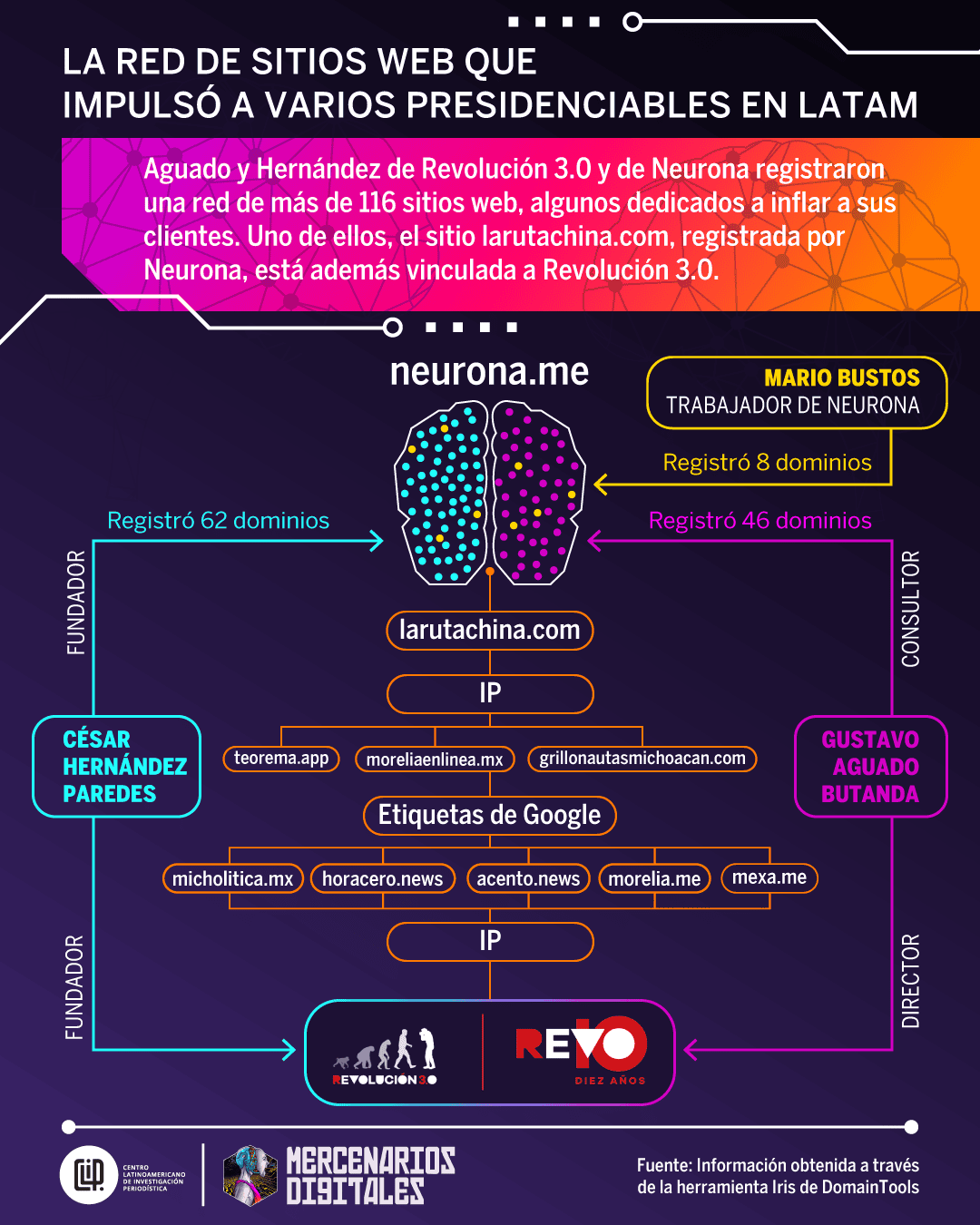
Thanks to the database of web addresses “Whois”, this alliance found up to 116 domains registered between 2016 and 2019 with the emails of Hernandez and Gustavo Aguado and, with the neurona.me email of an individual named Mario Bustos, who created portals in the name of Neurona Consulting. At least 31 of these are inauthentic media acting in a coordinated manner. The analysis reveals that some of them were created in several batches during the same day, none of them published signed articles, their articles were copied from other media and then republished among themselves.
A former Neurona employee told this journalistic team that she had recognized one of the designs she created for the consulting firm in the site “morenacrece.com”, registered by Hernández.
This apparent coordination effort aimed at amplifying a narrative, which is also present in the portals linked to Revolución 3.0, is in violation of rules of private company Meta Platforms, owner of Facebook, which prohibits “people from misrepresenting themselves on Facebook, using fake accounts or artificially boosting the popularity of content”.
We recovered some of the sites with Wayback Machine and analyzed their appearance and what publications were shared at the time they were archived. “Opinión de Oruro“, “El Economista de Bolivia“, “Mirada Transparente“, “El Horizonte de Ecuador” or “Hagámoslo Viral“, are some of the sites that integrated this network of media posing as journalistic, at least a dozen of which were active until the end of 2020. In the saved pages one can read repeated entries on the negative effects of the US blockade of Venezuela and the support of different Latin American countries for Maduro’s government.
For each portal, a Facebook profile and a Twitter profile were created, where propaganda was replicated, and advertising content was paid for. The portals linked to Revolución 3.0 tagged the ads as socio-political content, as required by Meta. However, they package the pieces with different headlines and photos to feign originality, while the contents are the same. This is the case of the sites “horacero.news” and “contrapeso.news”, which between May 24 and 26 paid ads on Facebook to advertise a story against Aureoles. Titles and photos are different, but the texts are the same.


According to Rossana Reguillo, director of Signa Lab, a digital research laboratory of the Jesuit University of Guadalajara, ITESO, the intention of companies like Neurona in employing these strategies is to generate a climate of tension. “If you watch a video from one of these channels, it becomes what in philosophy is called a monad, that is, an echo chamber. People get trapped in these dynamics or in these portals that are characterized by strident colors, words in capital letters, adjectives in bold. All this undermines the health of public debate and, of course, generates levels of hatred and distrust”, said the researcher in an interview with this journalistic team.
This alliance contacted Hernández to get his version of the facts described here and to know how many and which media outlets he and his associates had registered during his career as political advisor in Latin America, but as of the date of this publication, we have not had a reply.
An extensive catalog of deceits
For years, Hernandez engineered the expansion of his political consulting firm Neurona by deploying regional influence operations, with techniques that sought to manipulate audiences, according to Meta’s standards. This investigation put together a table to identify how many of these tactics can be attributed to Neurona. It is based on the model proposed by the Carnegie Endowment for International Peace and used by Meta since early 2023, and in other strategies from the framework proposed by the DISARM Foundation to identify and analyze online influence operations.
In total, this alliance established that the Mexican consulting firm used 23 of 60 previously identified tactics used in other influence operations in Latin America. In addition to registering dozens of websites and passing them off as journalistic media, Neurona also acquired accounts in social networks and other digital assets, promoted campaigns using specific tags and, in some cases, created accounts to replace those suspended by Twitter. This is the case of the website Puente Sur, which after having its account ElPuenteSur closed, opened a new profile, @SurPorElpuente, which was also suspended by the platform. We also documented two examples of disinformation in content positioned by the firm.
In 2017, Neurona staff managed a group of accounts that appeared to be real people on Twitter (i.e., trolls). These disseminated false content created by the firm and used prejudicial tags such as #Atracasso and #Paquetasso, announcing that then Ecuadorian opposition presidential candidate, Guillermo Lasso, would implement a “tax package” upon winning the Presidency and that the measure would increase income tax by up to 129%. Tax analyst Andres Flores Jurado told this alliance that although the income increase figure could occur were the reform to be approved, it was not proposed by Lasso, but it was a recommendation of the Ecuadorian Chamber of Commerce to all candidates. Tax lawyer Yael Ferro agreed with Flores that this proposal could not be attributed to the candidate. However, Hernandez himself shared posts that did exactly that.

While these accounts were misinformed about Lasso, they were also promoting the participation of the National Constituent Assembly (ANC) of Venezuela in the 2017 elections, with videos that were circulated through social media by members of Neurona, officials, activists of the United Socialist Party of Venezuela (PSUV), influential accounts as well as also fake accounts, or trolls.
That year, the Supreme Court’s decision to remove powers from the Venezuelan Congress provoked the largest wave of anti-government demonstrations of the decade, which left at least 105 murders in which State agents or paramilitary collaborators were involved. The findings of this alliance show that, along with messages against Lasso, these accounts posted as many as 1265 tweets, in which they also blamed the Venezuelan opposition for the deaths of protesters.

Likewise, Hernandez trained so-called “digital warriors” in Bolivia, as Bolivian press reported in 2019. According to a report issued in February 2023 by META, these cyber troops include public officials directed by the government to promote messages on social networks in their favor, disinformation, and attacks on opponents. The report entitled “Meta’s Adversarial Threat Report, Fourth Quarter 2022“, points out the existence of a mixed operation in Bolivia allegedly linked to the current government of Movimiento al Socialismo (MAS), which included the “digital warriors” and for which the company closed 1,041 Facebook accounts, 450 pages, 14 groups and 130 Instagram accounts.
According to Signa Lab’s Reguillo, the activities carried out by this media network and other Neurona tactics are dishonest and harmful to citizens because they deprive them of the right to be informed truthfully and make better decisions on election day. “They are strategies that undermine the basis of a democracy and the basis of a society. Truth and information are fundamental goods and when you alter one of these two things, democracy is the main victim,” he said.
State contract with the seal of Revolution 3.0
Although Neurona and its creator are Mexican, we have not found any direct contracts of either of them in that country. Why, being Mexican, does this company not have contracts in Mexico but in Bolivia or Spain?.
In an interview, a Mexican political strategist who preferred not to reveal his identity gave some clues. He said it is usual for the government to make contracts to communication companies from areas of difficult public access, such as Security, in order to keep them reserved.
This alliance had access to internal communications of the Secretary of National Defense (Sedena) – leaked by the hacktivist collective Guacamaya in September 2022, and found that the company Técnica Publicidad e Innovación SA de CV offered internet advertising services to Sedena in February 2020. The proposal bore the Revolución 3.0 logo.
In addition, we found in public databases that Técnica Publicidad e Innovación obtained contracts for 7.5 million Mexican pesos (about 416,000 current dollars) with three other government agencies to spread official messages. It was not possible, however, to know who the shareholders of this company are or could be related to Revolución 3.0, whose logo they used in the offer to Sedena. Técnicas de Publicidad’s representative in this proposal also presented Sedena with other offers from different companies to provide similar services.
Over the years, Revolución 3.0 has had several websites, some of which have been used by media companies to disseminate government content. This is the case of the company Desarrollos de Gestión e Innovación, which in three months signed two contracts with the government of Aguascalientes, Mexico for 2.8 million pesos (155,000 dollars) to disseminate advertising and state propaganda through the page revoluciontrespuntocero-ags.com.
In addition to a trademark and a digital media outlet, there is also a company called Revolución 3.0, registered in 2020 by Gustavo Aguado and his brother Waldemar. Years before, the Aguados and Záyin Villavicencio, who according to his personal networks maintained an affectionate relationship with Gustavo, also registered the Revolución 3.0 and Neurona trademarks before the Mexican Institute of Intellectual Property. In March 2023, the company Revolución 3.0 signed a contract for 458,000 pesos (about 30,000 dollars to date) with the Court of Administrative Justice of the state of Michoacán. The representative before this contract was Gustavo Aguado. At the beginning of June of this year, Villavicencio was named coordinator of social communication in the same state.
Multiple entanglements with justice
In the last five years, the consulting firm has been the subject of criminal proceedings in Bolivia, Spain, and Ecuador. In May 2021, the case against it in Bolivia, for corruption in contracting and political damage to the State, was dismissed for lack of evidence. It has not been charged in the other two countries either and the cases are still under preliminary investigation.
By 2019, the network of inauthentic media managed by Neurona brought its publications almost to a halt. That same year, the Spanish justice system had initiated an investigation to clarify whether a contract signed between a subsidiary of the consulting firm, Neurona Comunidad SL, and the political formation Podemos to carry out campaign work in the 2019 general elections, was allegedly simulated: that is, whether it was paid but not fulfilled.
To date, the Prosecutor’s Office of Madrid argues that the investigation of the Neurona case has not proven “the existence of a simulated contract” between Podemos and the consulting firm, while the investigating judge of the case admitted into the record that Neurona carried out part of the electoral work paid by the party. At this time only one diligence is pending, which is the preparation of a report on the costs of the work that Neurona did for Podemos in the 2019 elections. This alliance consulted the Spanish Attorney General’s Office about the status of the case, but at the date of publication it had not received an answer.
Another fact that put Mexico’s Economic and Fiscal Crimes Unit (UDEF) on alert was that Neurona Comunidad wired money in the dates close to the 2019 elections to another mercantile called Creative Advice Interactive. The latter is a Mexican company based in Jalisco, which does not carry out any activity related to political marketing. This journalistic team went to the offices of the company but found only signs of offices for rent and a building for sale with no trace of Creative Advice. We also went to the addresses in Guadalajara, Mexico that two of its partners registered in the contracts. There were people living there who had nothing to do with the company. Likewise, Mexicans Against Corruption and Impunity (MCCI) – a member of this journalistic alliance – documented that the same company was used in 2018 by the Congress of Aguascalientes to divert 8 million pesos.
In Ecuador, authorities are investigating the alleged unjustified private illicit enrichment for a contract of more than US$20 million with Consultoría Neurona, Ecuadorian subsidiary of the company, for the campaign of the former correista presidential candidate, Andrés Arauz. In relation to this contract, in 2021 the justice system reported that it was investigating up to 25 individuals and legal entities, including Juan Carlos Monedero, one of the founders of the leftist party Podemos.
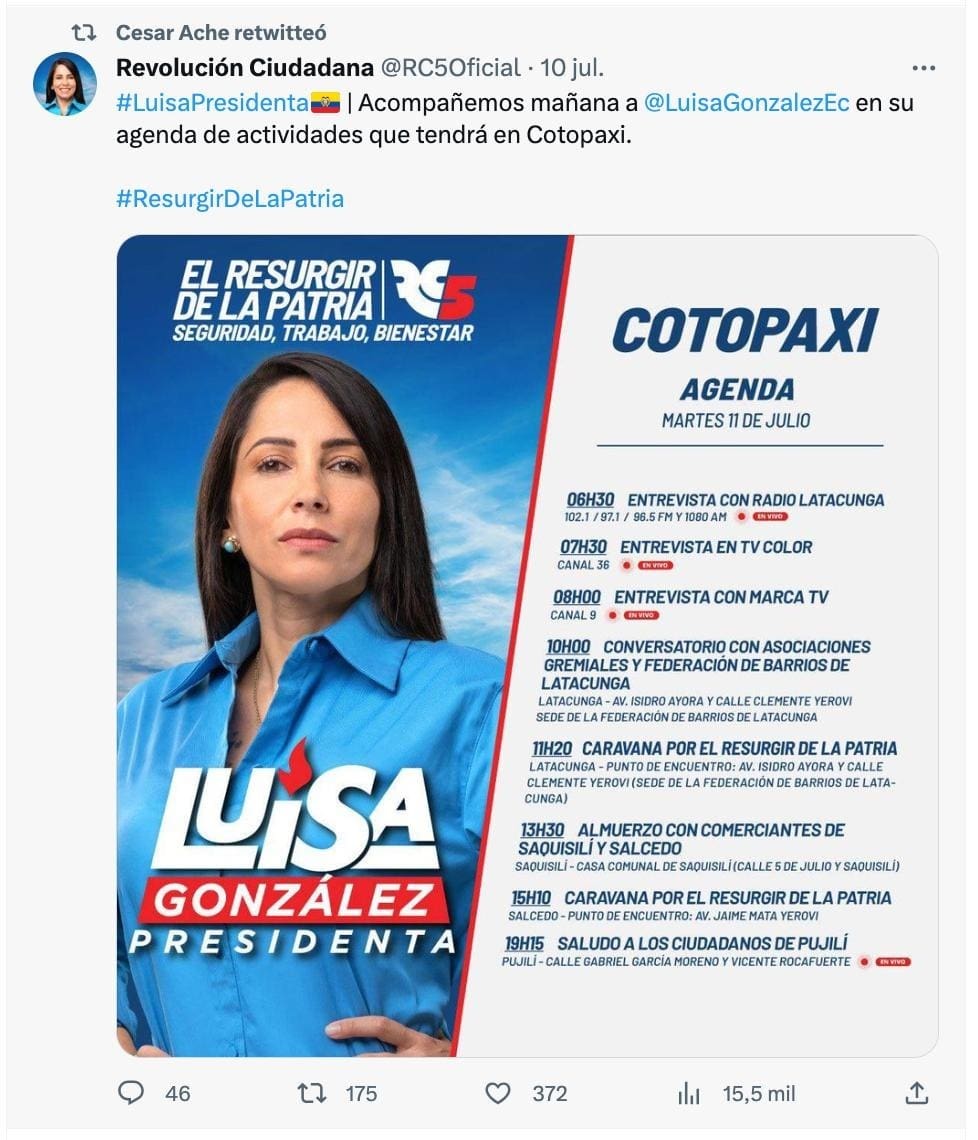
However, the Attorney General’s Office of Ecuador answered the questions our questions regarding the status of the case saying that it is in the preliminary phase of investigation and no further information can be provided. Despite facing this judicial inquiry, this team found that Hernandez continues to circulate on his Twitter account publications of third parties trying to position running mates Luisa Gonzalez and Andres Arauz, a formula that will compete in the upcoming presidential elections in Ecuador.
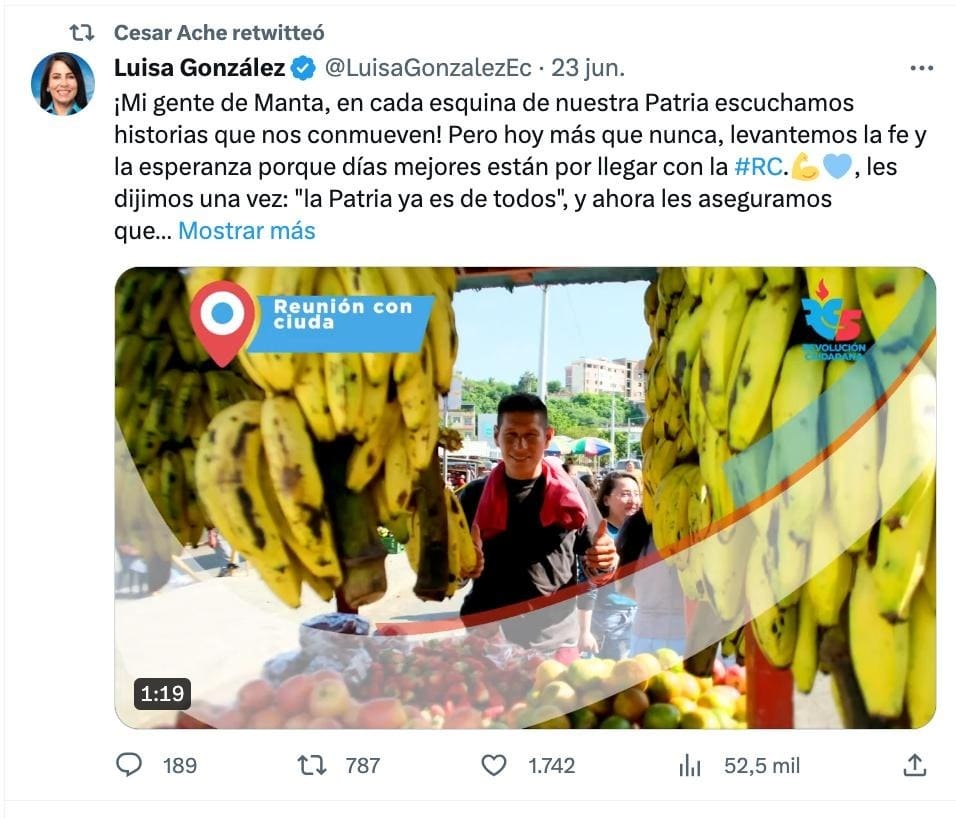
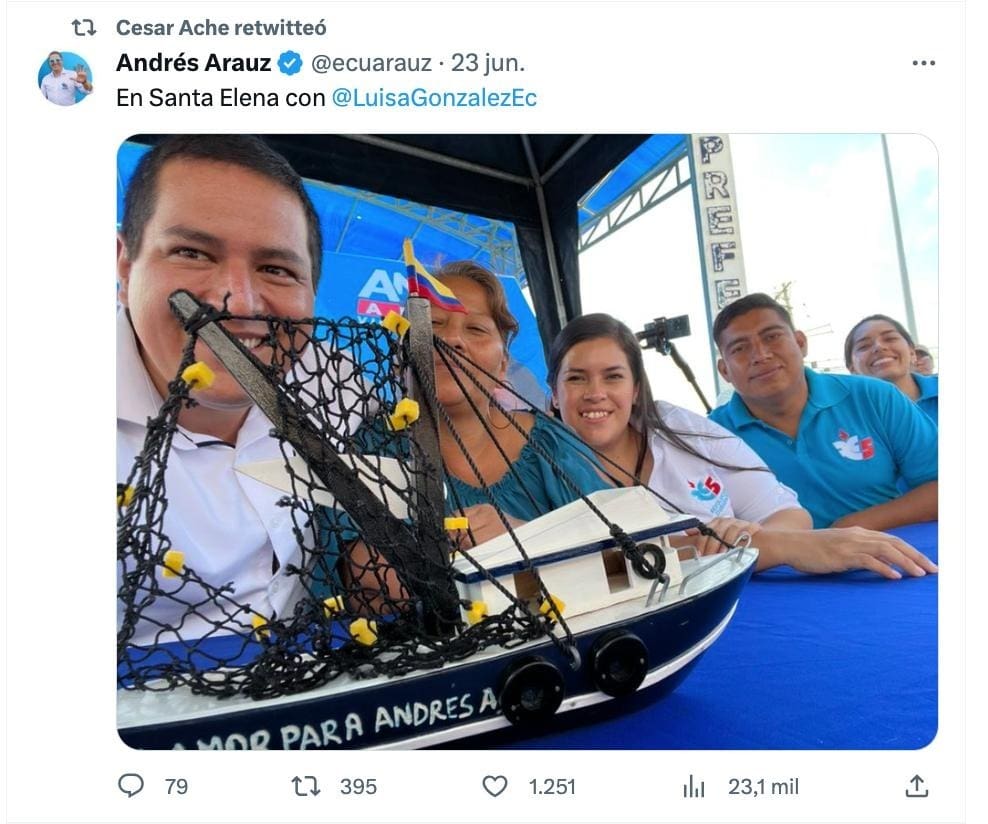
With cases pending in the courts of two countries, its network of coordinated influence practically inactive, and the offices of its associated companies closed, there are indications that Neurona is a thing of the past. As this collaborative investigation has shown, however, its twin brother, Revolucion 3.0, may be following in its footsteps today, creating inauthentic and coordinated outlets to continue spreading propaganda and positioning the current government party in Mexico, while Hernandez himself continues to tweet in favor of the Ecuadorian correista candidates.

Mercenarios digitales es una investigación de Chequeado (Argentina), UOL y Agência Pública (Brasil), LaBot (Chile), Colombiacheck y Cuestión Pública (Colombia), CRHoy, Interferencia y Lado B (Costa Rica), GK (Ecuador), Factchequeado (EEUU) Ocote (Guatemala), Contracorriente (Honduras), Animal Político y Mexicanos Contra la Corrupción y la Impunidad (México), Confidencial y República 18 (Nicaragua), Ojo Público (Perú), El Surti (Paraguay), La Diaria (Uruguay) y tres periodistas investigativas (Bolivia y España/Colombia); las organizaciones de investigación digital Cazadores de Fake News (Venezuela), Fundación Karisma (Colombia), Interpreta Lab (Chile), Lab Ciudadano (Honduras) y DRFLab (EEUU); y estudiantes del curso de maestría Using Data to Investigate Across Borders de la profesora Giannina Segnini (Universidad de Columbia EEUU), con la coordinación del Centro Latinoamericano de Investigación Periodística, CLIP. Revisión y asesoría legal: El Veinte.
Con apoyo financiero de Free Press Unlimited, el programa Redes contra el silencio (ASDI), Seattle International Foundation y Rockefeller Brothers Foundation.