

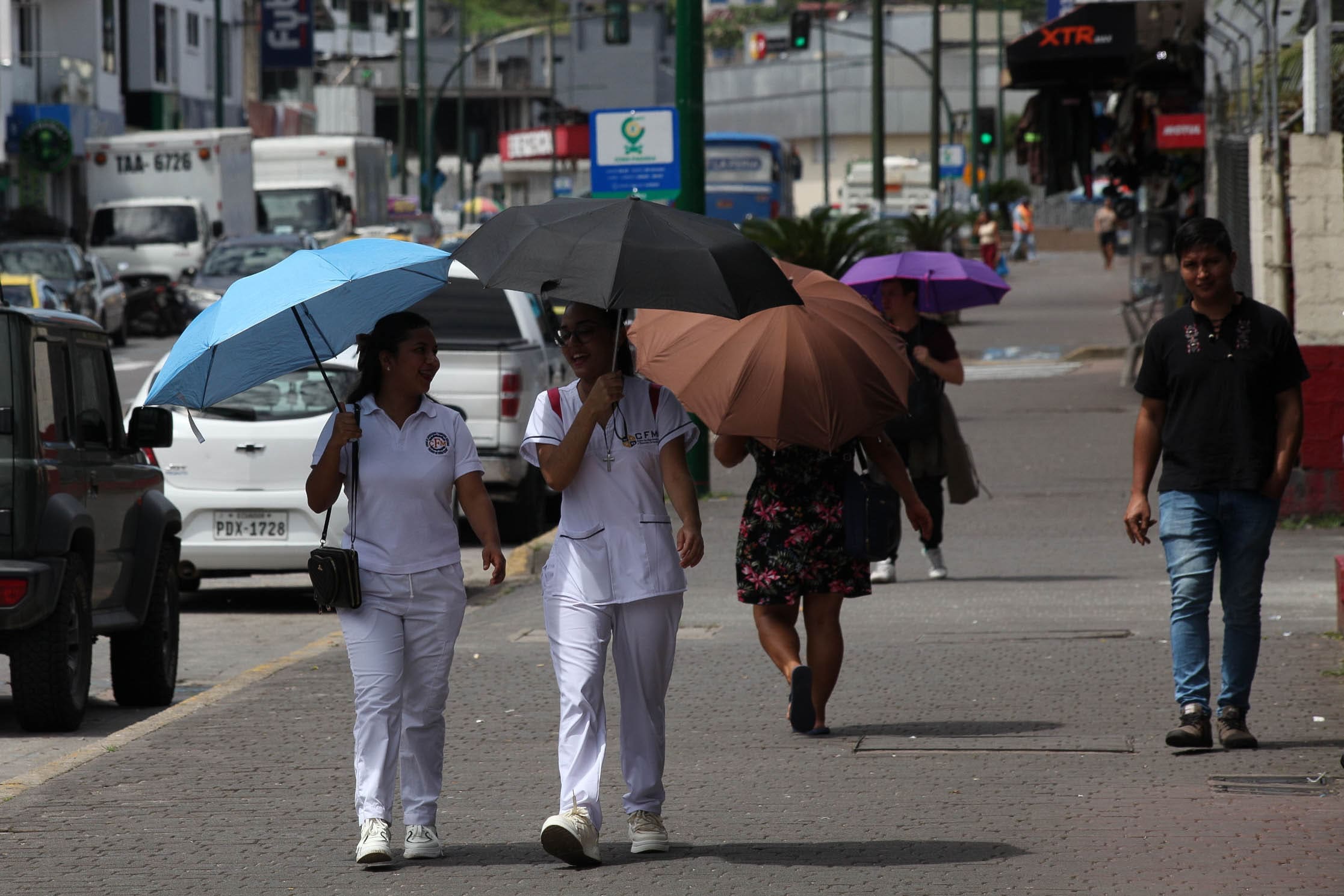
Since 2020, the city of Tena, in the Andean foothills of Ecuador’s northern Amazon, has been facing a population increase due to the mining boom that is sweeping the province of Napo without any regulation or state control. Unplanned expansion of the urban area is causing increases in soil, water and air temperatures due to the loss of forests.
By Diego Cazar Baquero (La Barra Espaciadora)
Inside her food and drinks shop in Tena’s bus terminal, Tatiana* takes refuge from the heat and remembers that she arrived in this Amazonian city some twenty-five years ago. She did so with her mother, who was born in the Andean province of Imbabura. “When we came here, people used to jump in the river from the carriage bridge to swim. Now you can cross the river by foot, I think it’s knee-deep,” says a woman in her thirties, born in Quito. The bridge she is talking about crosses the Tena River and is part of the tourist infrastructure of the Malecón Escénico of this city that is growing unusually fast.
In 1990, only 6% of Amazonians lived in cities. In 2010 it already constituted 38%. In 2022, the population in the canton of Tena alone had increased by almost 34% and totaled 80,816 inhabitants. It grew at an annual rate of 2.4%, while the country grew at only 1.33%, according to data from the National Institute of Statistics and Census (INEC).
During the last half century, other Ecuadorian Amazonian cities such as Lago Agrio, Shushufindi or Francisco de Orellana (Coca) have expanded without planning, pushed by the oil industry that has settled in their vicinity.
But the small town of Tena is experiencing even more accelerated growth in a shorter time than the others, thanks to the advance of gold mining, which has been exerting great pressure on its urban area since 2020.
Now we are facing a mining problem,” acknowledges Jimmy Reyes, current mayor of Tena, in an interview with the team of La Barra Espaciadora.”Previous governments have been handing out concessions”. Reyes assures that the responsibility for the advance of mining does not lie with the municipality but with the central government. “I presented a letter stating that we are opposed to Tena being a mining canton and they told me that it is State policy, that we have to act based on our competencies and that everything that corresponds to extractivism, that is, to strategic sectors, they manage it from the central level with their ministries”.
?It’s too much, the rivers have dried up too much,” complains Tatiana.
?Is it mining that is drying up the rivers? -I ask her.
?I don’t know, but, just imagine, look there -Tatiana points to a wall in front of her shop where there are several advertisements posted, and reads aloud-: ‘Job offer. Mining’. Everyone is offering because there is a lot of money to be made and now Tena is a bit corrupted by mining. Recently a man was killed near the hospital. A settling of scores, they say. Because he was a miner.

On a wall at the Tena land terminal, a job advertisement for a “mining and quarrying assistant” is displayed. Photo: Armando Lara.
The rapid growth of the urban area is causing an unusual increase in soil, river and air temperatures and is also threatening nearby protected areas, especially the Colonso Chalupas Biological Reserve, according to research by the Universidad Regional Amazónica Ikiam, Fundación Ecociencia, and in situ observations by La Barra Espaciadora.
Some local sources consulted for this story asked to appear under false names (*), due to the high risk they face – according to their own testimonies – because of the recurrent presence of criminal actors linked to illegal mining and drug trafficking.
Tena’s heat islands
?Come here because the sun is over there! -shouts Tatiana.
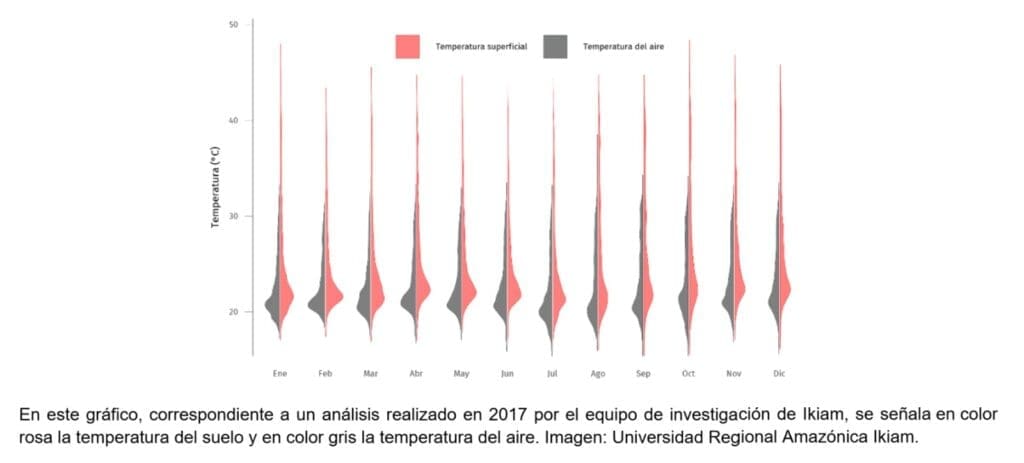
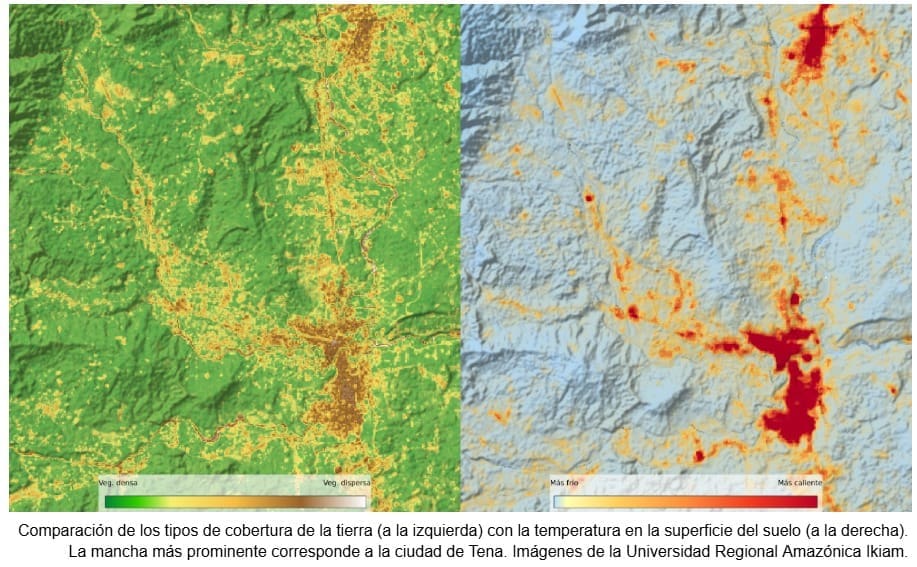
The bus terminal where her business is located and the city’s Civic Plaza have the highest average temperatures (37.9º C and 37.4º C, respectively), according to research conducted by the Universidad Regional Amazónica Ikiam, under the direction of environmental engineer and professor Gabriel Gaona.
It is 4:35 in the afternoon. The small restaurants in the terminal look empty, but the noise of engines and horns on Avenida 15 de Noviembre -the main road- gives a sensation of increasing heat. The neighbor of the kiosk next door has spread a large plastic sheet over her tables to make some shade and get a customer. While she waits, a stray dog walks slowly, takes refuge under a chair, panting at times.
Tatiana is fortunate that the sun’s rays do not reach her shop, although the heavy air of the aisle dots her neck and chest with sweat. She is not doing well selling food at this hour, except for an indigenous Waorani couple who just got off a bus and ask for a couple of dried chicken, a Jamaica water and a tamarind juice to refresh themselves.
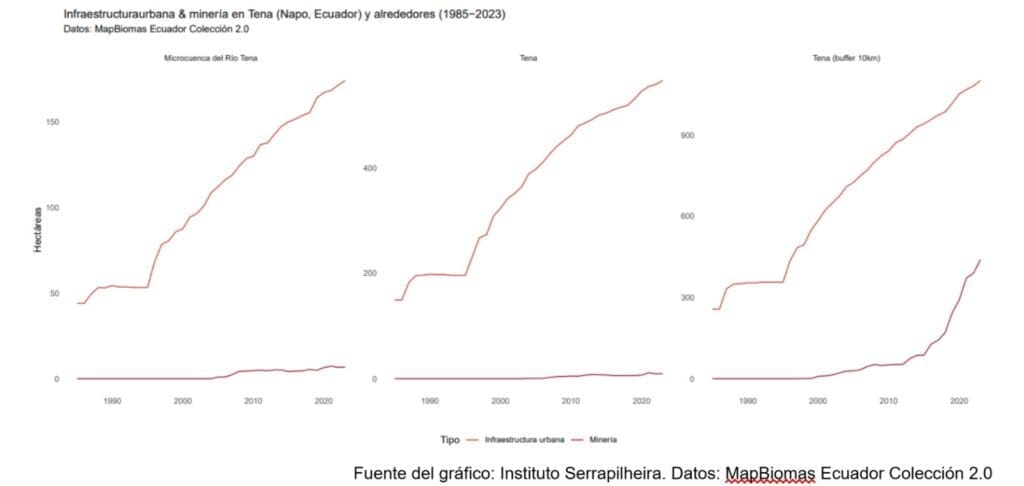
Historical data from the MapBiomas Ecuador initiative (1985-2023) show how mining came closer to the city. According to an interpretation of these data by scientist Pedro Paulo Souza-Lopes, from the Quantitative Ecology Training Program of the Serrapilheira Institute, Brazil, at first glance, there is no relationship between mining and the increase in temperatures. Land use followed an apparently stable trend and there was a significant transition from agricultural land to forest between 2001 and 2023. However, if one looks in detail, urban infrastructure and mining increased considerably in the 10 km area around the city of Tena.
A report by the Monitoring of the Andes Amazon Program (MAAP), led by three environmental non-governmental organizations grouped in Amazon Conservation, warned in 2022 that between 1996 and 2020 there was an almost 210-fold increase in the mining area throughout the province. In 1996 only 2.6 hectares of mining were detected in Napo, but by 2020 there were already 556.8 hectares. The period of greatest activity was concentrated in just four years: between 2016 and 2020.
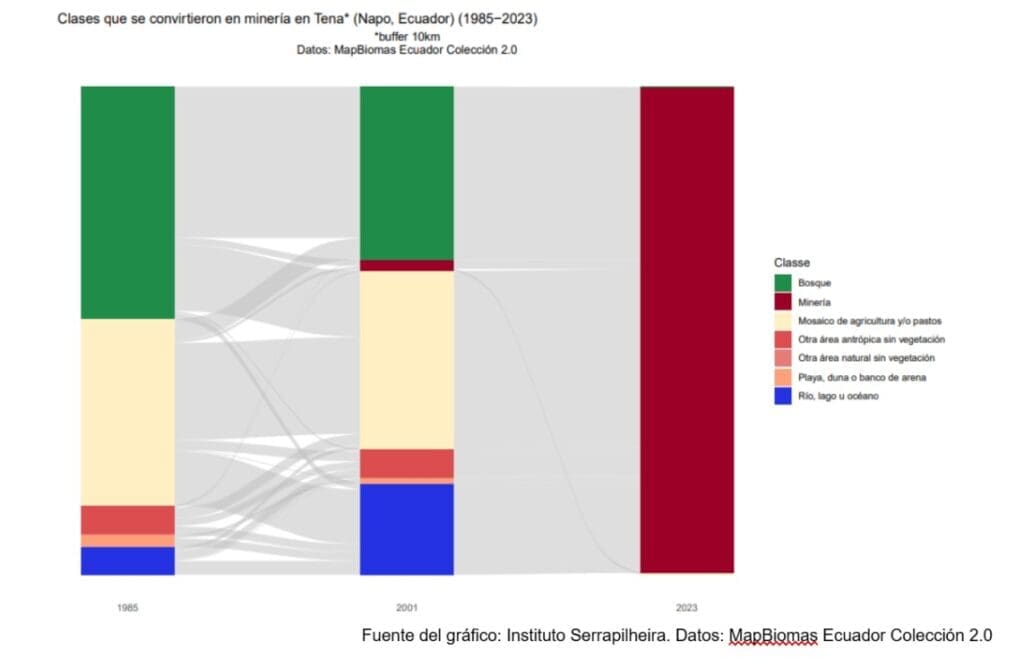
The first detection of mining shown by MapBiomas already in the city of Tena and its surroundings occurred in 1998, with just 0.72 hectares, but in 2023 the area taken by mining reached 440 hectares of its surrounding areas, a growth of more than 600% in 25 years. The Serrapilheira Institute notes that agricultural lands and forests are precisely those that gave way to mining. In fact, the transition process shows that part of the forest was first transformed into agricultural land and then into mines.
“We are losing these ecosystem services and, therefore, we have temperature rise in these sectors,” said to this journalistic team Jorge Villa, a specialist in geographic information systems and remote sensing of the EcoCiencia Foundation. He added that the ecosystem services provided by forests are vital when it comes to temperature for three fundamental reasons: they emit a large amount of vapor that the clouds condense and then becomes rain, which functions as “a climate regulator”; they absorb the solar radiation that reaches the earth, “they do not reflect it, as happens with roads or cement, but [the trees] use that energy for their biological processes”; they offer a large amount of shade. This is what does not exist in mining areas, therefore, “they tend to rise in temperature and as they are next to rivers, they tend to raise the temperature of these bodies of water as well”.
A subsequent MAAP report released in March 2023 proved a 300% increase in mining in Napo since 2015, and just 17% of that increase was recorded outside of official mining concessions.
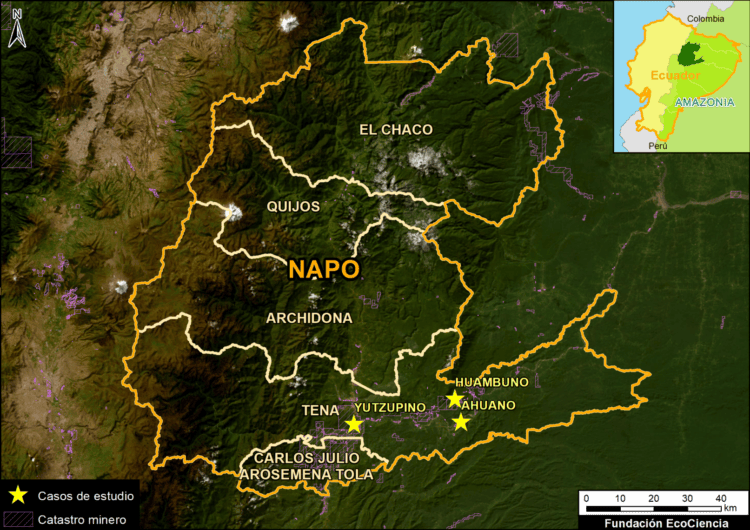
The immigrant population – from inside and outside the country – and several rural inhabitants of Tena canton and the rest of Napo province are directly or indirectly associated with the uncontrolled advance of gold mining. MAAP data show that mining is increasingly closer to the urban area and, therefore, has repercussions on its dynamics.
“Urban heat islands occur when cities experience higher ambient temperatures than those present in their surrounding peripheral and rural spaces,” says the presentation document of the research project Heat islands in the northwestern Amazon. The case of the rural urban gradient of the Tena River basin, led by Gaona.
The infrastructure of the land transport terminal in Tena is made of cement and iron and there is no vegetation anywhere in that immense block. “It is because of the type of material that raises the temperature,” insists the scientist. For that reason, the terminal has been catalogued as one of the main heat islands in the city.


Likewise, the highest air temperature levels recorded by Ikiam reach 45º C during the day and 40º C at night. Ikiam measures the air temperature every 15 minutes, at various points in the city, at 1.5 meters above the ground.
To measure the vertical warming effect, Ikiam focused on three different land uses: forest, built-up areas and grasslands, according to Pablo Meneses, who is also part of the research team.
With sensors on drones, the scientists measure the effects and analyze how these temperature changes affect the different species of amphibians, since these animals are bioindicators for understanding temperature changes. Meneses also seeks to verify if there are what he calls “species exchanges” in these gradients, derived from urban expansion, and warns that the case of Tena may be useful to analyze the phenomenon of heat islands in other more populous Amazonian cities in Peru or Brazil. His scientific research is still in progress.
?Come on in, we have lunch, meals, come eat, come on, roast chickens” -insists Tatiana, with some resignation. She is waiting “for the sun to go down so she can go out with the quimbolitos”. Her high-pitched voice slips in between the Andean cumbia that is playing in another place.
?Come on in, we have stalls, come eat, come and eat, come on…


Stores and stores on Avenida 15 de Noviembre, in downtown Tena, display fans on sale and air conditioning equipment. Street vendors also offer their products: small toy fans for children, soft drinks and others. Photo: Armando Lara.

“More population, more needs” in the aspirational metropolis.
One of the premises of Ikiam’s research is that the Ecuadorian Amazon has been the region with the highest population growth rates in Ecuador during the last decades.
Ikiam’s study area corresponds to what they call the urban-rural gradient between Tena and Archidona, that is, the area that connects Tena -the provincial capital- with the small canton of Archidona, located just five minutes away by car. Between these two towns are other small population centers such as Muyuna, Chambira and Alto Pano, where there are considerable temperature increases at ground level, probably related to the arrival of new residents to these areas and to these new urban developments in Tena.
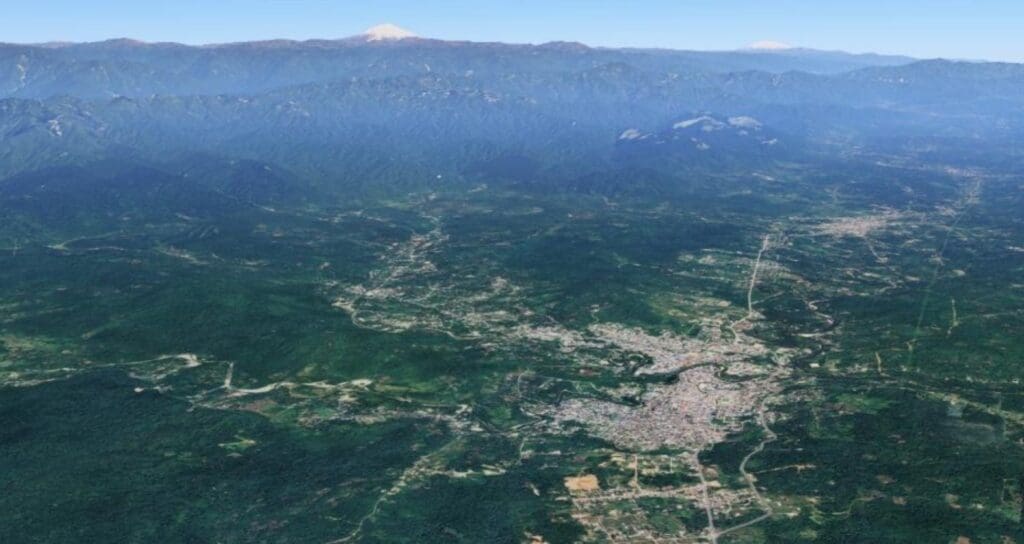
Jimmy Reyes, the mayor of Tena, assured that the growth of the city is due to immigration from other provinces of the country that “come to look for the Amazon because they see Tena as an option and, obviously, with more population [there is] more need”.

The Municipality of Tena took the INEC data and clarified that the increase of immigrants between 2010 and 2022 in the canton was 210.25%, with an annual growth rate of 9.89%. These are people from other localities in Ecuador and from outside the country. “Due to the effects of insecurity,” said Reyes, “people, especially from the center of the highlands, are no longer choosing to go to the coast but come here; we have had holidays in which hotel occupancy overflows, people have had to rent houses”.
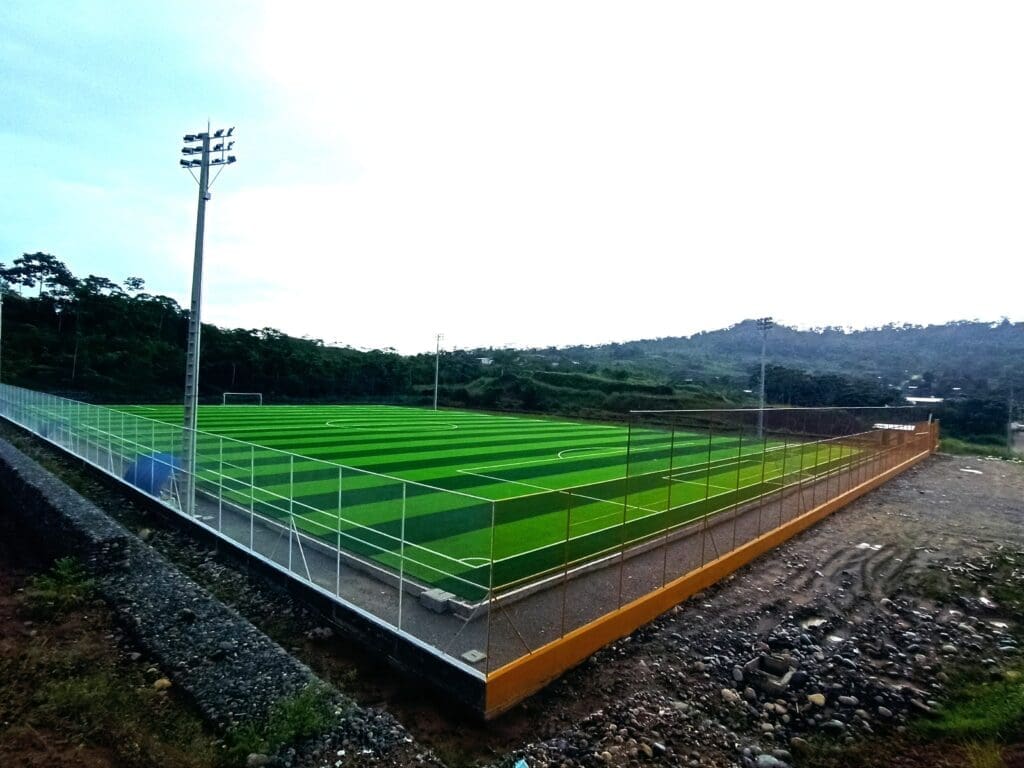
In the northwest of Tena, uphill, is the neighborhood of El Buen Pastor. The locals know it as the 4X4, because until recently there were two improvised tracks for the practice of this motorized sport. But if we compare the landscape of this neighborhood at the beginning of 2025 with its appearance in May of the same year, it is unrecognizable. On the space where one of these tracks used to operate, the Government of the Province of Napo – with the support of the Municipality – built a field for professional soccer, the construction of which was completed last February. At the beginning of April, a Catholic church was finished a few blocks up the hill and roads have been opened in the area. Some of them lead nowhere.
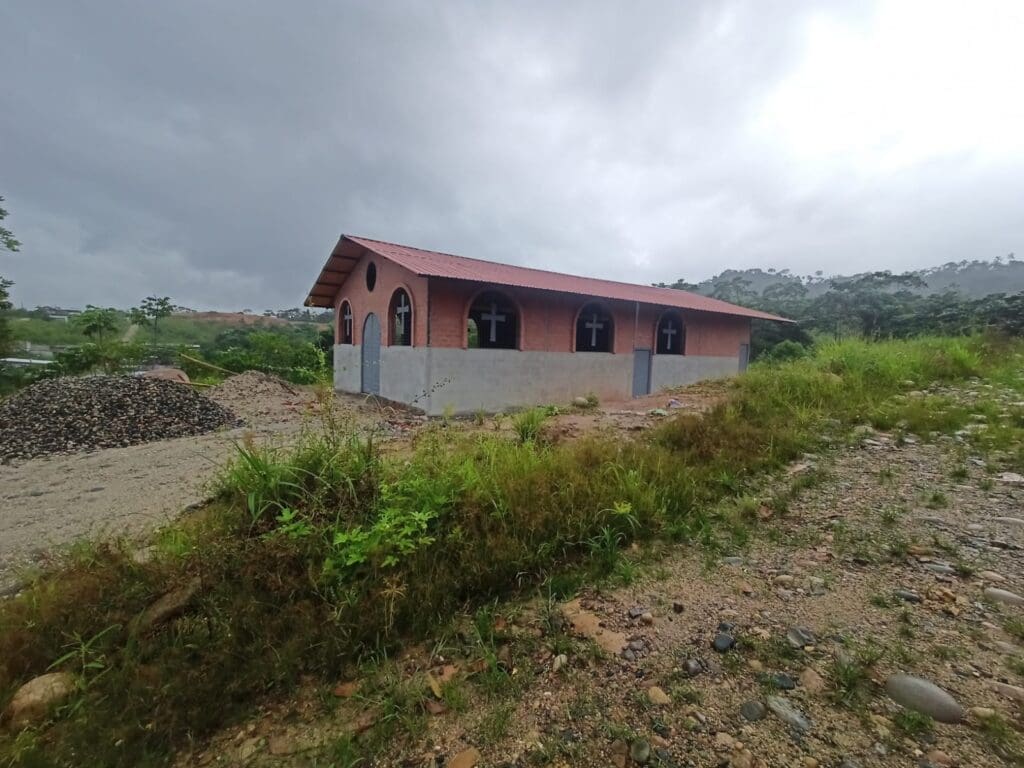
Catholic church in the El Buen Pastor neighborhood, whose construction was completed in April 2025. Photo: Diego Cazar Baquero.
Luis Benavides – a bricklayer from Quito – walks with his nephew Santiago down one of those recently opened dirt streets. That Thursday it rained “by miracle,” he says, and they were unable to work on the construction of a house for which they were hired four months ago. “This place here is a neighborhood that is growing, with people who are a little better off,” Luis says.
To make rapid progress in the construction of the new houses, four people work together: two bricklayers, a laborer and the master builder or construction manager. A bricklayer,” says Luis, “earns $170 per week, or $680 per month. The foreman, on the other hand, receives US$40 for each day’s work.
In this neighborhood, signs for the sale of houses and land have multiplied. Santiago notices that they are selling quickly. He says that some were for sale a few days ago “but they have already removed the signs”. A house in this sector can cost $48,000. Plots range from 250 to more than 1,000 square meters and cost up to $10,000.
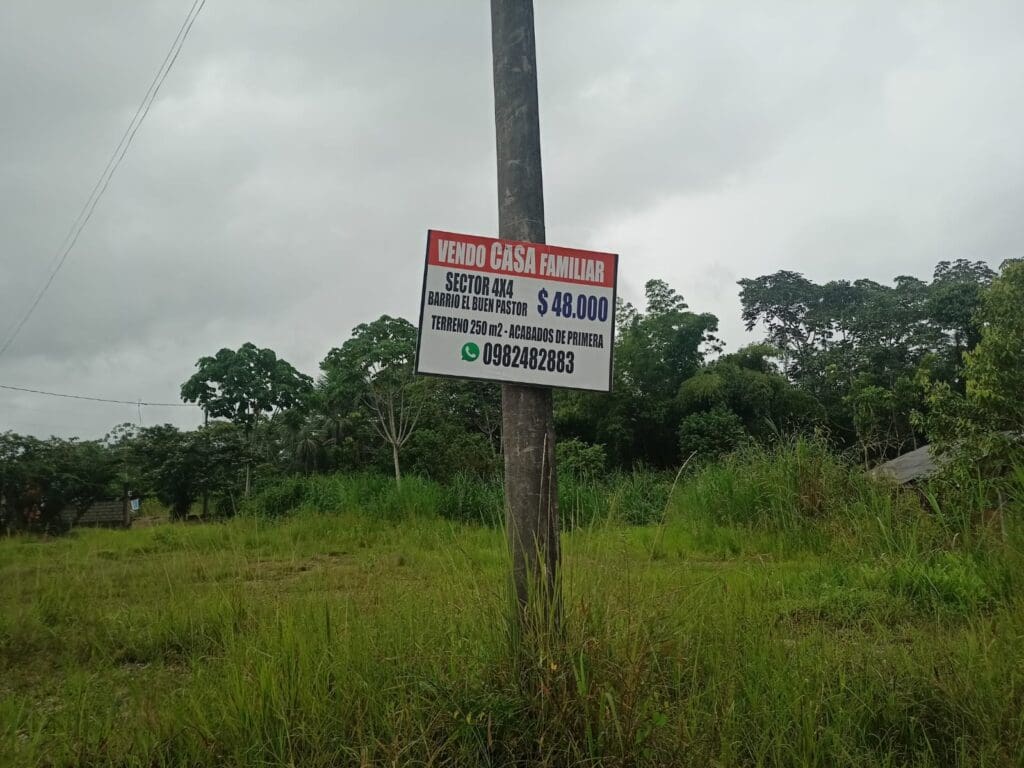
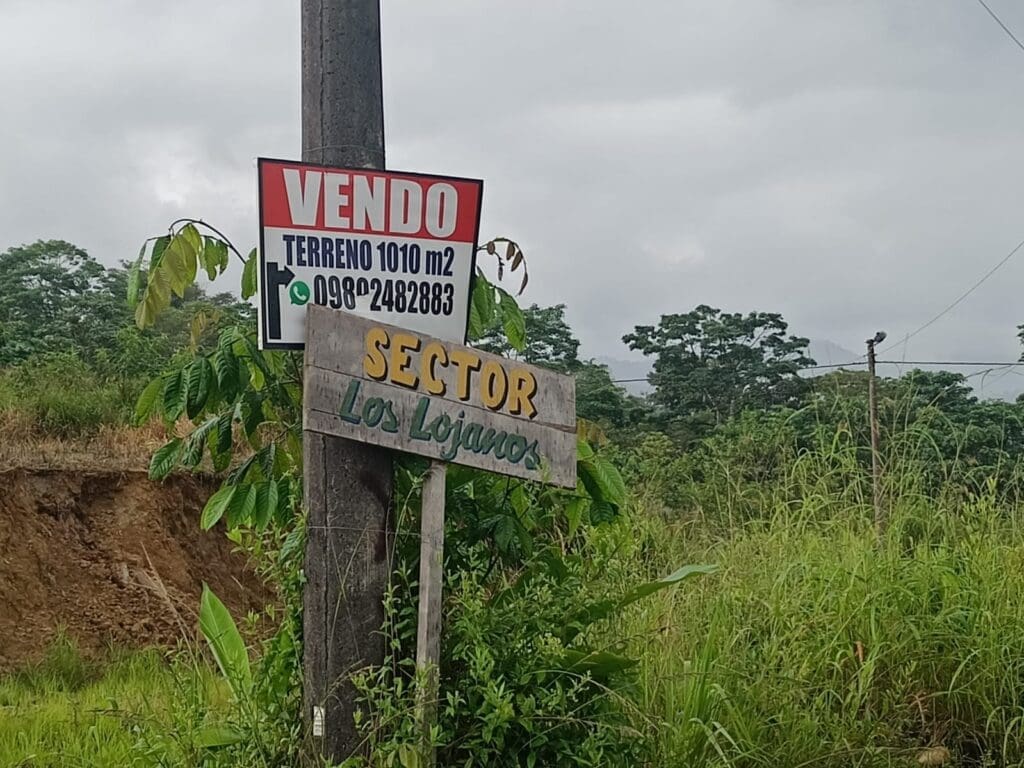
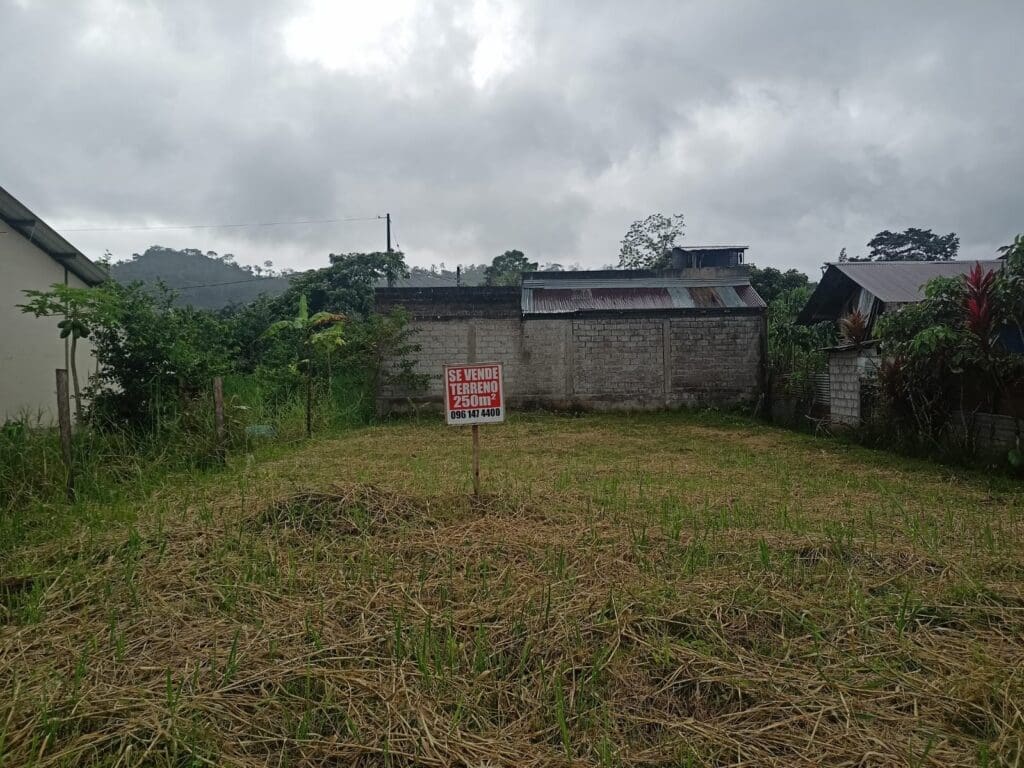
Tatiana’s mother lives very close to that neighborhood. “Where my mommy lives there were only three houses and now they are all buildings,” she says.
“As a result of the larger population there are also more vehicles, mobility has also been affected,” acknowledges Mayor Reyes and adds: “We have focused on working on unsatisfied basic services, that is the biggest problem we have in the urban area; and in rural areas: water coverage, safe water, especially for the rural areas, because there we still have a deficit of safe water. Likewise, sewage, to protect the environment and rivers; roads are also still a problem…”.
Indeed, during the tour of La Barra Espaciadora, it was found that the road density in the upper peripheries of Tena is considerable. Newly paved roads, public lighting poles and many properties for sale are the features of the landscape. “There are many roads that open onto private properties and there are properties that are several hectares in size,” explains Gaona.
“There is a vision of building city-type houses in areas that are not cities -says the Ikiam researcher-, in that process of trying to emulate a city where there is no city, the property becomes more expensive because you start to require materials such as zinc or you start to use materials that are not produced in the city such as cement, combined with imported materials”.
Other poles of expansion of the city are those heading towards Archidona, Puerto Napo, Pano and the Colonso Chalupas Biological Reserve (RBCC). “With this boom in migration to Tena, sub-spaces have begun to be created on large plots of land,” he adds, for lease or sale of land to migrants.
The threat to protected areas is also increasing
In Napo alone, the advance of mining threatens five protected areas: Cayambe Coca National Park, Antisana Ecological Reserve, Llanganates National Park, Sumaco-Napo-Galeras National Park, and the Colonso Chalupas Biological Reserve, located on the western flank of the city of Tena and the small town of Archidona.
According to Byron Lagla, director of Protected Areas and Other Forms of Conservation of the Ministry of Environment, Water and Ecological Transition, of the 78 that make up the National System of Protected Areas (SNAP), the Colonso Chalupas Biological Reserve is the most affected by illegal mining in the country. We are under siege by mining and petroleum,” says Lagla. “The Management Plan states that nothing else can be done [there] except conservation, but there is illegal mining.
Ikiam began operating in October 2014, oriented to the study and research in Life and Earth Sciences. That same year, the RBCC was created, with 93,246 hectares and at least six ecosystems that serve as a living laboratory for research projects.
Scientists from the EcoCiencia Foundation proved that the increase in temperatures experienced by Tena has repercussions on the water and that these phenomena also exert pressure on the RBCC. Its buffer zone is one of the high areas surrounding the city. On those hills it is easy to see clear-cut forest areas. Opening roads on either side generates significant pressure on the buffer zone,” observes Gabriel Gaona, “and, obviously, on the reserve, so we have found that some biological corridors have been broken. This is due to the fact that the RBCC is located between Llanganates National Park and Antisana Ecological Reserve.
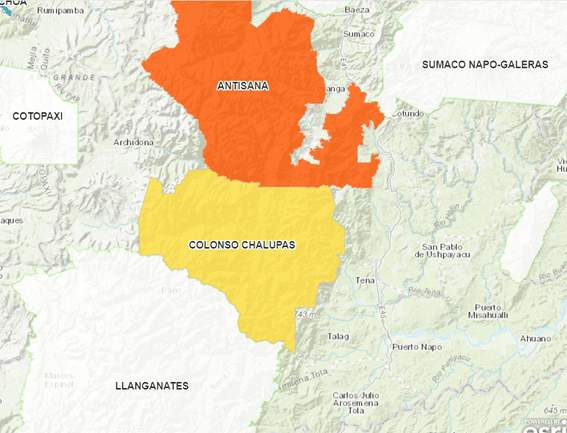
A recent MAAP report, published on May 4, confirms that more than a third of deforestation by mining in the nine Amazonian countries has been registered in protected areas and indigenous territories, which would be sufficient proof of its illegality. The report states that “Ecuador has become an important deforestation front for mining”.

Image provided by the Planet Satellite, as of April 2025, showing the connection and proximity between the Colonso Chalupas Biological Reserve, on the left; the Napo and Anzu riverbeds, affected by dozens of mining operations, in the lower part of the photo; and the city of Tena, whose layout appears in the upper right corner.
“Diablito, diablito, make him find gold…”
?It’s sunny as hell! -exclaims Marcelo*, a sixty-something farmer of coastal origin who arrived in Tena when he was 13 years old; we’ve already installed air conditioning, it burns here! Yesterday the sun wasn’t so strong, but it was extremely hot!
Marcelo owns three restaurants in different parts of Tena. Every day he wakes up before 3 a.m. and sets out from his home, also in El Buen Pastor, and heads to one of his restaurants in a central area of the city to cook and prepare everything he needs for the day. Nearly half a century of life in this city has made him feel like another Tenense.
With an easy smile and a montubio accent that evokes his roots, the dark, broad man invites us in and takes a place at our table.
?So, isn’t it normal to feel this hot here? -I ask him, without giving him time to settle down on the bench.
?No. All these days it has been very hot, even us locals notice it,” he says.
?But what is the reason for this?
?Imagine how they [the miners] are here and the earth is heating up,” he says, with the certainty that comes from experience.
A few minutes later, Sandra*, Marcelo’s wife, arrives. The woman introduces herself in whispers. She seems introverted, of few words, but upon hearing our conversation, she soon offers to accompany us on a tour of the Yutzupino community and the banks of the Jatunyaku River. In that place, in February 2022, Operation Manatí I was carried out, a spectacular deployment of prosecutors, government authorities, military and police in which 148 diggers were seized that had destroyed kilometers of rivers and jungle were . This operation, however, did not stop illegal mining, but rather helped to disperse it throughout the rest of Napo province, as confirmed to us by the provincial prosecutor of Napo, Diego Segovia, in an interview in his office.
The province has close to 60,000 hectares under concession,” said the official. “Is it legal mining or is it illegal mining,” he wondered; “the National Police cannot enter these places, there are shootings in mining fronts, there is displacement of people….
Among the rivers most affected by mining in the area were the Jatunyaku and the Yutzupino, which run a few kilometers from the urban area.
***
The situation worsened after the operation. For this reason, on August 25, 2023, the Municipal Council of Tena held an extraordinary session at the request of the prosecutor Diego Segovia, who urged Mayor Reyes and his councilors to ask the government of then President Guillermo Lasso to declare a state of emergency focused on the points where illegal mining “and even armed groups” are present; the declaration of an environmental emergency due to the imminence of heavy metals in the rivers, and the reversal of all mining concessions in the canton of Tena for not having carried out the prior, free and informed consultation required by the Constitution. But the request was never granted.
“It is not a matter of lack of will of the National Police or the Armed Forces – said Segovia in that session -, unfortunately, the Government does not allocate the resources required [for] a large-scale mobilization of police and military personnel; to enter with 200 or 300 in that area is practically to enter in a numerical inferiority, putting at risk the health and life of police and military personnel”.
Recent events, such as the murder of 11 soldiers from the 19th Napo Jungle Group on Friday, May 9, confirmed that organized crime is part of this activity and that the State’s institutional apparatus has not been able to halt its advance.
On May 28, 2025, the government of President Daniel Noboa announced the suspension of four mining concessions that were in the hands of the Chinese company Terraearth Resources in what is known as the Tena Mining Project. These were the Talag, Confluencia, Anzu Norte and El Icho concessions, all located a few minutes from the urban perimeter of Tena.
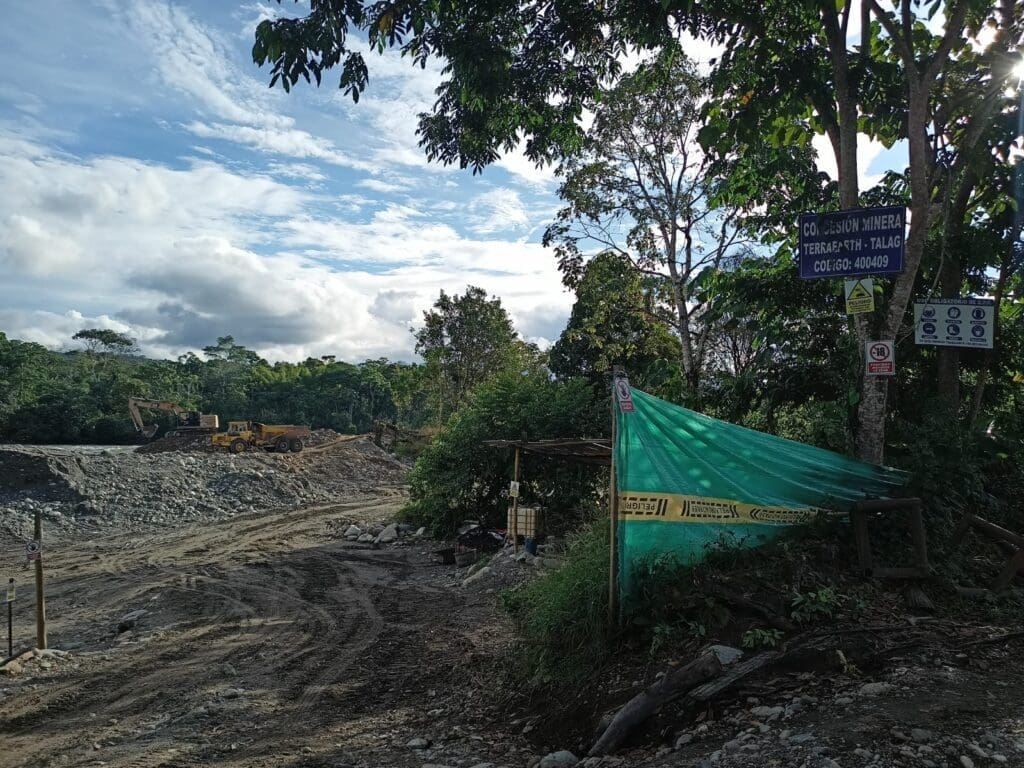
One of the accesses to the Talag mining concession, granted to the Chinese company Terraearth Resources and suspended at the end of May by the Ecuadorian government. No activities were interrupted in this concession after the official suspension. Photo: Diego Cazar Baquero.

However, hours after the announcement, Beatriz*, a woman who lives on the banks of the Jatunyaku River, told La Barra Espaciadora that the suspension was not complied with. Here in the Talag sector they have not suspended anything,” she said, “just minutes ago they brought in machinery near my land to wash gold”. A week later, at the beginning of June, the miners in the suspended concessions continued mining without any control.
The argument presented by the Ministry of Energy and Mines to support the suspension of the concessions was that the Chinese company failed to comply with the environmental management plan approved by the authorities. Terraearth Resources is the mining concessionaire with the most assigned territory in Napo and has faced at least four criminal cases, one of them related to a land use lease agreement for exploration and mining, which is still ongoing, and another with poorly remediated environmental damages. In total, the firm has 10,900 hectares in concessions, equivalent to 13,300 professional soccer fields. Such as the one built in the El Buen Pastor neighborhood of Tena.
***
Together with Sandra, we leave the city center by car. In a few minutes we take a third order road that leads to Yutzupino, bordering the Napo River. We pass through the Kichwa community of El Ceibo, from where we can still see mining activity on the remains left after the Manatí operation. The water, in the distance, looks yellowish because there are still miners scraping the land and the river. Eight minutes later we are in Yutzupino. There are private guards and sentry boxes. There are miners working in plain sight. There are backhoes, dump trucks and zeta-type sorting machines (used to concentrate and process alluvial gold at low cost). The creaking of the equipment merges with the noise of the engine of a large blue pickup truck, without license plates and with dark windows, which crosses in the opposite direction.
We get out of the car and walk to where the machines are operating.
There is a makeshift mining camp, there are tables, there are stacked fuel tanks. There is someone sleeping and a large backhoe is parked.
We pass through the Illuku neighborhood, located on the edge of the mines. Approximately half a kilometer away, three dump trucks pick up material and return to deposit it in the processing plants.
The land looks like an immense beach with river rocks. That’s not a river,” says Sandra, “that’s all they mined, there’s no river anymore. They used to say, ‘Diablito, diablito, help me get gold,’ and that’s why not many foreign [tourists] come here anymore because it’s all contaminated”.
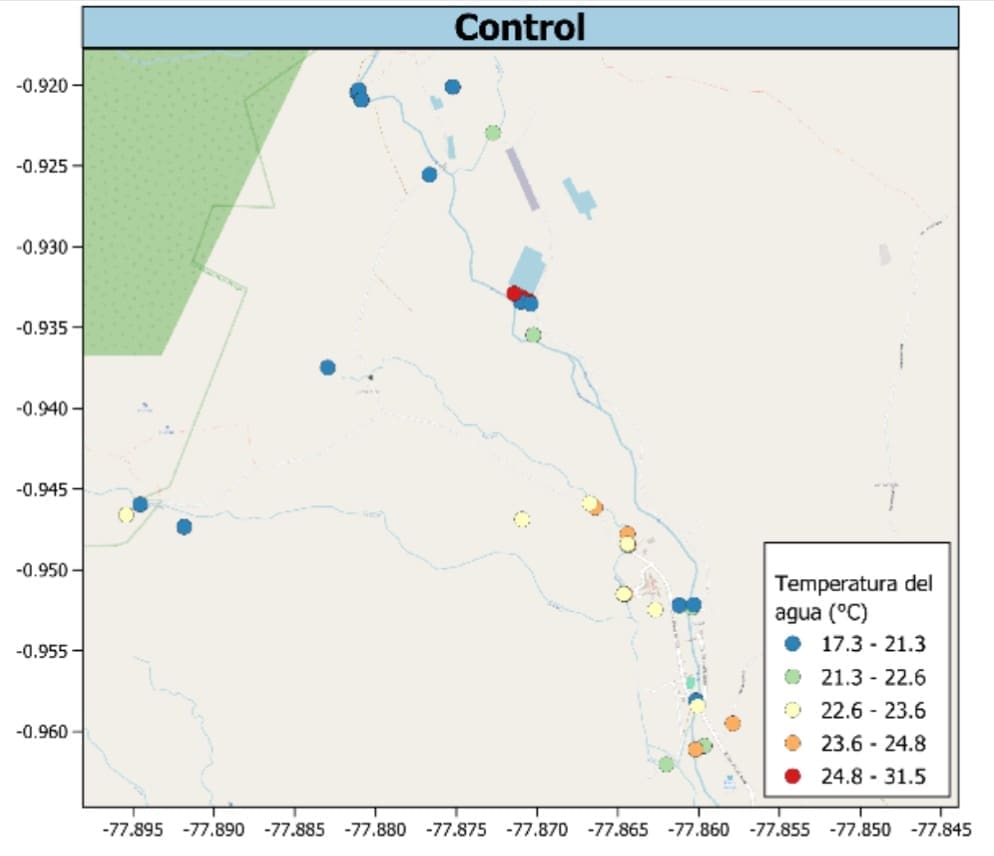
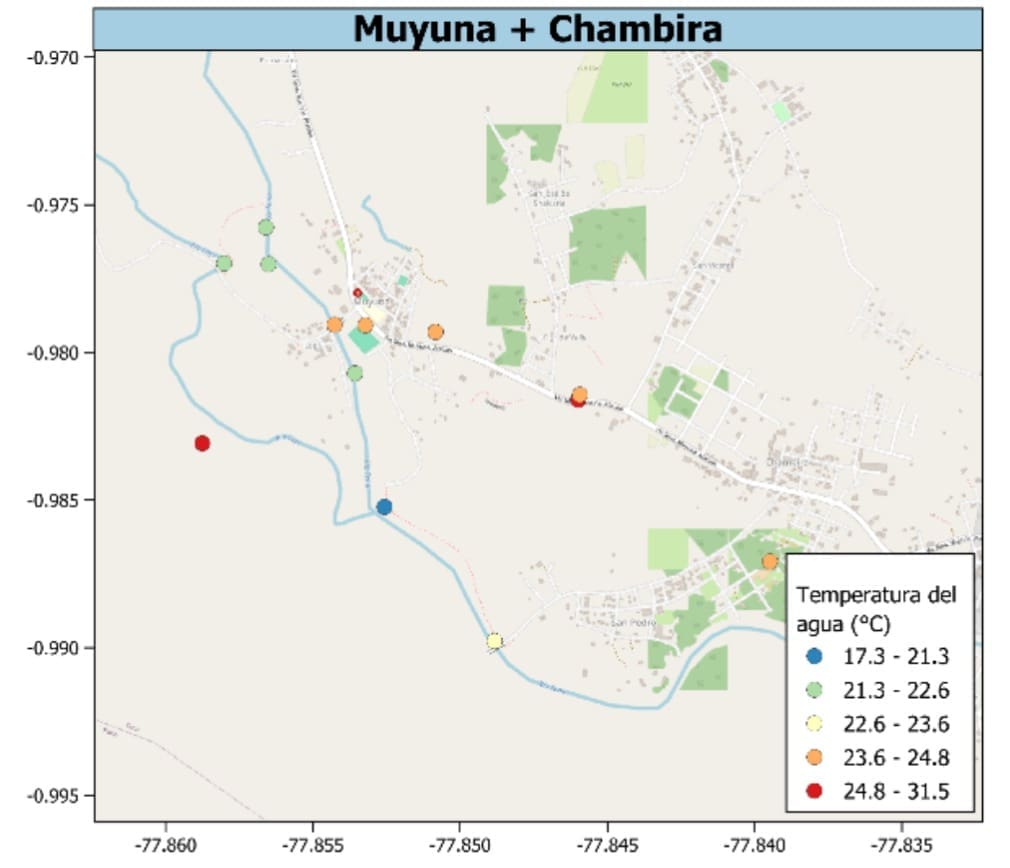
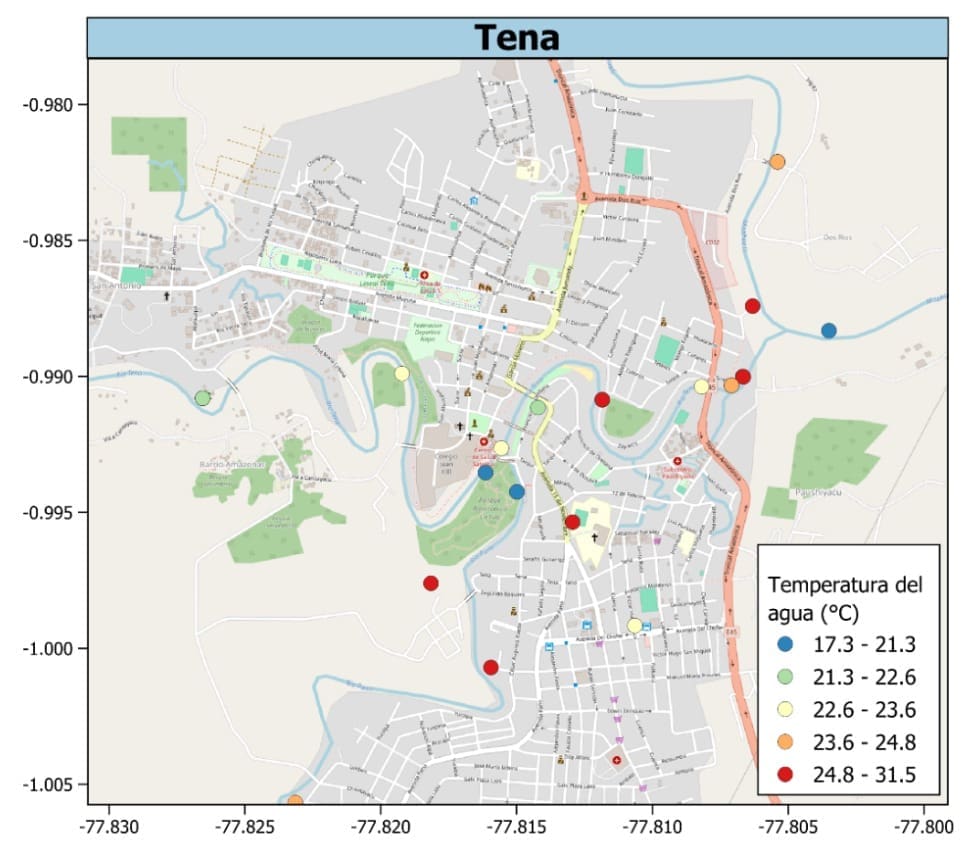
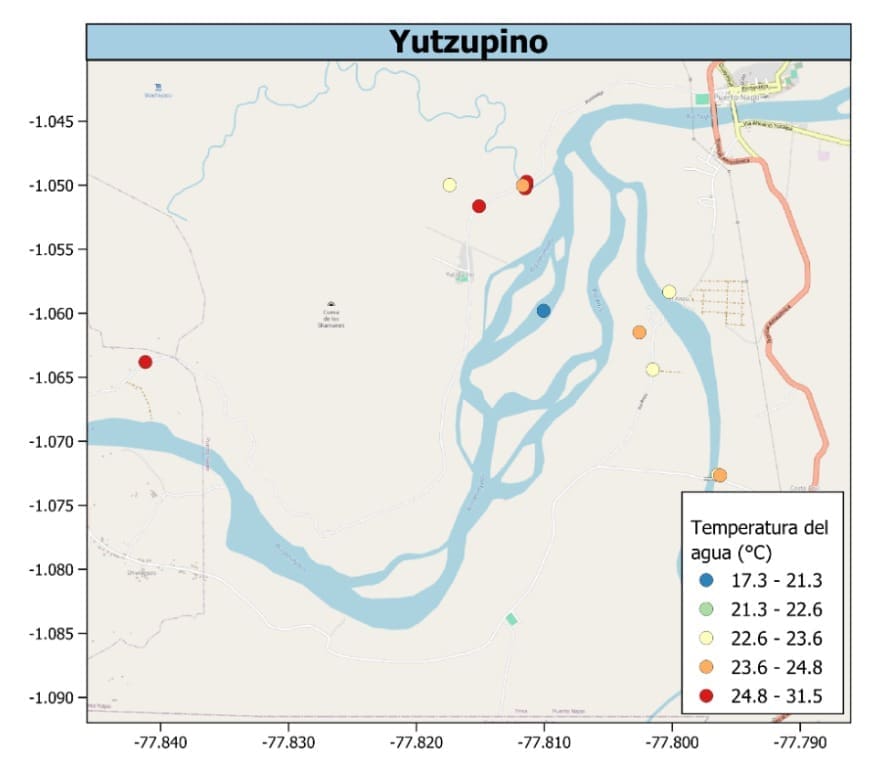
Juseth Chancay, a hydrologist and researcher working with the EcoCiencia Foundation, collects data and designs tools based on satellite information and global hydrological models to determine the levels of water quality degradation resulting from changes in land use. Chancay proved that the degradation caused in the Jatunyaku River has caused a variation of between 2 and 3 degrees in water temperature with measurements made from 2004 to May 2025.

This table shows a timeline for the period between 1995 and 2025, showing the variations in water body temperatures compared: the blue line corresponds to the control zone, that is, the area of the Colonso Chalupas Biological Reserve that has not yet been affected by mining, but is threatened. The red line represents the variations recorded in Yutzupino, one of the mining hotspots near Tena. Image: EcoCiencia.
The data show that the lowest temperatures are found in the upper basin of the Tena River and within the Colonso Chalupas Biological Reserve, and increase the closer you get to the city. Some of the rivers monitored are the Anzu, Ahuayaku, Colonso, Jatunyaku, Misahuallí.
The points that are upstream of the basin show an average of 22.17ºC. The control zone marks a space before suffering an impact, it functions as the reference zone and determines how the rivers would behave if they were not impacted.
The zone of influence of Tena, specifically the areas of Muyuna and Chambira, where urban expansion poles are registered, show 23.67ºC, that is, an increase of more than one degree with respect to the reference. Meanwhile, the lower zone of Yutzupino shows an average temperature of 24.71ºC, which represents an increase of more than two degrees.
Another Ikiam investigation, published by geoscientist Josué Ponce Ramírez in 2023, proved the presence of heavy metals such as arsenic, cadmium, lead, copper, mercury, chromium and zinc in the Huambuno River by taking 20 samples, of which more than half (53%) exceeded the limits recommended by the CMME (the Canadian Council of Ministers of the Environment). The Huambuno runs about 6 km northwest of the Ahuano parish in the Tena canton and is one of the first tributaries of the Napo River. It is approximately 20 kilometers long.
A curious analogy presented by Ponce points out that the samples collected in the Huambuno River have a higher presence of heavy metals with respect to the average of the samples collected in the Yellow River, in China, where the same metals were found. His assertion is supported by a study by scientist Pengyang Zhang. “The damage caused in 13 years of small-scale mining in the Huambuno River,” says Ponce, “exceeds the average of samples collected in the Yellow River, which is a large agricultural population of millennia. Around the Huambuno riverbed live approximately 2,000 people, almost all of Kichwa nationality, and the entire parish of Ahuano has 7,476 inhabitants, according to the 2022 census. It is the third most populated of the Tena canton.
“It has been evidenced,” says the study, “that, in some urban areas, soils are generally contaminated with lead, zinc, cadmium and copper from vehicular traffic, paint and various urban sources.
In January 2023, the expansion of the mining area in the Huambuno sector increased by 86% compared to the same month in 2022, as reported by MAAP and as reported by Mongabay Latam. Between January 2022 and January 2023, 110 hectares of forest and agricultural areas were destroyed in this sector.

This story is the result of a collaboration between Latin American journalists and scientists, fostered by Instituto Serrapilheira of Brazil and the Latin American Center for Investigative Journalism (CLIP), exploring together how damage to the Amazon’s biodiversity disrupts the various environmental services it provides to the continent.


