


Women are the most frequent targets of digital attacks against environmental activists in Panama. The stories of Raisa Banfield, Camila Aybar, and Martita Cornejo shed light on the machinery behind online campaigns designed to discredit, intimidate, and silence environmental defenders.
By Daniel Molina Alarco (Concolon)
When Panamanian President José Raúl Mulino announced plans to reopen Cobre Panamá, the largest open pit mine in Central America, Raisa Banfield immediately knew what would follow: another wave of attacks. Banfield, an architect and one of the most recognizable figures in Panama’s environmental movement, has learned that even a single social media post criticizing mining can trigger a torrent of abuse. Detractors accuse her of hypocrisy for using products made from mined materials. They ridicule her proposals for building an environmentally sustainable economy. They challenge the legitimacy of her activism. To her, these incidents do not feel random or disconnected; they resemble a coordinated campaign in which environmental defenders are placed squarely in the crosshairs.
“In the beginning, it was overwhelming, and you fall into depression,” says Banfield from her office at the Center for the Integration of Nature and Cities, where she heads the Sustainable Development division. “I’ve spent more than twenty years maintaining an independent public voice, and the personal, professional, and political costs have been extremely high.”
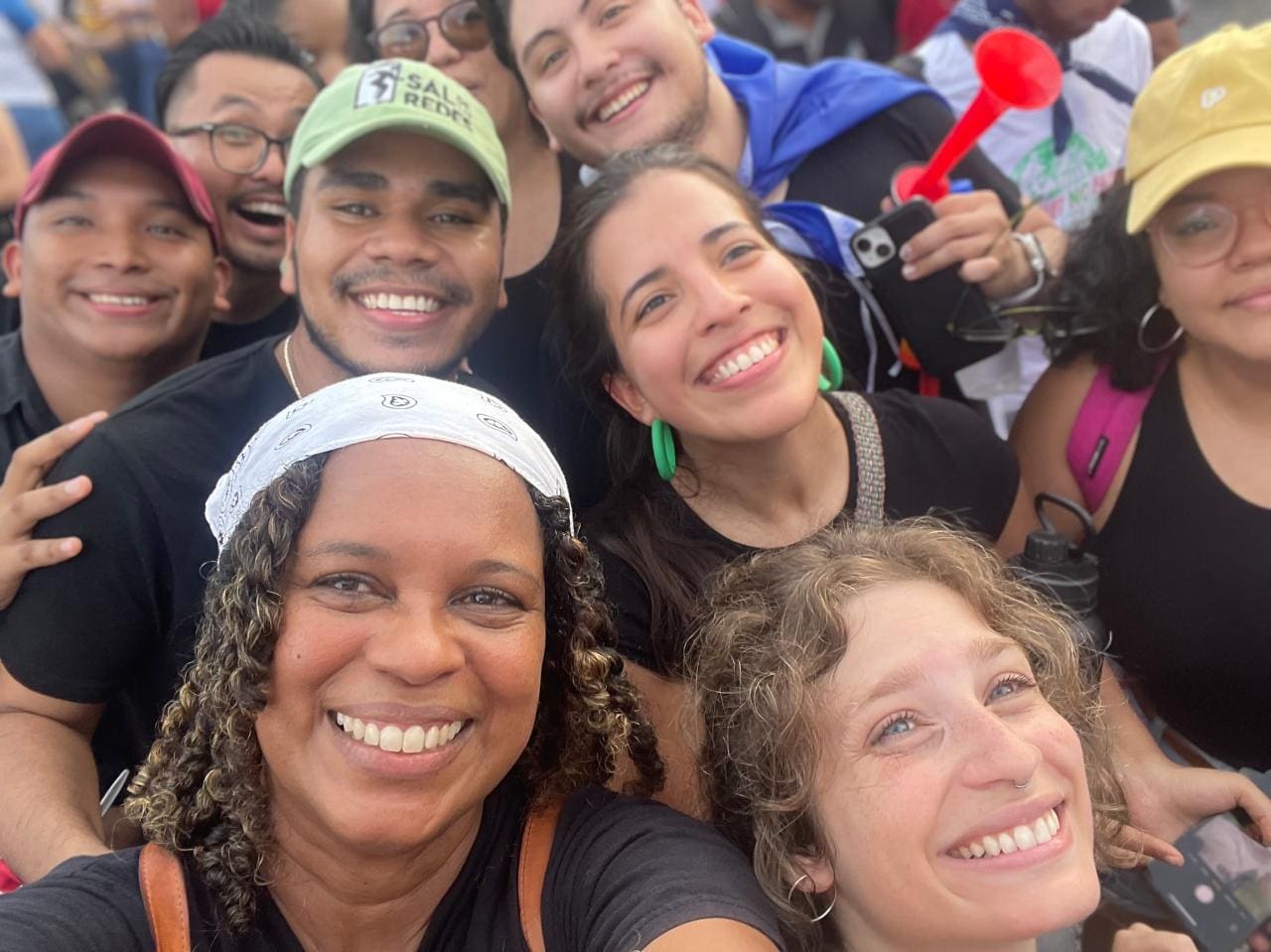
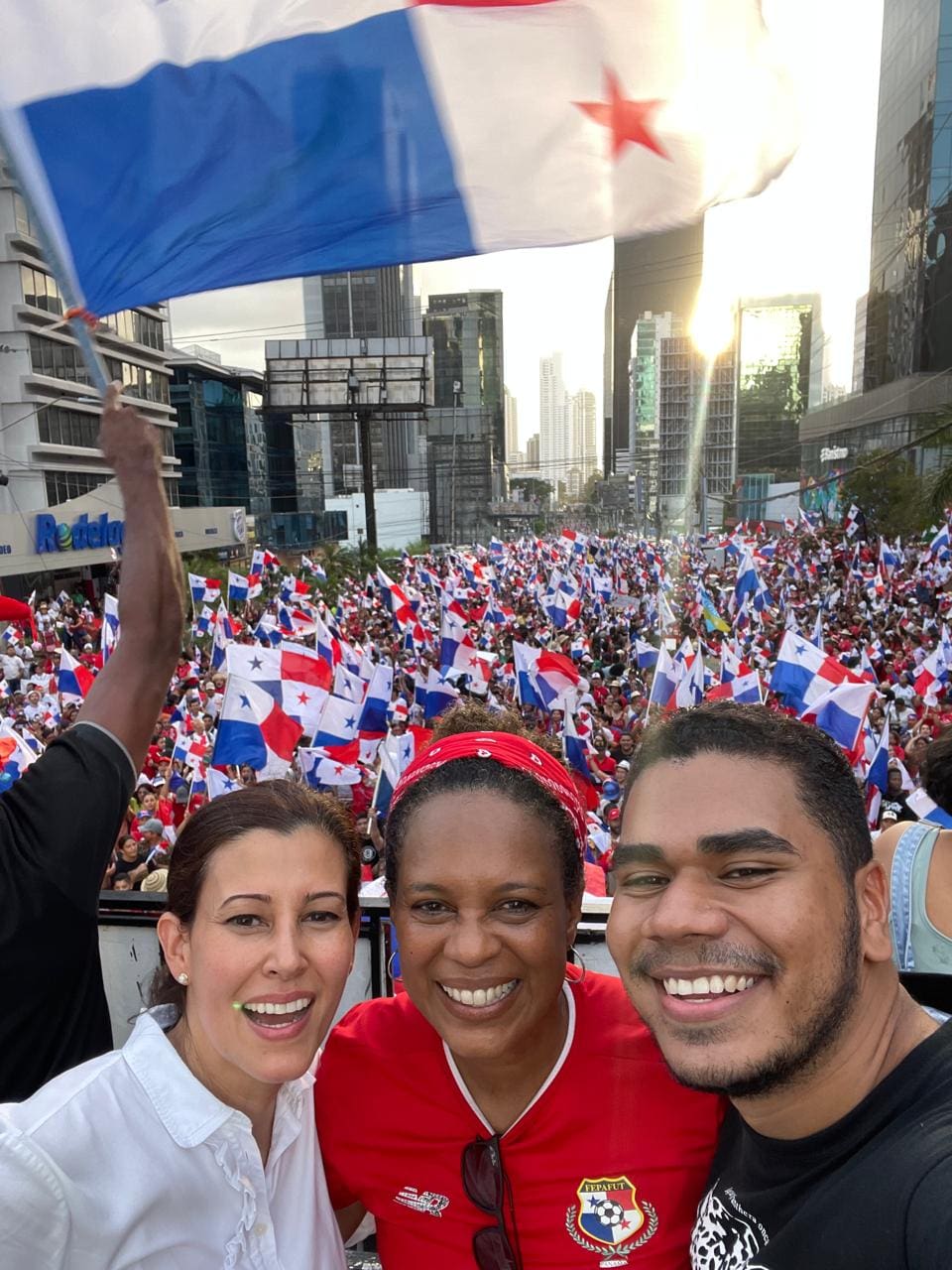
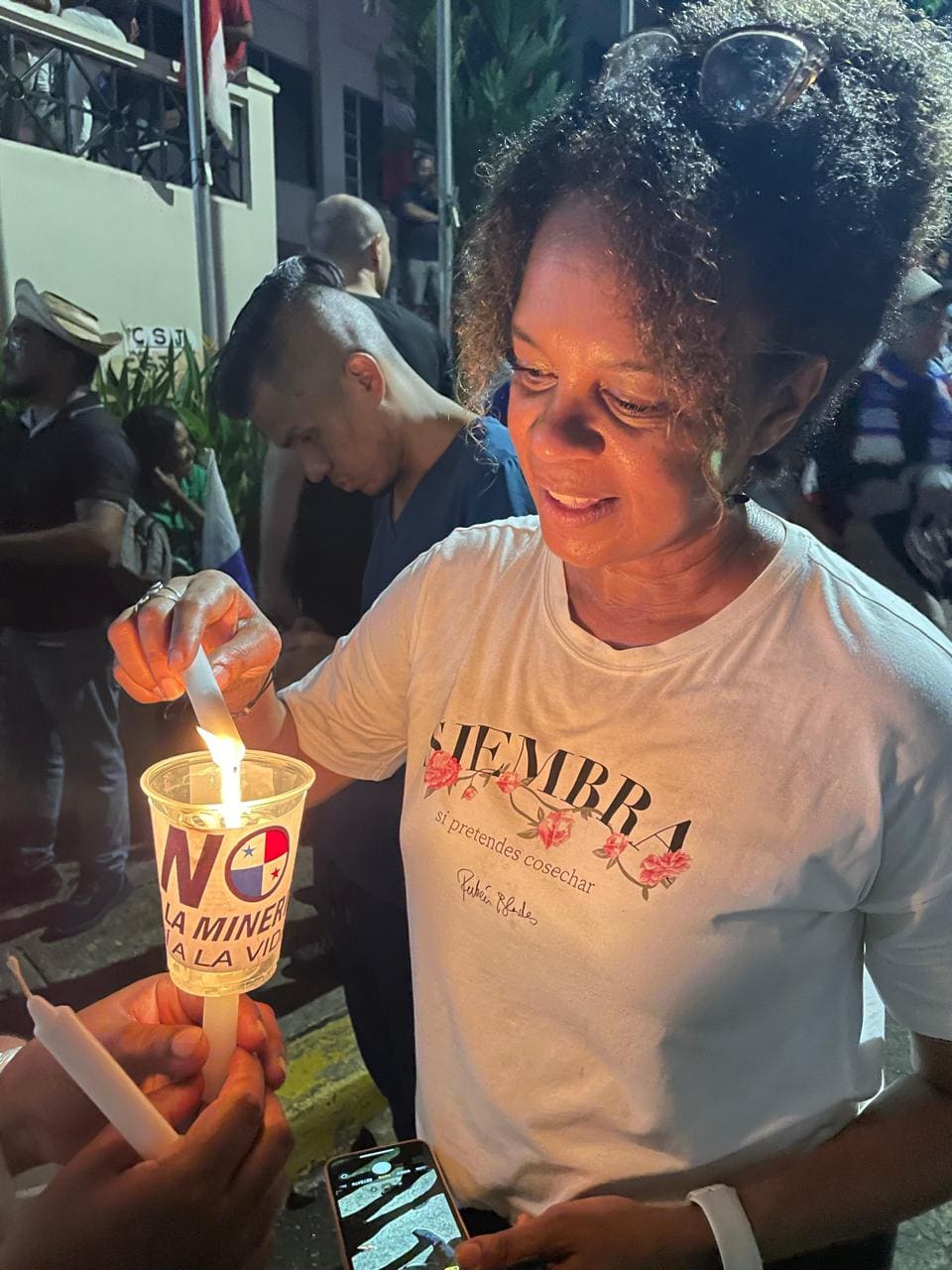
Across Panama, people who have opposed the reopening of the Cobre Panamá concession—which the Supreme Court has declared unconstitutional on two separate occasions—or who have criticized the environmental impacts of projects such as Puerto Barú, or who simply advocate for environmental protection, have faced digital harassment, legal intimidation, and workplace reprisals. Banfield has been the target of dozens of videos produced for online platforms portraying her as an ineffective leader. Podcasters have singled her out in an effort to pressure her into taking a guided tour of the mine. On social media, she is routinely branded a liar and accused of standing in the way of economic growth. The attacks are then echoed by media figures and opinion-makers, often becoming news stories themselves. One notable example was a headline published by Panamá América in November 2025: “Former Minister Criticizes Raisa Banfield for Opposing the Country’s Economic Development.”
Banfield believes that many of those behind these attacks enjoy a degree of institutional protection that insulates them from legal consequences for defamation and slander. The impact has extended well beyond the emotional strain. Professionally, she says, opportunities have begun to disappear. Invitations to forums and events where she could contribute her expertise on architecture and urban development have become less frequent. Years of attacks have gradually eroded her public image, and she laments being increasingly dismissed as “difficult” or “troublesome.”
“What makes this especially painful,” she says, “is that I work in academia, I run a research center for students, and all of this affects my position. It becomes a burden that follows you and limits you. It’s a way of discouraging me, of sending the message that if I choose to engage in activism or speak publicly, then I can no longer be taken seriously as a professional.”
@panamaprogresa_507 Nuestros amigos pseudoambientalistas antitodo pro-izquierda que quieren ver al país quebrado nos dicen que el loro de Panamá es verde. @El Loro de PTY ? sonido original – Progresa Panamá 507
According to Banfield, environmental activism in Panama has always attracted criticism. But the campaign surrounding the proposed reopening of the mine, she says, has pushed the harassment into a different category altogether.
One of the videos created to target Raisa Banfield and other environmental activists.
Planned Attacks
The data backs up Banfield’s sense that there is a coordinated strategy at work. A cross-border collaborative investigation, Digital Poachers (Taladores Digitales), carried out by Concolón in partnership with the Latin American Center for Investigative Journalism (CLIP) and six other media outlets across the region, uncovered recurring patterns in the digital harassment directed at environmental defenders in Panama on X, TikTok, and Instagram. Activists are portrayed as public enemies, subjected to sustained harassment, smeared with fabricated content, impersonated through deepfakes, and exposed through the public release of personal information. The people behind these attacks range from anonymous and fake-profile accounts to supposedly informational pages, media personalities, and influencers with thousands of followers.
Camila Aybar—a communications specialist, digital content creator, and environmental activist—has also found herself in the crosshairs. During the anti-mining protests of 2023, Aybar decided to publicly announce that she would be traveling to attend a concert for which she had purchased tickets months before the demonstrations began. She worried that someone might photograph her at the airport or accuse her of abandoning the movement. To get ahead of the criticism, she recorded a video explaining the situation. She broke down in tears while filming it.
“When you’re an activist, you genuinely feel guilty for taking time off. People don’t understand that, but you carry this constant sense of guilt about everything you do,” says Aybar, founder of the organization 5Gatos and one of the leaders of Sal de las Redes, the movement that helped organize the massive anti-mining protests of 2023.
Since that episode, critics have continued to refer to her as “the Swifty”—a label that, she says, is meant to discredit her and reduce six years of environmental activism to a single personal decision.
instagram.com/reel/C0MMmAkuEKQ/?utm_source=ig_web_copy_link&igsh=NTc4MTIwNjQ2YQ==
Aybar has learned to recognize the warning signs. Whenever several people send her the same link via direct message, she knows a new attack has surfaced. It can happen while she is working with an organization, advising clients, or traveling around the country. The notifications start arriving. She opens Instagram or TikTok and finds a new video, a new post, or a fresh wave of attacks waiting for her.
“I’ll just be going about my day, and suddenly the videos start coming in,” she says.
For years, she saved screenshots, links, and recordings of the harassment. Eventually, however, the exhaustion caught up with her.
“What has affected me most,” Aybar says, “is when they use artificial intelligence to replicate my voice, my face, and my body, creating videos in which I appear to say things I never actually said. Those videos then go viral, and people believe they’re real.”
@ellorodepanamaesverde En Panamá ya no solo discutimos de política, Ni si la niña sabe que es un hombre y una mujer… ahora debatimos si los loros son transexuales. ??? Definitivamente, hay quienes confunden libertad de pensamiento con falta de pensamiento. #Panamá #PTY #507 #PanamaCity #Panama507 ? sonido original – El Loro de PTY
A deepfake video created with artificial intelligence to imitate Camila Aybar.
The person on screen looks like her. Sounds like her. But the message is absurd, malicious, and clearly intended to damage her reputation.
These AI-generated videos—known as deepfakes—can leave victims feeling profoundly unsettled, blurring the boundary between reality and fabrication. Seeing your own face and hearing your own voice deliver lies invented by someone else creates a powerful sense of shock, Aybar says. What worries her most is that years of activism could be undone by a few convincing fakes.
“I’m afraid of losing the reputation and credibility that took me so long to build,” she says.
An analysis of more than 500 hostile messages targeting Panamanian environmental activists identified dozens of cases involving deepfakes or identity impersonation directed at eight different individuals. The technical sophistication required to produce this material points to a level of coordination that would be difficult for spontaneous or ad hoc actors to achieve. The resulting content has the potential to mislead the public, damage the reputations of activists opposed to the mine, and muddy public debate about the environmental impacts of open-pit mining in Panama.
“They’ve also made videos claiming that I’m funded by the Communist Party and paid to promote them on YouTube,” Aybar says. “First you see an ad from Cobre Panamá, and then right after that there’s another ad saying ‘Camila the liar,’ ‘Camila the communist,’ or ‘Meet Camila.’ It features an animated character that isn’t me, but looks exactly like me. Are you really going to tell me those two ads just happened to end up side by side by pure coincidence?”
Ver esta publicación en Instagram
Aybar later posted a reel on her social media accounts documenting the sequence of fake news stories circulating about her.
The same videos are often shared simultaneously by dozens of accounts across X (formerly Twitter), TikTok, and Instagram—a pattern that suggests coordinated amplification rather than spontaneous public outrage.
Navigating Online Hate
Years of being targeted have taught Banfield how to spot the patterns: which accounts behave like bots, which ones amplify pro-mining content, and who moves within the broader ecosystem surrounding the digital campaign.
“I’ve been on Twitter—now X—since 2010,” she says. “After a while, you learn to recognize when someone is trying to create a swampy trap for you to fall into, only to turn the resulting controversy into a story in the mainstream media, where you end up looking like the hysterical one, the crazy one.”
Anonymous accounts, commentators, and public figures supportive of reopening the mine repeatedly circulated one of the nicknames that began following her because of her environmental activism: “the lying architect.”
?????
La arquitecta mentirosa, la señora de los pájaros: no genera empleo, lo destruye. A punta de falacias, vende humo mientras el país paga la factura aho tiene su 10,4% de desempleo.
Una de las responsables del desempleo inducido. https://t.co/U6PLXEVfod— El Loro De Panamá Es Verde (@LoroVerdeDePTY) April 4, 2026
A previous investigation, Mined Countries II (Países Minados II), conducted by Concolón, CLIP, and La Voz de Guanacaste, documented a campaign promoting the reopening of the Canadian mining company First Quantum Minerals’ open pit mine in Panama. The goal was to rehabilitate the public image of the Cobre Panamá project and win back public support.
In an internal memo distributed last year, the company itself acknowledged what it described as “strong opposition to the mine in Panama.” According to the document, the resistance stemmed at least in part from communication failures: “we could have acted differently and communicated more broadly throughout the country.” The response was an ambitious communications strategy. Since early 2024, the campaign has reached hundreds of thousands of Panamanians through guided visits to the mine, presentations at universities, and participation in more than 150 public forums and discussions about the project.
The Digital Poachers investigation then traced the accounts that are now targeting Banfield, Aybar, and other women environmental defenders.
https://www.tiktok.com/@ellorodepanamaesverde/photo/7459201218691321094?is_from_webapp=1&web_id=7627157692591703572Post by @elloroverdedepanama.
The digital harassment campaign has not been limited to the activists who organized street protests in defense of the environment. It has also targeted those who challenged mining projects in the courts.
That was the experience of Martita Cornejo, an environmental lawyer who was among those who filed the constitutional challenge against the law ratifying the agreement signed in 2023 between the administration of former president Laurentino Cortizo and Minera Panamá.
The coordinated campaign against Cornejo began on April 23, 2026. She was accused of simultaneously holding two public-sector jobs—one with the Municipality of San Miguelito and another with the National Assembly—a practice prohibited under Panamanian law. Yet public payroll records from the municipality, along with an institutional source, showed that she had not worked there since December 31, 2024.
When that allegation failed to hold up, the narrative shifted. Critics began labeling her a botella—a common Panamanian term for someone who collects a government salary without actually working—in relation to her position in the legislature.
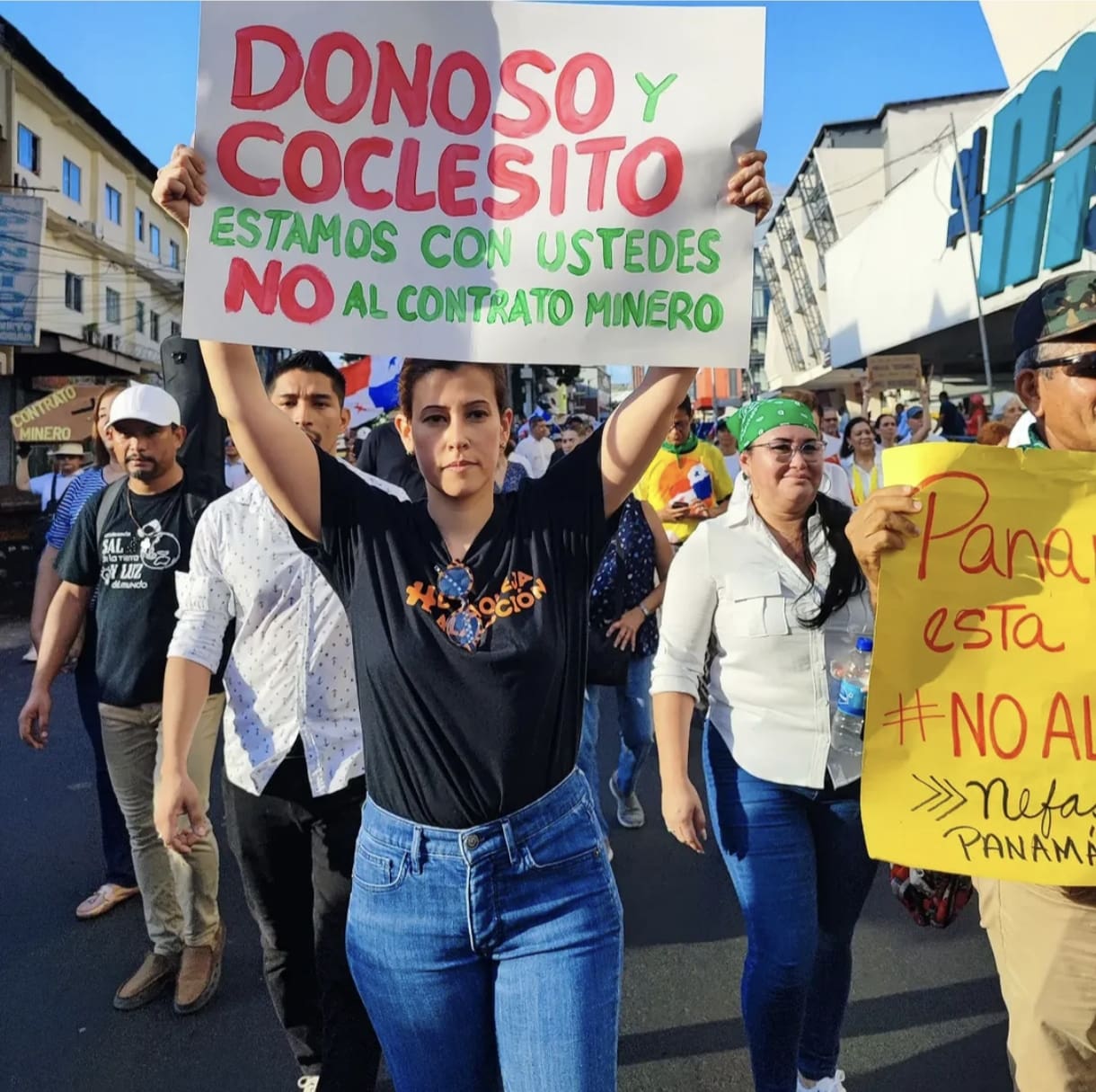
The Digital Poachers review identified dozens of posts across X, TikTok, and Instagram repeating the accusations, generated and amplified by a network of accounts strikingly similar to those involved in the attacks on Raisa Banfield and Camila Aybar.
The newspaper La Crítica published a defamatory item repeating the claims, and journalist Atenógenes Rodríguez, from the program Cuarto Poder, echoed the narrative. Influencers also joined in, including lawyer Karisma Karamañites, who has more than 70,000 followers on TikTok and accused Cornejo of being an activist “funded by the state.” In response to the allegations, Cornejo’s supervisor, legislator Alexandra Brenes, publicly denied the accusations on social media.
Martita es parte de mi equipo de trabajo desde febrero 2026, es una profesional que cumple con su horario, funciones y sí, también denunciamos lo que está mal. No dejaremos de actuar, así les incomode y manipulen la información. Sigan cobrando ?, nosotros seguiremos trabajando !
— Ale Brenes (@AlexandraBrene6) April 24, 2026
At the same time, Panama’s Office of the Comptroller General suspended salary payments to Cornejo and several of her colleagues in the independent VAMOS caucus. Comptroller Anel Flores justified the measure on the basis of an audit covering a period before Cornejo had even joined the National Assembly. She took office on February 2, 2026, whereas the audit concerned events from 2025. Cornejo and several other officials subsequently filed legal complaints against Flores, accusing him of abuse of authority and falsification.
Por cierto, no vamos a retirar nuestra denuncia por abuso de autoridad, usurpación de funciones públicas y falsificación de documentos, señor @boloflores
Para remate hoy habla de peculado ! pic.twitter.com/8HQ70h3NF8— Martita Cornejo R. (@martitacornejor) May 8, 2026
“I’m not even being paid by the institution where I work, and they’re calling me a botella,” says the environmental lawyer, who has already pursued legal action and submitted evidence challenging the official account. “We cannot allow ourselves to become accustomed to this.”
Gendered Violence
As the database of digital harassment against environmental activists makes clear, women are disproportionately targeted in Panama.
A study titled Safe Online (Seguras en Línea), conducted by the Panamanian Institute for Law and Technology (Ipandetec) between 2021 and 2023, documented the main forms of online violence in the country. Eight out of ten respondents reported having experienced online harassment or abuse at least once in their lives. Most of the victims were women or members of the LGBTQ+ community.
“There have been times when people take photos of me out of context, post them somewhere else, and add sexual hashtags,” says Aybar.
According to digital rights lawyer Lía Hernández, these attacks are far from random. Women continue to be viewed as “the weakest link” within conservative and patriarchal social structures. And when those women are public figures—such as Raisa Banfield or Camila Aybar—the harassment is intensified by the political and economic interests surrounding mining.
The phenomenon extends well beyond Panama. A report by the organization Global Witness on digital threats against environmental defenders found that nine out of ten activists had experienced online harassment or abuse linked to their work. Many described the same recurring pattern: anonymous attackers, troll farms, and the circulation of fabricated content, including deepfakes. The script is remarkably consistent across countries. Women are targeted with attacks focused on their appearance, morality, and sexuality—much as Aybar has been through the sexualization of her images.
Many victims ultimately choose not to report digital violence. Hernández says this is often because they are unfamiliar with the available legal mechanisms or lack confidence in the authorities responsible for investigating such cases. There is also a psychological barrier: victims frequently avoid pursuing legal action because they fear being questioned, discredited, or retraumatized during the process.
After gathering evidence, Aybar filed a complaint with the Specialized Cybercrime Prosecutor’s Office on February 3, 2026. Attackers had gained access to an account she had not used since adolescence, extracted photographs from it, and distributed them without her consent across social media platforms and online groups. To date, investigators have not been able to identify those responsible.
instagram.com/reel/DUTdyDYESeJ/?utm_source=ig_web_copy_link&igsh=MzRlODBiNWFlZA==
“This is not a game. It’s not a rumor. It’s a legal matter in which my dignity, integrity, reputation, privacy, and emotional well-being have been severely affected,” she said in a statement shared on her social media accounts.
Despite the attacks, Aybar continues to produce environmental content for her digital platforms. Banfield remains a prominent voice in defense of environmental causes, both in the media and on social networks. Cornejo continues pursuing environmental protection through legislative initiatives.
At any moment, a new deepfake could emerge. Another abusive post could go viral. Another threat could arrive. Yet all three women appear to share the same conviction: they will not be silenced.
The voices of the thousands who took to the streets in 2023 to protest mining in Panama changed the national conversation. As environmental awareness becomes increasingly visible across the country, the debate over reopening Cobre Panamá risks being overshadowed by a more pressing question: Why are those who defend the environment subjected to the kind of systematic attacks exposed by Digital Poachers?
Digital Poachers (Taladores Digitales) is an investigative project aimed at uncovering the interests behind online smear campaigns targeting environmental activists in six Latin American countries. The project is coordinated by the Latin American Center for Investigative Journalism (CLIP) in partnership with AFP (Brazil), Colombiacheck (Colombia), Agencia Ocote (Guatemala), Contracorriente (Honduras), Animal Político and Mongabay Latam (Mexico), and Concolón (Panama). It was carried out with support from the Global Initiative for Information Integrity on Climate Change and received legal review from El Veinte.


