


Reynaldo and two of his relatives left Honduras and fled to the U.S. in 2020. In Mexico, a person offered them a faster way of traveling: crammed with dozens of migrants in a tractor-trailer. An investigation led by Telemundo and the Latin American Center for Investigative Journalism (CLIP), in collaboration with Contracorriente, revealed that migrants regularly utilize this mode of transportation, in which authorities are often complicit.
By Allan Bu/Contracorriente
Reynaldo, a campesino from the western Honduran department of Ocotepeque, was given clear and precise instructions: do not make a sound while traveling inside the trailer, not even to breathe.
A few days before, he and two of his cousins made the decision to take the migration route to the U.S. because they had lost their jobs during the COVID-19 pandemic. In Mexico, they were advancing on their own when they met a friendly stranger, whom Reynaldo calls “friend” and who conveniently offered them a much faster and safer means of transportation.
Reynaldo, his cousins, and dozens of migrants were crammed into a truck trailer, where they had to wait for hours in complete silence. It was freezing inside, and smugglers did not allow them to eat or to take care of physiological needs. Each person sat between the legs of the person behind them, forming four rows of people along the trailer. They remained in that position for 11 hours.
This way of transporting people goes back hundreds of years when African slaves were brought to the Americas on ships.

Cases like Reynaldo’s have become more common in recent years. Thousands of migrants, among them Hondurans, ride in truck trailers across Mexico. Circumstances change such as the duration of the trip, the price, and the way they are boarded, but there are two constants: human smuggling networks, who organize these trips, and the complicity of public officials, especially in Mexico.
During the last five years, 159 cases of tractor trailers – abandoned or stopped by authorities – transporting 18,921 migrants were reported. These numbers were obtained from a database compiled by the Latin American Center for Investigative Journalism (CLIP) and Telemundo, who gathered data from statements issued by Mexico’s National Immigration Institute (INM), registries from the press, and other news – which list the number of migrants traveling inside trailers that were either involved in accidents, stopped by authorities or abandoned. According to these data, Hondurans represent the third largest group of migrants in these cases with more than 2,339 persons, behind Guatemala with 7,781 persons. (See full story published by our journalistic alliance)
Over the last five years, the U.S. Border Patrol reported that a total of 888,511 Guatemalan migrants and 858,114 Honduran migrants were detained. Both countries rank as second and third in terms of the number of detainees, respectively. Mexico is the country with the highest number of detained migrants (2,735,858) during that period of time.
There are thousands of people heading to the U.S., and only a fraction of them cross the border without being detected by U.S. authorities. Such a high number of people traveling north, and the difficulty of legally crossing the U.S.-Mexico border brought about human smuggling networks that generate billions of dollars in profits and whose tentacles stretch across all levels of society.
Reynaldo boarded the trailer in Mexico City, but many migrants hire smugglers as soon as they leave their neighborhoods or cities in Honduras. Smugglers or “coyotes” offer trips with amenities that they usually don’t provide. They change the dynamics of their operations; migrants travel on privately-owned cars, buses, by foot or in trailers, many of which have been found crammed with migrants in recent years, suggesting that human smuggling networks offer this mode of transportation on a large scale.
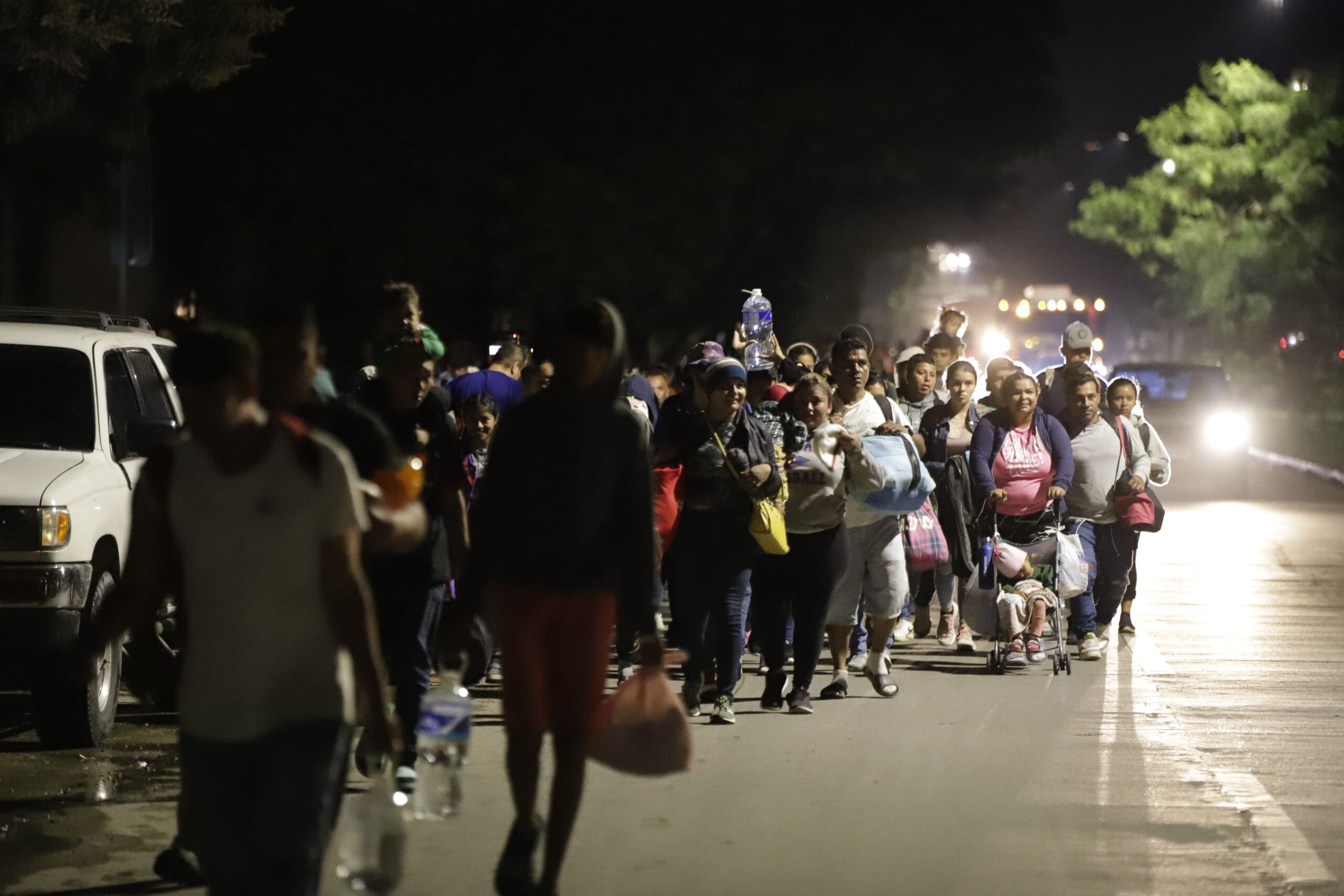
Migrants pay large sums of money to cross Mexico in truck trailers, risking their lives in the process. A migrant could pay a smuggler up to $14,000 for a trip from Honduras to the U.S. Reynaldo paid $600 for a seven-hour trip from Mexico City to Monterrey, a seven-hour drive away from the U.S.-Mexico border.
At the main station in San Pedro Sula, in northwestern Honduras, Donnys, a farmer who left the country in December 2023 said he had heard about migrants being transported in trailers, but he couldn’t afford it. “Yes, I’ve heard about the trailers, but those people have money. Those of us who cannot afford it have to walk or ask for rides. On the road, it’s all a gamble. Whether we walk or travel by car, we entrust ourselves to God; he has the final word,” he said while carrying his backpack, the only belonging he took on this adventure.
Enclosure
Reynaldo was interviewed by Contracorriente, member of the journalistic alliance that carried out this investigation, in the municipality of Ocotepeque at dusk, next to a highway that leads to the Guatemalan border, on which thousands of migrants not only from Honduras but also from Nicaragua, Venezuela, Colombia, Ecuador, Haiti, Russia, as well as African and Asian countries travel as they head to the U.S.
It was cool outside when we met with Reynaldo. He told us about his trip inside the trailer: “We could hardly breathe; I sat on the floor, and another person sat between my legs. We just took our backpacks with us,” he said. “We were sitting in rows. If you have a cough or the flu, you’re not allowed to go because you’re going to make too much noise. You have to be as quiet as possible and are not allowed to eat anything.”
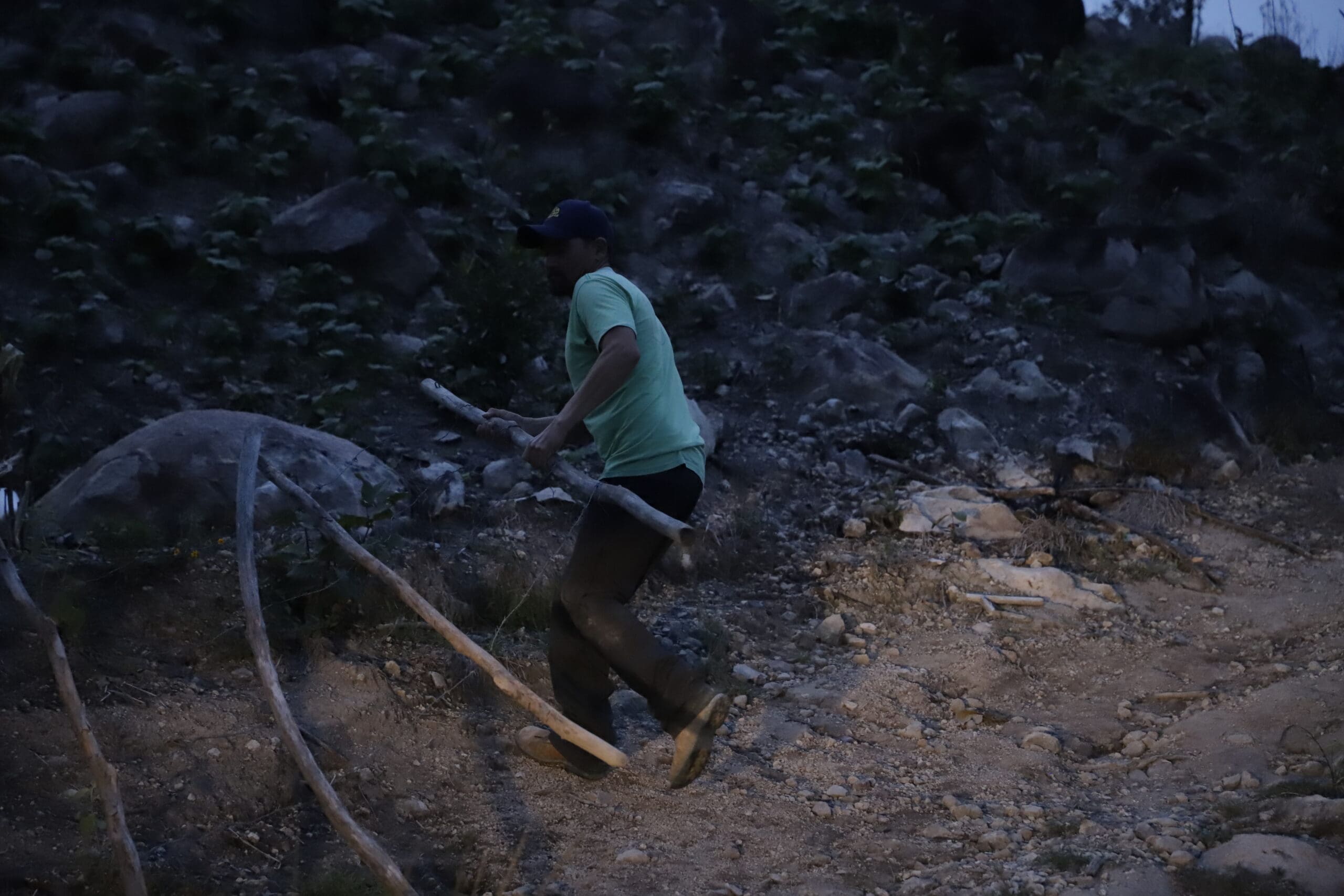
Reynaldo and his cousins boarded the trailer somewhere close to Mexico City at 7 p.m. and they arrived in Monterrey at 6 a.m. the following day, 11 hours later. We asked him how many people they traveled with, and he said that he couldn’t count. “We sat in four rows along the trailer from end to end, so there were a lot of people. Smugglers simply say ‘get in,’ and it’s completely dark,” he said.
Despite cases of people who have died or have been close to dying of asphyxiation inside trailers, Reynaldo was told that he should take a jacket and a cap, if possible, because the cold is unbearable. “Otherwise you shiver with cold at night. Some said, ‘I haven’t taken a bath in days; I’ve been starving, and it is freezing here.’ Most migrants come from warm regions,” he said.
Reynaldo says that four armed individuals from the human smuggling organization were inside the trailer in strategic positions to maintain order. They said loudly and clearly that they would “cover anyone’s mouth” if they had to, and that’s why no one dared disobey them. Instructions also applied to minors, who enraged smugglers when they cried. Reynaldo heard smugglers say: “Shut that son of a bitch up.” “Some women cried when smugglers mistreated their children,” Reynaldo said.
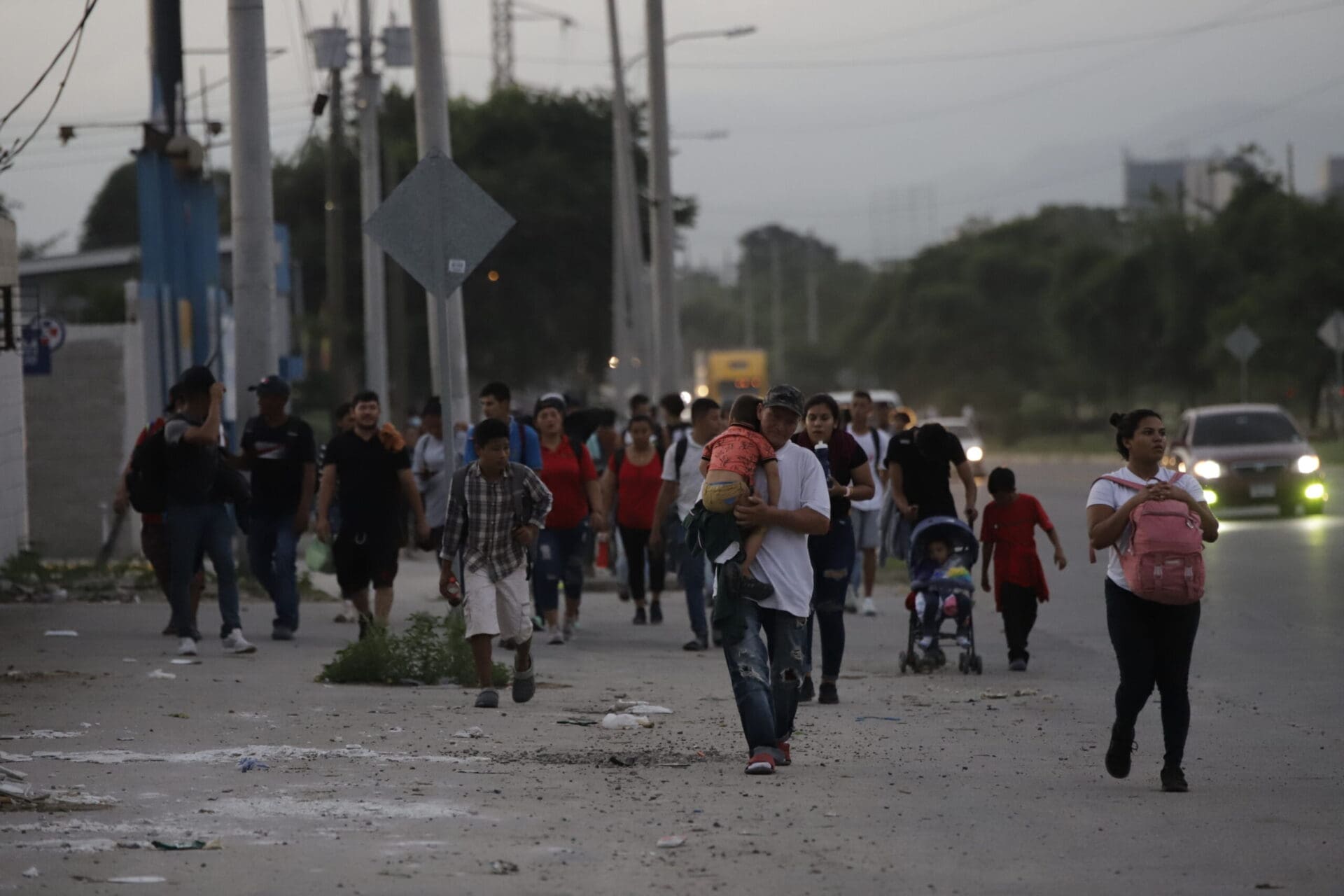
Rosa Yanira, another Honduran migrant, traveled with her two sons inside a trailer. She told Telemundo a story similar to Reynaldo’s. They took jackets because smugglers warned them about the cold inside the trailer, but by the end of the trip, they couldn’t stand the heat. And they were not allowed to make any noises. She recalls that a boy was crying once and his mother couldn’t soothe him, so one of the “guides” said, “If you don’t shut him up, I will.”
After such a grueling trip, Yanira was kidnapped, a fate that awaits hundreds of migrants en route to the U.S. There are many testimonies of abuse against migrants in transit through Mexico ranging from deaths inside trailers to cold-blooded killings by kidnappers. There are also reports of people who have disappeared in the Mexican desert or were maimed by trains. Despite the risks, Hondurans continue to flee their country. In 2023, the U.S. Border Patrol detained 234,799 Hondurans who had crossed the border.
Those who left and didn’t arrive are hopeful of trying again. Reynaldo – who spent more than 10 hours inside a trailer and was dropped off close to Saltillo, in the northern state of Nuevo León – was deported and had spent all his money. However, he says he still thinks about migrating again. For now, he grows corn and beans, and does any kind of work to make ends meet, but the thought of trying again is always there: “I want to try again. Once you have made the trip, you enjoy it despite enduring hunger and sleeplessness.”
Authorities’ complicity in human smuggling
“Once you’re in Mexico, find a coyote or a ‘pollero,’ as they are called by smugglers. They are the ones who load people inside the trailer,” Reynaldo said without mentioning if they were pulled over by authorities during the 11-hour trip across Mexico.
Our journalistic alliance interviewed a truck driver in Mexico who has occasionally transported migrants in his “cage” (trailer) since 2013. He has probably transported around 100 migrants, he says.
He said he doesn’t belong to a criminal organization, but they contact him every now and then – without the possibility of refusing – to drive his truck “loaded without any cargo,” as they say when a trailer is full of people and not cucumbers, pineapples or watermelons. He noticed the complicity of authorities in such a profitable and unscrupulous business in his first trip: “Your nerves are on edge; military officers pull you over, and you tell them what’s going on. You make a call, and they talk to each other. They get their cut, and you’re allowed to go.”
The driver explained that if authorities pull a truck over, smugglers have to pay about $60 for each migrant. If smugglers lose one migrant, they could lose up to $4,500, he says. That amount of money demonstrates how profitable this business is. (Read full interview here)
Former CIA Officer David Fitzgerald gave a talk to associates of The Cipher Brief affirming that there is growing influence and coordination from drug cartels in human smuggling from Guatemala to the U.S.-Mexico border.
“. . . for some of the cartels, especially the Mexican cartels, and in Colombia, the Clan del Golfo or the Gulf clan. Human trafficking has been almost as profitable or in some cases more profitable than narcotics smuggling. Over the last couple of years, the Mexican cartels have basically gone from operating in or close to the border to controlling the whole migrant system all the way from Guatemala to the US border,” Fitzgerald said in his talk.
The driver coincides with Fitzgerald’s views and affirmed that he has seen criminal groups provide more protection to the human smuggling business than to the drug trafficking one.
Honduras’ Ambassador to Mexico Héctor Amador, who was interviewed by our journalistic alliance, doesn’t concur with this perspective. He says that human smuggling “has no connections to drug cartels.” These are two separate businesses, he added, but human smuggling organizations occasionally abandon migrants and hand them over to kidnappers, with whom they have connections.
We inquired with Mexico’s National Immigration Institute (INM) and the National Guard – both responsible for overseeing highways – about their outlook on this matter and sought a response to accusations of complicity among public officials, but by the time this investigation concluded, they had not replied.
The migrant exodus continues
The story of a two-year-old boy who was found alone, shirtless, and surrounded by waste and old clothes made headlines across Latin America in 2021. The body of a 25-year-old man was found less than two meters away. The boy’s name is Wilder, and he was traveling with his father to the U.S. He was found outside of an abandoned trailer on a highway in Las Choapas, in the state of Veracruz.
According to INM, migrants who were traveling in the back of a trailer truck said that some people had fainted due to the lack of air while others screamed and hit the walls demanding that the driver stop the vehicle. A few minutes later, he stopped, and one of the guides opened the doors. Those who still had strength jumped out of the trailer and ran away. Eight people were found: seven adults and little Wilder.
According to the database compiled by our journalistic alliance, at least 15 trailer trucks transporting 2,910 migrants, including 577 minors, were abandoned or pulled over by authorities in 2021. Fifty-six migrants died in a single accident in Chiapas, Mexico. In the last two years, the number of migrants found in truck trailers increased from 4,332 in 2022 to 5,019 in 2023.
Isidro Ladino, affectionately called Chilo by his relatives, fled Honduras looking for better opportunities. At the time, in San José Miramar – a small town in northwestern Honduras and home to some 270 families – a farm laborer would earn $4 a day but that is not enough to maintain a family. This is the main reason why Isidro decided to leave the country.
Both Reynaldo and Isidro lost their jobs during the pandemic and tried to arrive in the U.S. to find well-paid employment.
Gissela, a Honduran woman, used to work in the northern city of Villanueva, where she owned two trucks. She paid a smuggler $25,000 for a trip to the U.S. with her son. They didn’t travel in the back of a trailer truck, but they left behind a very comfortable life.
According to Pastoral de Movilidad Humana en Honduras, an institution that provides assistance and support to migrants and refugees, between 500 and 700 Hondurans leave the country every day. In 2018, during the administration of Juan Orlando Hernández – who was convicted of drug trafficking in New York on March 8 – large caravans of up to 15,000 migrants were organized. Honduras has not seen any caravans since Xiomara Castro took office in January 2022, but northbound migration continues.
What socioeconomic conditions could compel so many people to think that prospects of a decent future can only be found thousands of kilometers away?
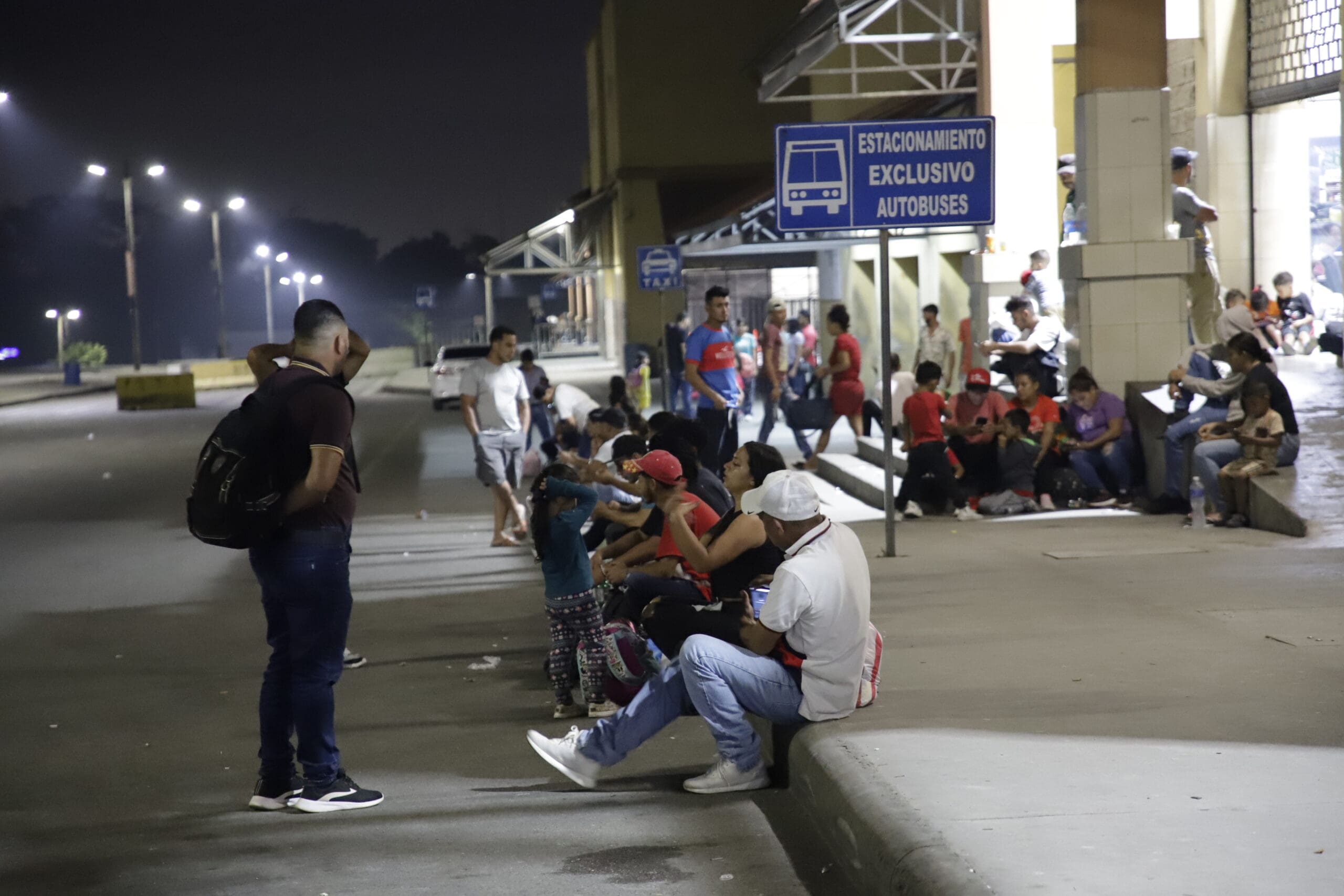
“I enjoy working the land, but wages aren’t high enough to cover our needs,” said Donnys – a campesino from Danlí, in the department of El Paraíso – when we asked him at the main station why he was leaving the country. Like Donnys, many migrate because of unemployment, violence, and the consequences of natural disasters like Hurricane Mitch (1998) and tropical storms Eta and Iota (2020).
The basic needs of the population are not met. From the beginning, Honduras has had a weak democracy, with successives coups, and did not achieve electoral stability until 1980.
During that “democratic era,” elections were held every four years, but problems such as corruption have worsened. Honduras’ Anti-Corruption Council (CNA) reported annual losses of up to 60 billion lempiras (around $2.4 billion) due to corruption during the previous administration. There is no parallel between economic and population growth, and 63 percent of Hondurans live in poverty. Inequality in this country is among the highest in Latin America, and violence has taken over the streets. By the end of 2023, Honduras’ homicide rate reached 30 per 100,000 inhabitants.
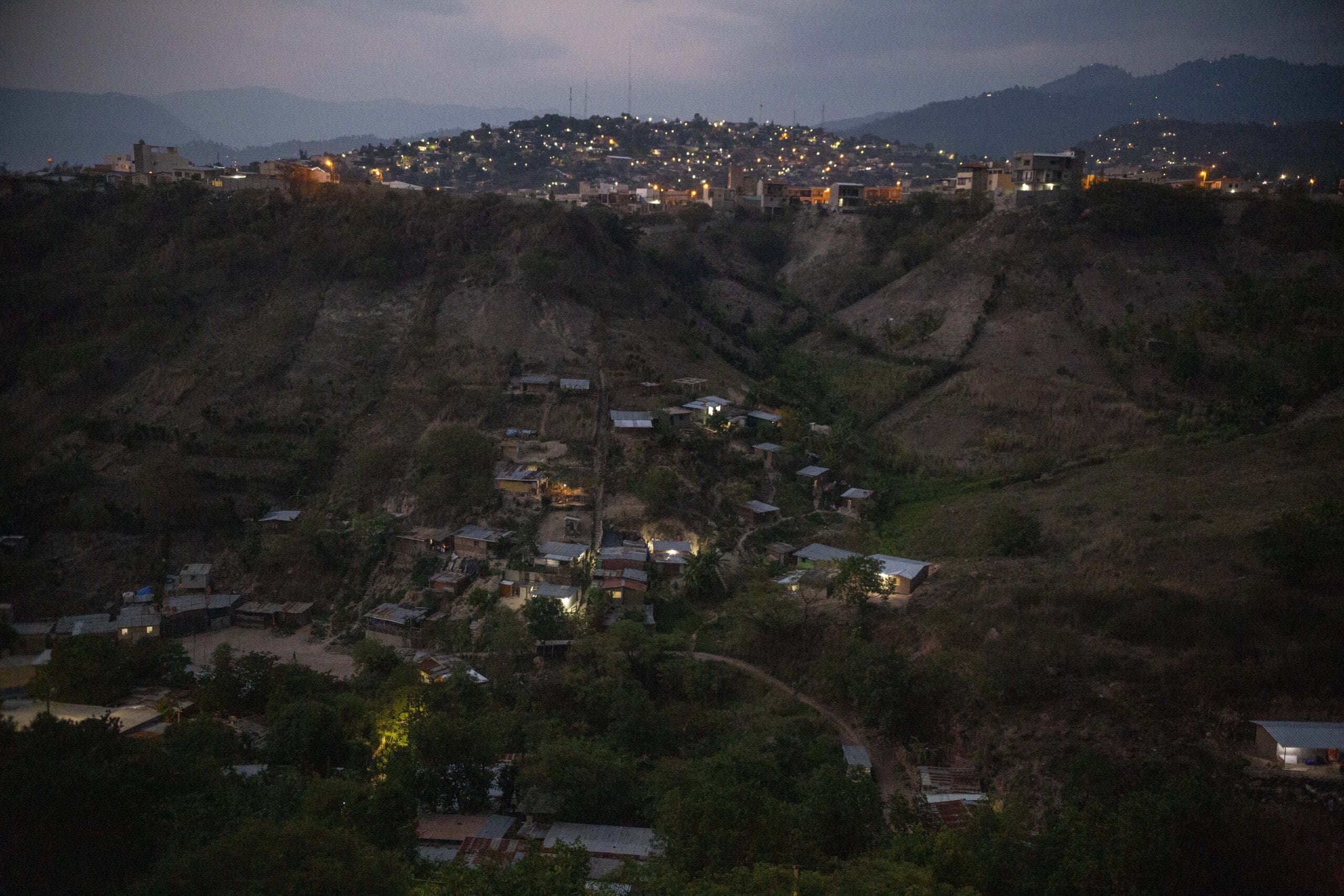
Circumstances force Hondurans to flee their country in search of a better life. They walk, take buses, or ride inside truck trailers. Part of our conversation with Reynaldo perhaps captures much of Honduras’ misfortunes: “I felt joyful on the road despite the hunger, sleeplessness, thirst, negative comments from strangers, or the looks of dislike they gave us, among other things, but I was happy. My dream is to arrive in the U.S.”
Photography: Fernando Destephen and Amílcar Izaguirre
Translation: José Rivera

A journalistic investigation coordinated by Noticias Telemundo and the Latin American Center for Investigative Journalism (CLIP) with the participation of the International Consortium of Investigative Journalists (ICIJ), Bellingcat, Contracorriente (Honduras), Plaza Pública (Guatemala), EnUn2x3-Tamaulipas, Chiapas Paralelo and Pie de Página (Mexico). Legal review: El Veinte