

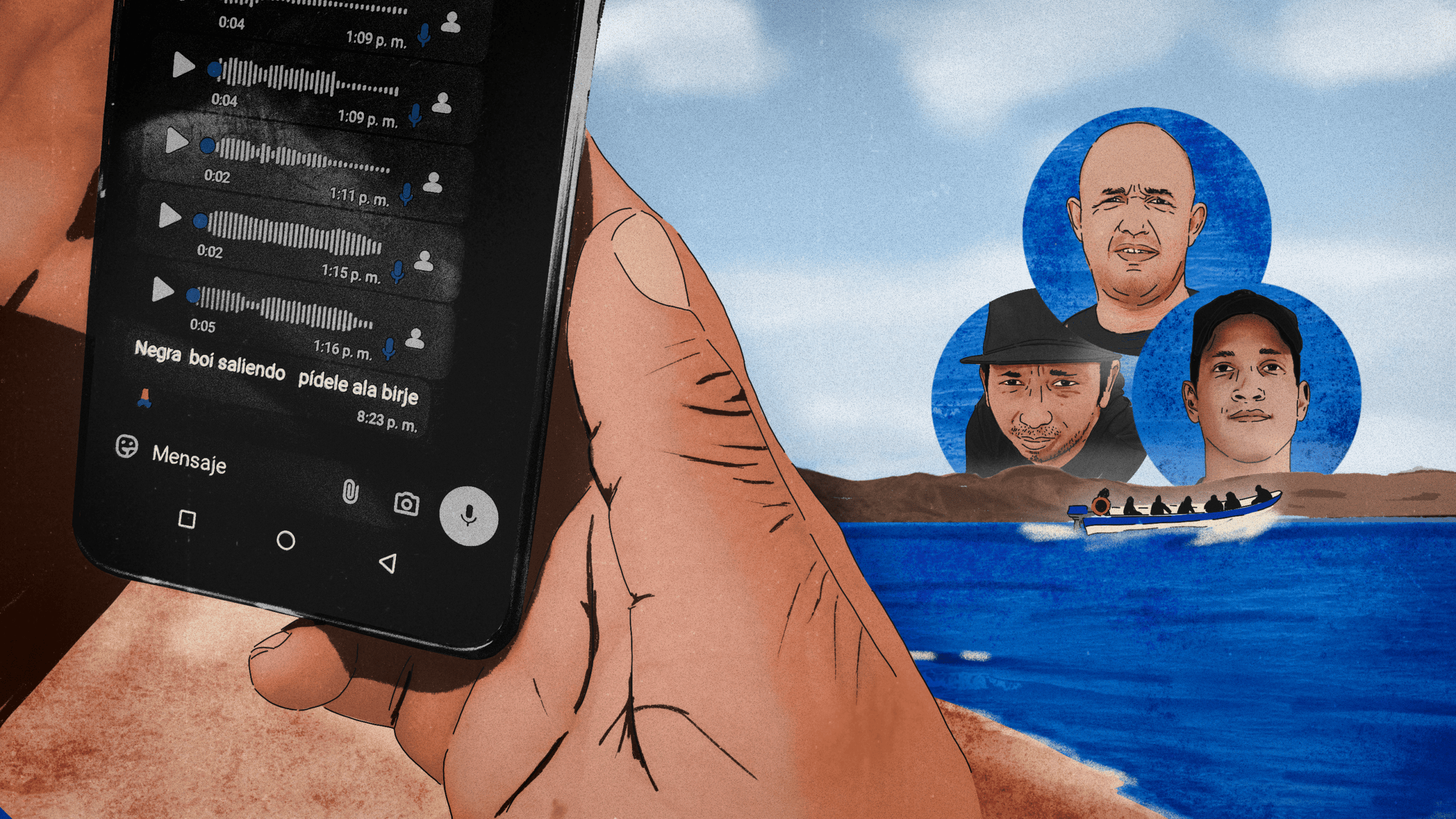
A reporting team from ARI traveled to Güiria, interviewed relatives and friends of three men killed in the explosions, and identified eight victims from Venezuela’s Sucre state.
“That’s what Donald Trump never stopped to think about. He’s killing a father, and he doesn’t even know why he got on that boat. He left because we had to take our daughter to a dermatologist and we didn’t have the money,” said the wife of one of the men.
In Güiria, every time U.S. Southern Command launches a “lethal kinetic strike” against boats crossing the Caribbean Sea, people talk about it. In this fishing town on the Gulf of Paria in Sucre state, northeastern Venezuela, residents worry and ask themselves whether, this time, one of their own has become the latest victim.
People there openly acknowledge that drug trafficking has been part of the town’s economic life for decades. That is why several local residents have died in the bombings. “The gringos blew them up,” people say whenever one of these attacks occurs.
But while Donald Trump’s government boasts of killing dozens of “narco-terrorists” at sea, the stories told in Güiria paint a different picture: the dead were poor men whose families have now been left even more vulnerable.
There is the story of Luis Ramón Amundarain, a 36-year-old motorcycle taxi driver and boat captain whose final message to his wife was an everyday joke. The man did not even own a house or expensive possessions. He accepted his first “job” because he had no way to pay for his youngest daughter’s dermatology treatment or feed his four other children.
Then there is Juan Carlos Fuentes, a bus driver and mechanic who, unable to repair his vehicle in a Venezuela crippled by crisis, traveled to Trinidad and Tobago searching for a future.
“He couldn’t take it anymore. He just couldn’t anymore. Sometimes my children ask me for things and I have nothing to give them,” he told his wife before leaving.
His journey ended in an explosion in international waters.
There is also the story of Eduard José Hidalgo, a former artisanal fisherman who, after being deported from the United States in December 2025, was forced by the criminal groups controlling the drug trade to take another “job.”
Other victims identified in this investigation who died under similar circumstances include Luis Alí Martínez, Dushak Milovcic, Robert Sánchez, Eduardo Jaime, and Jesús Carreño.
The boats they were allegedly traveling on were blown apart without trial, without any presumption of innocence, and without regard for the fact that, at the weakest links of illicit economies, hunger and desperation are everywhere.
This chapter of The Bombed: Denied the Right to Defense reconstructs the lives of three men whose deaths were celebrated on social media by international authorities, yet mourned in silence by those who knew the hardships they carried.
The investigation was coordinated by the Latin American Center for Investigative Journalism (CLIP) and carried out in partnership with Venezuela’s Alianza Rebelde Investiga (ARI); Colombia’s 360, Casa Macondo, and Verdad Abierta; The Guardian in Trinidad and Tobago; and freelance journalists in the Dominican Republic, Ecuador, Costa Rica, and Mexico, with support from El Veinte and Airwars.
Ramón’s Last Message
At 7:41 that evening, Ramón vanished. His wife never received his usual replies—messages delivered in that firm, teasing tone that in Venezuela can feel like affection, flirtation, or a private joke between partners. The last thing Ramón sent her, jokingly, was: “Go make dinner. Hurry up.” He sent it over WhatsApp on October 2, 2025. He never came online again.
The next day, October 3, U.S. Southern Command, through Operation Southern Spear, bombed a speedboat traveling through international waters in the Caribbean, near the Venezuelan coast. Four men were aboard. All of them died.
One of them was Luis Ramón Amundarain—Ramón, as everyone who loved him called him.
He was born in Güiria, where his family still lives. Where his wife received that message. Where Ramón spent all 36 years of his life. Before becoming the victim of that attack and being labeled a narco-terrorist by U.S. authorities, Ramón was an experienced fisherman and a motorcycle taxi driver.

Today, his wife walks slowly, as though dragging each step behind her. Her shoulders tilt toward the ground, her brows droop, her eyes remain wet. Her voice turns hoarse and breaks apart every time she imagines what was done to them and what their final moments must have been like.
“When I saw the first boat they bombed—the one Che María was on—I asked him, ‘Is that really true?’ And he said, ‘Yeah, looks like it is.’ Ever since then, I haven’t stopped thinking about what those people must have felt. I mean, in that exact moment. And when they tell me he was there…”
Her voice cuts off. She cannot hold back the tears. After a long pause, she continues:
“It’s something I keep imagining…” Again, she loses the words as tears run down her cheeks. “How… I mean, how he lived through it. Something so horrible. Because it’s horrible.”
She is tall and broad-shouldered, but whenever she speaks about Ramón, her posture softens, making her seem fragile, exposed. She remembers the conversation they had after the bombing of the first boat, on September 2, 2025, when 11 people died.
“Che María” was well known in Güiria. His real name was Luis Alí Martínez, and at the time of the attack he was supposedly serving a house-arrest sentence after being held responsible for the 2020 Güiria shipwrecks, in which more than 40 adults and children died, including three of his own children.
“Ramón, what if those people come this way, toward Macuro? The sea washes everything back.”
“No way. Those people aren’t coming over here.”
“You think so?”
“No, girl.”
“But listen—if you’re on the boat, and at that exact moment you look up and they fire one of those things… do you even have time to jump? And what happened to them? Did they burn? Were they blown to pieces?”
She walks through downtown Güiria under the blazing sun, accustomed to temperatures above 86 degrees. Now she asks herself those same questions about her husband. She says the uncertainty torments her because she does not know what happened to him.
Sometimes, when she goes out, she feels the stares of neighbors and grows uncomfortable. Speaking softly, she recalls the last night she talked to the man she had shared 15 years of her life with.
“We spent a while talking and joking around, because nobody joked around like he did.”
That night, October 2, she was outside the house playing the lottery when he messaged her:
“What are you doing?”
“Playing the lottery.”
“Go make dinner. Hurry up,” he told her jokingly.
“Alright then, I’m going to make dinner,” she replied, playing along.
That was at 7:41 p.m.
At the time, Ramón was in Trinidad. His wife was in Venezuela, in the house where they lived with their five children, all of them minors. On September 28, he had traveled to the Caribbean island, less than 60 miles from Güiria.
According to his wife, he left looking for extra income because opportunities in town were scarce. Fishing and motorcycle taxi work no longer brought in enough money for a family of seven.
“He left Güiria on September 28. Everything was normal. Then, once he got there, we kept talking. But on the morning of October 3, I woke up waiting for his usual call or good morning message. Nothing came. That struck me as strange.”
Then came the phone call from her sister—the wife of Ramón’s brother.
“They blew up a boat.”
“Okay… and what does that have to do with me?” she replied.
“Ramón and Juan Carlos were on it.”
“That’s a lie!” was all she managed to say.
She remained in shock for two hours before the tears finally came. Her children saw her crying but did not understand why. The oldest was 12 years old. He found out when neighbors began arriving at the house to offer condolences.
Ramón Didn’t Say a Word

Juan Carlos Fuentes, Robert Sánchez—Ramón’s cousin—and Jesús Carreño were also on the boat that day, according to several sources in Güiria. The first two were from Güiria and close to the veteran fisherman. The third was from Macuro, a neighboring town about 25 miles away and so close to Trinidad that, from the beach, you can see the lights of the island glowing at night. Both towns belong to Valdez municipality.
His wife’s disbelief was not only shock. She had another reason not to believe it.
Ramón, who usually told her everything he planned to do, never mentioned that trip. On the morning of Thursday, October 2, they exchanged good-morning messages, and Ramón told her what he planned to do over the next few hours.
“He told me he was going to visit my sister, who lives there in Trinidad. That’s why, when the news came, I didn’t believe it. Because he told me he was going there. I called him and he didn’t answer. Then I called my sister and asked her, ‘Did Ramón get there?’”
The answer that morning awakened her worst fears.
“No, Ramón isn’t here. Haven’t you heard what people are saying?” her sister asked.
“Yes, I heard. But since he told me he was going there…”
“I was waiting for him too.”
That was when she realized her husband had not done what he told her he would do.
She believes he kept it from her because, had he told her what he was really planning, she would have done everything possible to stop him. She had succeeded before. It was not the first time Ramón had considered taking a job like that.
No one knows where Ramón was headed, but all signs suggest he was about to make a “run,” the local term for transporting illicit cargo. Yet another person close to the fisherman insists firmly that, at the moment the boat was blown apart, they were carrying no drugs whatsoever.
“I’m sure there were no drugs on that boat. Absolutely sure,” one of Ramón’s friends said. “And a boat going from here to there is going to pick up merchandise, not deliver it. So he”—meaning Donald Trump—“is killing people just to kill them.”
The friend added that he does not know what Ramón’s destination was.
His wife’s voice grows heavy again.
“When they sent me the video of the boat, I could see people swimming in the water. If there were people swimming, what did they do to them? Did they finish them off? That’s the question I ask myself every single day, because I can see people swimming. I see it. And I think: ‘What if Ramón was one of them?’ Didn’t they see they were human beings? Didn’t they feel anything?”
Earlier this morning, on President Trump’s orders, I directed a lethal, kinetic strike on a narco-trafficking vessel affiliated with Designated Terrorist Organizations in the USSOUTHCOM area of responsibility. Four male narco-terrorists aboard the vessel were killed in the… pic.twitter.com/QpNPljFcGn
— Secretary of War Pete Hegseth (@SecWar) October 3, 2025
She pauses.
“The way I see it, a person may be doing whatever they’re doing, but there’s still a way to judge them. Why didn’t they intercept the boat first, inspect it, confirm whether there were drugs on board?”
She calms herself. Her voice weakens further as she wipes away tears with her fingers.
“To this day, it still feels unreal to me, because I haven’t seen a body. I haven’t seen anything. But I believe it too. I mean, I know I have to start accepting it, because from that date until now I haven’t received any answer. No messages. Nothing.”
The statement released by U.S. authorities after the strike offered neither details nor evidence. Defense Secretary Pete Hegseth was the official who confirmed the operation:
“Our intelligence unequivocally confirmed that this vessel was trafficking narcotics, that the individuals aboard were narco-terrorists, and that they were operating along a known drug-trafficking route. These strikes will continue until the attacks against the American people stop!!!!”
“Why are they destroying so many families?” Ramón’s wife asks. “For what purpose? Because regardless of whether they were captains of a boat, they still didn’t own any of it. The boat didn’t belong to any of the men who were on it. Ramón was a fisherman. We don’t even own a house, and they call him a narco-terrorist. A narco-terrorist should have money, property. We have nothing. I live in my brother’s house.”
At the time of the attack, the military operations had left 21 people dead. Today, the death toll has risen to more than 180.
The Family’s Hope

Ramón had worked as a fisherman since he was 14 years old. He was an exceptional captain. He had never traveled very far. Usually, Macuro and Pedernales were the most distant places he went. He would pick up the fish caught there, transport them back to the dock in Güiria, then head home, hop on his motorcycle, and start doing odd driving jobs around town.
His wife admits that after October 3, she stopped sending their three oldest children to school. Only the 12-year-old knew exactly what had happened. The other two learned at school, where classmates told them their father had been blown up.
“When his grandmother decided to hold a prayer service for Ramón’s soul, my oldest son said, ‘I’m not going. If she’s lost faith, I haven’t.’ To this day, my children still say their father is going to come back.”
The prayer service took place on April 3, six months after the bombing. Up until then, Ramón’s mother still hoped her son would return. But someone eventually told her they really had been attacked, that he had been on the boat, and that the men had jumped into the sea.
“I have my youngest daughter, the two-year-old, and if she eats fish, she breaks out in rashes. And fish is the cheapest food here. If I buy fish, what am I supposed to feed her? She has to follow a special diet. And he was the one covering all those expenses.”
There was food to pay for, antihistamines, creams. When the little girl’s skin flares up, her whole body starts itching and she scratches herself until she bleeds. The cream she uses costs more than $10 and lasts barely eight days. Everything in Güiria is expensive, and there are no specialists nearby.
Families eat properly on the 15th and the 30th of the month, when government subsidies arrive. Some people, like Ramón’s wife, are already so deep in debt by then that the money disappears immediately into repayments.
“That’s what Donald Trump never stopped to think about. He’s killing a father, and he doesn’t even know why he got on that boat. He left because we needed to take our daughter to a dermatologist and we didn’t have the money. We would’ve had to leave Güiria for that. You need money, you need transportation. And he said, ‘Alright, I’ll go see what I can do.’”
She says that is why he went to Trinidad.
She pauses, talks briefly about something else, then adds:
“I’m not going to pretend he may not have decided to get on that boat to do that kind of work. Given the situation, maybe he did. But when that explosion happened, he was killed unjustly because he wasn’t carrying anything.”
She does not know who hired him, who he had spoken to, who owned the boat, whose cargo they were supposed to pick up, or where they were headed.
In the months before the trip, Ramón had worked only as a motorcycle taxi driver. At the time he was bombed, it was the first time he had ever taken that route.
“In those days, the little girl’s skin was in really bad shape. That’s another reason he left. He called every day. After everything happened, I started seeing her skin improve. And that hit me hard too, because I thought, ‘Ramón would have been so happy to see this.’”
She says she never demanded anything from her husband beyond food for the family, partly because she understood how things worked in town. She did not want him getting on a boat to make “runs.”
Sometimes, when food was running short, the subject would come up at the dinner table.
“Someone asked me to do a trip.”
“And for what? I’d rather we just have enough to eat, even if we never have luxuries. I don’t want you getting on a boat. What if you get arrested? Or the cargo falls into the sea? Or you come back and they don’t pay you?”
She remembers October 2 with particular sadness because she feels Ramón made her laugh more than usual that day over chat.
“That same day I had a fever. And I texted him, ‘Nobody loves me.’ And he replied, ‘Hold on—what do you mean nobody loves you? Doesn’t your husband love you? Doesn’t your mother love you? Don’t your children love you? You don’t need anyone else to love you.’”
She says she listens to that voice message every single day.

Ramón’s Wife’s Journey
Most of the time, she smiles only faintly, lifting the corners of her mouth just enough to suggest it. Her gaze is soft and innocent, her eyelids heavy. She speaks easily, but cautiously too. The only moments she smiles fully—showing her teeth—are when she tells stories about her husband or their youngest daughter.
People pass by, recognize her, greet her.
“You’re walking far today,” they tell her.
But few people in the town center seem to really know her. Or perhaps they pretend not to. In the hillside neighborhood where she lives, she is far more familiar. That was where the mayor came looking for her on November 29, at 11 o’clock at night.
“You need to be at the airport tomorrow at eight in the morning,” the mayor told her.
“Why? For what?”
“Don’t bring clothes, don’t bring anything. Just whatever you can carry.”
“But what for?”
“The president sent for you.”
“Just me?”
“No, several of you.”
On November 30, she and the wives of four other victims—including those of Juan Carlos, Robert, and Luis Alí—were taken to the Federal Legislative Palace in Caracas. They were received by Jorge Rodríguez, Pedro Infante, and América Pérez.
“He asked us if we wanted to appear on camera,” she recalls, referring to Rodríguez. “We said no. We appear in the video, but only from behind. They promised us the world. They asked me if I had a house, and I said no. Someone even came out to measure a plot where they could supposedly build me one. But after that, it all remained just words.”
She and Juan Carlos’s wife say that once they made clear they did not want to appear on camera, officials told them to gather their belongings and sent them back home.
In December, the governor of Sucre state visited them. Through the mayor, she offered help for the heart condition of Ramón’s 12-year-old son. Nothing has come of it.
“My sister in Trinidad told me, ‘Stop waiting around for anyone. Take the boy to the doctor—I’ll pay for the appointment myself.’ So the cardiologist referred him to a nephrologist. And to this day, I’m still waiting for the mayor’s help.”
A few months ago, she was added to the payroll of the Valdez municipal government as part of the street-cleaning crews. In return, she receives a small stipend.
The children are still waiting for Ramón.
Especially the youngest, who asks about her father every night. She sends him voice notes that never reach their recipient and reminds him not to forget to bring her bread.
“Your daddy’s coming,” her mother tells her when she misbehaves.
“Daddy’s not coming yet,” the little girl replies.
At night, before bed, the ritual changes.
“Mommy, call Daddy.”
“What for?”
“Bread!” she says, scolding him for not bringing it.
“I’ll call him now.”
That is when her mother plays one of Ramón’s old voice messages.
Later, when she lies down to sleep, the girl whispers:
“Dear God, let Daddy come home. Amen.”
Ramón’s wife breaks down crying again.
She remembers that he never allowed her to work, even during times when there was barely enough food on the table. He insisted on carrying every expense himself.
Inside Ramón’s family home, everyone remains fixed on the phone, waiting for a call that might finally dissolve the uncertainty. The older children are the most vigilant.
“They keep saying, ‘Mom, don’t let your phone run out of credit because Dad is going to call.’ Running out of phone credit has become almost traumatic for me because of them. Sometimes the phone rings and I don’t even want to answer, and they say, ‘Mom, what if it’s Dad?’ Every day they live believing their father is going to call, that he’s going to come home.”
She wipes away her tears, pauses, and adds:
“If Ramón had really been a narco-terrorist—if he’d had money, if he’d been living large—believe me, I wouldn’t be living where I live now. And if you go to the homes of the other three men they killed, you’ll see they don’t have much either. Because none of it belonged to them.”
Eduard, the Man Deported from the United States
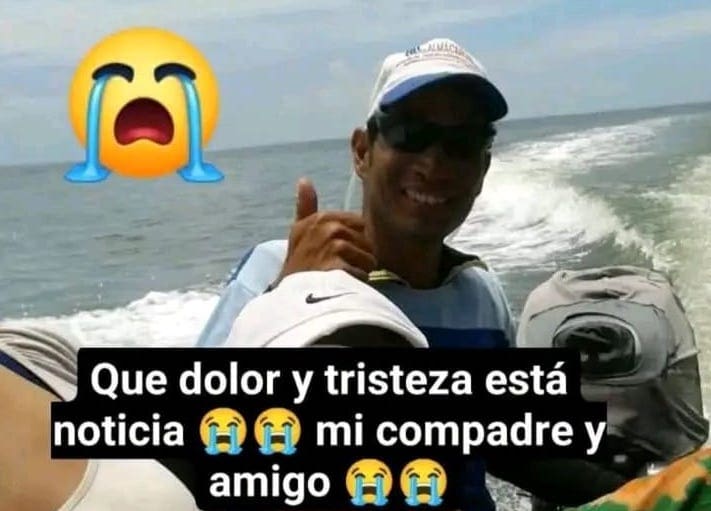
The last anyone heard from Eduard José Hidalgo was that he was in Caracas.
He had gone there to check in with authorities—or at least that is what he told people close to him. Eduard was one of the 266 Venezuelans deported from the United States on a direct flight that landed at Maiquetía International Airport, outside Caracas, on December 3, 2025. According to those close to him, he was required to report periodically to security authorities after his return.
That is what one person close to Eduard, who asked to remain anonymous for safety reasons, told reporters.
The next news they received about him came on February 23, 2026. “They blew him up,” people said. Just like that. “Lethal Kinetic Strike, Feb. 23, 2026” was the headline of the official statement published by U.S. Southern Command on its website. The statement included images of the attack itself. “Three male narco-terrorists were killed during this action,” the text read. Though no names were released, word quickly spread through town that Eduard had been aboard the vessel.
He was 46 years old.
Born in Caracas, Eduard had lived in Güiria since he was young. Like most people who grow up in that coastal town, he became a fisherman. Locals knew him as “El Chingo.” He had been born with a cleft lip, and although he underwent surgery, the scar above his mouth remained visible.
He learned the sea early and learned how to navigate it well—the narrow stretch of Caribbean waters surrounding Güiria, Macuro, Boca del Dragón, and the islands of the Lesser Antilles. The kind of fishing Eduard practiced, like most of his fellow townspeople, was artisanal: small wooden boats powered by outboard motors.
Mar, an old friend of Eduard’s, knew him well. She said she never learned exactly when he left his home for Caracas or when he set out toward the international waters where he was eventually bombed.
“We found out what happened through social media and through relatives of the other two boys who were with him,” she explained.
She said the other two victims were also from Güiria, though she did not know their real names—only their nicknames.
“One of them they called Andresito, and the other one was Topo, or something like that,” she recalled.
And so the rumor that “El Chingo,” “Andresito,” and “Topo” had died spread quickly through the narrow streets of Güiria.
“The gringos blew them up. It happened right after Carnival,” people said.
The rumors traveled from mouth to mouth, and—as had happened since the first attacks involving men from Güiria—they turned out to be true.
Posts soon flooded social media, especially Facebook.
“My friend, this news hurt me deeply,” read one.
“What pain and sadness this news brings. My friend, my brother,” read another, posted alongside photos of Eduard circulating online.

But that is the only information Eduard’s loved ones have ever received about what happened to him.
“To this day, they still haven’t appeared, so…” Mar said quietly.
Neither she, nor Eduard’s mother, nor his five children have heard anything more since that day. All they have are a few scattered and confusing accounts of what supposedly happened at sea.
The Boat Wasn’t Moving
The video released by U.S. authorities followed the same format as the footage from the previous 43 attacks. The only unusual detail was that the boat was not moving. It appeared to be anchored in the middle of the Caribbean. The number of people aboard could not be seen because that section of the footage had been obscured.
“From what we were told, they were on their way back, and the boat had stopped because it was waiting for another vessel that was bringing fuel so they could make it back to shore,” Mar said.
She explained that the information came from people “involved in the business,” in the “runs”—the local term for activities carried out outside the law.
Mar said nobody knew exactly where the vessel had departed from and that any claim on that point would be speculation. Neither Southern Command nor U.S. officials provided precise details when this journalistic alliance requested them.
The men from Güiria became victims 161, 162, and 163 among the more than 180 people killed in these military operations across the Caribbean Sea, part of a campaign that U.S. authorities say is intended to stop drug trafficking into the United States.
Eduard had arrived in the United States sometime between late 2024 and early 2025 through irregular migration routes. He was detained after some time there and later deported back to Venezuela. He landed at Simón Bolívar International Airport in Maiquetía before returning to Güiria.
According to people close to him, he was required to report periodically to Venezuela’s Bolivarian National Intelligence Service, known as Sebin, in Caracas after his return to the country. They said they did not know why. The Venezuelan government, however, had indicated that deportees from the United States who faced prior arrest warrants or were considered politically high-risk would have to present themselves before authorities.
Mar said she did not know whether Eduard had been subject to any such measure. Still, she insisted:
“He had to report to Sebin in Caracas.”
She also said, cautiously, that although Eduard did not tell even his own mother about his departure, it was unlikely anyone had tricked him into making the trip. According to Mar, Eduard already understood the risks posed by the U.S. attacks and knew that those who disappeared at sea were reduced to a number and a label: “narco-terrorists.”
Accounts from relatives and townspeople suggest this was not the first time Eduard had made one of these “runs.” He had reportedly been making such trips for about 10 years, transporting various kinds of cargo. According to those close to him, he was hired by “people” from Río Salado, a town in Sucre state where a cell of the Tren de Aragua allegedly operates.
Eduard took these jobs to earn money to support his family. His oldest children are still teenagers. In Güiria, the work available to an average man is fishing, farming, or informal street vending. But the profits from those activities are nearly nonexistent in an impoverished country like Venezuela, where the official minimum wage is less than $1 a month and the average household income for a family of four hovers around $200 monthly.
Even so, Mar doubts Eduard went out to sea that particular day entirely of his own free will. Nor does she believe he carefully planned the trip.
“They forced him. They were looking for him,” she said. “The organization he used to do those ‘jobs’ for—the same people from Río Salado—came looking for him after he was deported from the United States. He made one trip to Trinidad and didn’t want to do any more. But they kept pressuring him, and he ended up having to go on that trip.”
Juan Carlos Was on That Boat

When the United States bombed the speedboat in the Caribbean and the news reached Güiria, she knew immediately.
No one told her at first that her husband had boarded the vessel. She simply felt it. So when customers arrived at the shop where she worked saying another boat had exploded, she blurted out, her voice more nervous than firm:
“Juan Carlos was on that boat.”
That morning—October 3, 2025—she felt exhausted, physically drained, as though she had not slept at all. She knew her husband had set sail the night before toward an unknown destination. He was from Güiria, raised in the Guarama neighborhood, and had departed from Trinidad and Tobago with three other men after sending her one last message from a friend’s phone:
“Negra, I’m heading out. Pray to the Virgin for me.”

The next day, while she worked, customers entering the store spoke of nothing else.
“They blew up a boat,” people kept saying.
It became the story of the day in the small fishing town in Venezuela’s Sucre state. Her boss eventually confirmed the rumors.
“Juan Carlos was on that boat,” she told her.
“No, girl. How can you say that?” her boss replied.
“Yes. I can feel it. Juan Carlos was on that boat. He was on that boat.”
Around noon, Juan Carlos’s wife went home and sat outside near the front entrance with one of her cousins. A few minutes later, a neighbor arrived and sat beside them.
“Oh my God. Look what just came up on my phone—they blew up a boat.”
She said nothing.
She only repeated to her cousin what she had already told her boss: that she felt her husband had been aboard that vessel. She could barely stand. Her legs felt weak beneath her.
By the end of the day, she went out to sell empanadas. Her phone rang several times, but she ignored it because she was busy working. Later that evening, once she was back home, she checked and saw the missed calls had come from a foreign number.
Her heart started racing again.
She became more certain that something had happened to her husband.
Then the phone rang once more.
It was an acquaintance calling from detention in Curaçao.
“They told me Juan was on that boat,” the man said.
“No, come on. It wasn’t them,” she replied.
“Listen, I understand. I know you don’t want to accept it. But it’s confirmed. It was them. Damn it, Juan Carlos was crazy. He saw how things were getting and still went out there,” the man answered.
She was left speechless. She did not move. She did not react. She sat there silently for a long while. At that moment she was alone in her house. Now there was no doubt left: she had lost her husband. She blamed herself for not convincing him not to make that trip. Before long, the house began filling with neighbors and friends who had already heard what had happened.
Juan Carlos Left from Trinidad

Juan Carlos was 43 years old and the father of four boys.
In town, he was known for driving one of the Yutong buses that arrived in Venezuela in 2011 and were later assigned by the government to private drivers and transportation lines through financing programs between 2014 and 2015. His Yutong bus was his main source of income.
But after Venezuela’s humanitarian crisis deepened in 2016, the vehicle suffered damage that eventually became impossible—or too expensive—for him to repair. Even so, Juan Carlos, who was also an excellent mechanic, kept patching it together however he could, getting it barely operational enough to run the Güiria–Yoco route.
At home, food was scarce, but he did whatever was necessary to put at least one of the day’s meals on the table, especially for his youngest son.
By the last year, the Yutong was no longer running at all.
That desperation led him to Trinidad on September 28, 2025, alongside Luis Ramón Amundarain and Robert Sánchez.
They had contacts on the island who promised them work at a car wash.
Two days before leaving, on September 26, Juan Carlos had been trying to repair the Yutong when the grinding wheel of a power tool snapped loose and sliced open one of his hands, from the base of his fingers almost down to his wrist. He was diabetic, yet seemed unconcerned by the injury.
He simply wrapped a plastic bag around his hand and kept going.
To his wife, however, it felt like a warning that he should not travel. Juan Carlos remained determined.
“Negra, I can’t take this anymore. I’m going to have to leave. I have to go,” he told her a few days before the trip.
Once in Trinidad, he received a call offering him a particular job, one that would involve his friends Luis Ramón and Robert, as well as another young man: Jesús Carreño.
“Negra, this trip came up. I feel like taking it,” he told her over the phone.
“No, Juan Carlos. Stay in Trinidad. At least you know mechanics. Find work there, work there, and we’ll help each other that way.”
“No, Negra. I’m going. I’m going.”

That was when she reminded him of what had happened a month earlier, when the United States bombed a vessel carrying 11 people. One of the dead had been from their town: Che.
The bombing had shaken Güiria. Juan Carlos knew all about it. He had seen the news reports, the photographs, the videos.
“Juan Carlos, nobody can go out there right now. Even if you’re not doing anything, if they see a boat out there they’re going to blow it up,” she pleaded.
But Juan Carlos, stubborn and strong-willed as always, replied:
“Negra, is that what you want? For something bad to happen to me?”
“I don’t want anything bad to happen to you, Juan Carlos. But look at what’s happening. Look what already happened. You can’t just go out there like that. Don’t go.”
“I just can’t take this situation anymore. I can’t. Sometimes my children ask me for things and I have nothing to give them. And I keep looking at that bus sitting there. I want to see my Yutong running again.”
“Think about the little boy, Juan Carlos.”
“That’s exactly why I’m leaving. I’m going. I can’t stand this desperation anymore. I’m going to either live or die, but I’m going.”
Still, Juan Carlos was persuasive. She no longer remembers the exact moment he convinced her that the “run” was not such a bad idea after all.
On Thursday, October 2, shortly after seven in the evening, Juan Carlos called her. They spoke over video chat.
“Negra, hold on, hold on—I think we’re about to leave.”
“Go where?”
He did not answer.
So she continued:
“Oh, Juan. Don’t go out there. Don’t go. Please don’t go.”
“In two days I’ll already be where I’m headed.”
“But are you carrying anything?”
“No, Negra. We’re not carrying anything. The only thing we have is the logistics they gave us. On the way back, though, that’s when we’ll be bringing merchandise.”
As he was about to depart from some beach in Trinidad, he sent her one last message, asking her to pray for him.
It was the last thing she ever heard from him.
Grief and Hunger
“Juan Carlos had never done ‘runs’ in his life,” his wife says. “Never. Never anything like that. Nothing. He tried it out of desperation, because all Juan Carlos wanted was to get his Yutong bus running again.”
She says she does not know who hired him for that October 3 trip. But she is certain that neither the boat nor whatever cargo might have been aboard belonged to him. In fact, it was the first time her husband had ever embarked on a journey like that.
“They look for people to do those kinds of jobs, but you don’t know where they’re from, where the boat comes from, or who owns it,” she explains.
That is why she rejects the U.S. government’s description of him as a “narco-terrorist.”
“Juan Carlos was no narco-terrorist, no matter what they said. Juan Carlos was a hardworking man. All his life he was a driver. He made concrete blocks, drove other people’s vehicles when he didn’t have his own, worked loading luggage onto buses traveling to Caracas. He did all of that.”
She still watches the video of the explosion published by U.S. Defense Secretary Pete Hegseth. It does not feel real to her. Sometimes she thinks it could just be recycled footage from previous attacks.
Often, it feels as though Juan Carlos is simply away on a trip.
At times she allows herself to hope he might still be alive, but the hope fades whenever she remembers that, if he were, he would already have found a way to contact them. Six months have passed. He has not.
They had spent 28 years together. She had been with him since she was 14 years old. She is now 42.
“I’ve gone through this process alone in my house. Completely alone. Some days I’m okay. But there are days when I spend all 24 hours thinking about Juan Carlos. I imagine where he was sitting on the boat when it happened…”
Through tears and long sighs, she describes the months since his disappearance.
“I stay shut inside my house. In the first days, every time I went to the market, I cried the whole way there. Someone would say even a few words to me, and I’d just cry and cry and cry. Sometimes I’d go two or three days without eating. There are moments when I sit outside and watch the neighbors’ children calling for their fathers, and I think: my children no longer have a father. My children are fatherless now.”

All of her children are adults except the youngest.
She continues:
“I didn’t work. I didn’t do anything because Juan Carlos always tried to provide everything for us. And now there are times when we have absolutely nothing in the house, and all I do is cry and think about him. I tell myself that if he were here, I wouldn’t be going through this. Because he always found a way. Even without the bus, he figured something out. He knew so much about mechanics.”
Since he disappeared, there have been nights when she and her two youngest children—the only ones still living at home—have gone to bed hungry.
That is why she questions the United States bombing boats without knowing who is aboard.
“I think: if they had arrested them instead, fine. Because even in prison they can still work. The man I know who’s locked up works there in prison and sends money home to his wife.”
Though she has received no further information about what happened to her husband, she says she has no doubt he was on that boat.
“I’m one hundred percent sure it was them. Because Juan Carlos would have found some way to contact us. I know that wherever he is, he’s thinking about us, because he knew he was the family’s only support. He knew he was the pillar of this house.”
She still has not told her youngest son what happened to his father.
The second-youngest says he will wait for him until the last day of his life.
The older children cry with their mother from afar. They had to emigrate, and they constantly remind her that they will do everything they can so she and the younger siblings never go without.
She lost her parents years ago and no longer speaks to her siblings. The only real support she has found is in Ramón’s wife. The two women talk about their grief and exchange whatever scraps of news they hear about their husbands’ cases.
“Sometimes I feel especially bad for her because she has five little children. Sometimes the two of us go sit alone in the plaza or by the beach. And we cry there. Sometimes we go sit by the sea and say, ‘Can you imagine if they suddenly came back right now?’”
As the weeks pass, she takes advantage of the good days and stays inside on the bad ones.
She survives on the small payment she receives as part of the payroll of the Valdez municipal government, whose capital is Güiria; on the domplinas and other local dishes people occasionally order from her; and on the empanadas she sells.
“To get through this, I need help,” she says. “Otherwise I’m never going to overcome it. And I feel like it’s affecting me deeply.”

Los bombardeados: sin derecho a la defensa es una investigación sobre las víctimas civiles de los ataques de Estados Unidos en Latinoamérica, coordinada por el Centro Latinoamericano de Investigación Periodística (CLIP) en alianza con Casa Macondo, Verdad Abierta y 360 grados (Colombia); la Alianza Rebelde Investiga (Venezuela); The Guardian (Trinidad y Tobago) y con el apoyo técnico de Airwars (Reino Unido) y El Veinte.


