


Many rivers that feed into the Amazon and the Atlantic have their source in the Andean páramos, as part of a continental system that later returns that water as rain. Millions of people depend on this water for drinking, irrigation and electricity, but the páramos face serious problems that affect their ability to provide it. That is why local scientists are promoting a range of strategies to better understand and preservation them. Few páramos illustrate this paradox as clearly as Cumbal, in southern Colombia, which has a carbon market project that aims to financially compensate local residents for looking after the ecosystem and the environmental services it provides. Its residents, however, have not received the promised money.
Andrés Bermúdez Liévano (CLIP)
*The high-Andean páramos stretching from Venezuela to Peru, such as El Ángel in Ecuador, provide water to millions of people and to river basins such as that of the Amazon. Photo: Andrés Bermúdez Liévano.
Where does the mighty Amazon River rise? The question has puzzled scientists, explorers and conquistadors for centuries. Whilst there is no definitive answer, it is believed that its most distant source lies on the snow-capped Mismi, at an altitude of 5,500 metres, near the Peruvian city of Arequipa. The melting ice of that glacier gives rise to the Carhuasanta stream, which feeds the Lloqueta stream, which flows into the Apurímac River, which empties into the Ene, which becomes the Tambo before changing its name again to the Ucayali until it finally pours its waters into the Amazon. Another, more recent study locates its source in several streams that feed into Lake Chinchaycocha, in central Peru, where it is thought to begin its winding journey of over 6,300 kilometres to its vast delta in the Atlantic Ocean.
In any case, what all scientists do agree on is that many of the rivers that feed the Amazon basin have their source in the páramos of the Andes, between southern Colombia and northern Peru. With their vast expanses of tussocks and cushion plants on the mountain peaks, almost always shrouded in a layer of mist barely interrupted by the silhouettes of the spiky frailejones, these high-mountain ecosystems with perpetually waterlogged soils have fascinated scientists for decades.
Home to iconic species such as the condor, the spectacled bear and the mountain tapir, the páramos are like islands atop the mountains, whose plants and animals have developed unique adaptations to survive the extreme climate. “Nowhere, perhaps, can be found collected together, in so small a space, productions so beautiful, and so remarkable in regard to the geography of plants,” wrote the German explorer and naturalist Alexander von Humboldt when he passed through a páramo two centuries ago. Science today proves him right: 60 per cent of the plants found in páramos are found nowhere else.
They are also the fastest-evolving landscapes on the planet, according to research carried out by botanist Santiago Madriñán and plant geneticist Andrés J. Cortés, both from Colombia. A single hectare of páramo can store up to 2,000 tonnes of carbon in its peat bogs or wetlands – between five and ten times the amount captured by a tropical forest, as measured by the ecologist Juan Carlos Benavides.
They are also veritable water factories that help sustain a cycle which carries water from the peaks of the Andes to the mighty Amazon, eventually reaching the Atlantic, where the water begins its journey back to the mountain range in the form of atmospheric moisture. There it falls again as rain, in a virtuous cycle that supplies water to cities as far afield as Bogotá, Quito, Lima and even São Paulo and Buenos Aires.
In these parts, we say we’re ‘emparamados’ (‘paramoed’) when a downpour drenches us.
In the Andean countries, we are coming to understand ever more clearly the importance of the páramos in the water cycle and the services they provide for drinking, food production and energy generation. “I’ll search the clouds, I’ll search again for the droplet of water I saw passing by yesterday,” sings Jorge Velosa in a carranga that traces the journey of a droplet from the summit to the sea and back again. More recently, Colombian children have fallen in love with Frailejón Ernesto Pérez, an animated character created by public television who teaches them to brush their teeth with the tap turned off and to use less electricity to conserve water (given that, as another report in this project explains, Andean countries rely on hydroelectric power for their electricity).
Even so, they are little known outside the northern Andes – the place where they are most commonly found, with a few others in Costa Rica and Panama, and distant cousins in East Africa and New Guinea – to the extent that they have no clear translation into English (where they are sometimes called ‘moors’ or ‘moorlands’, or ‘alpine tundra’, even though they are neither). Perhaps that is why it comes as no surprise that it is Colombian and Ecuadorian scientists – whose countries are home to most of the world’s páramos – who have been studying their unique characteristics most extensively in recent years.
But they are also ecosystems under constant pressure. Home to some 76,000 people in Colombia, the páramos have been losing their vegetation cover due to the expansion of livestock farming, agriculture and even mining. The more deforestation and degradation they suffer, the more the environmental services they provide – starting with water – are affected. Hence, they are at the centre of debates on what is known in public policy circles as payments for environmental services (PES), guided by the question: should city dwellers who depend on the water flowing from the páramos contribute financially to their conservation?
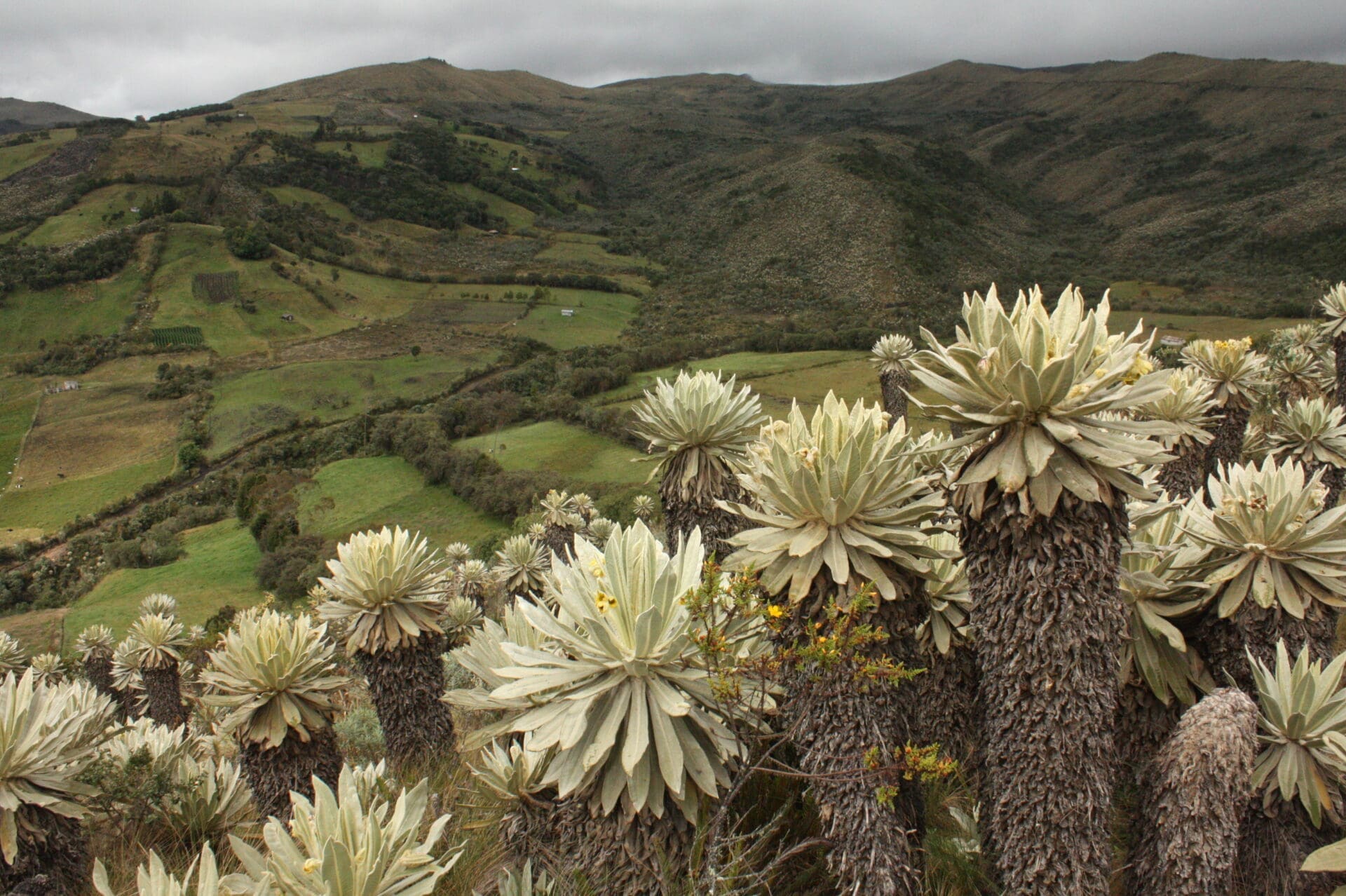
In the Cumbal páramo, in the south-western corner of Colombia and right on the border with Ecuador, lie some of the problems and some of the solutions.
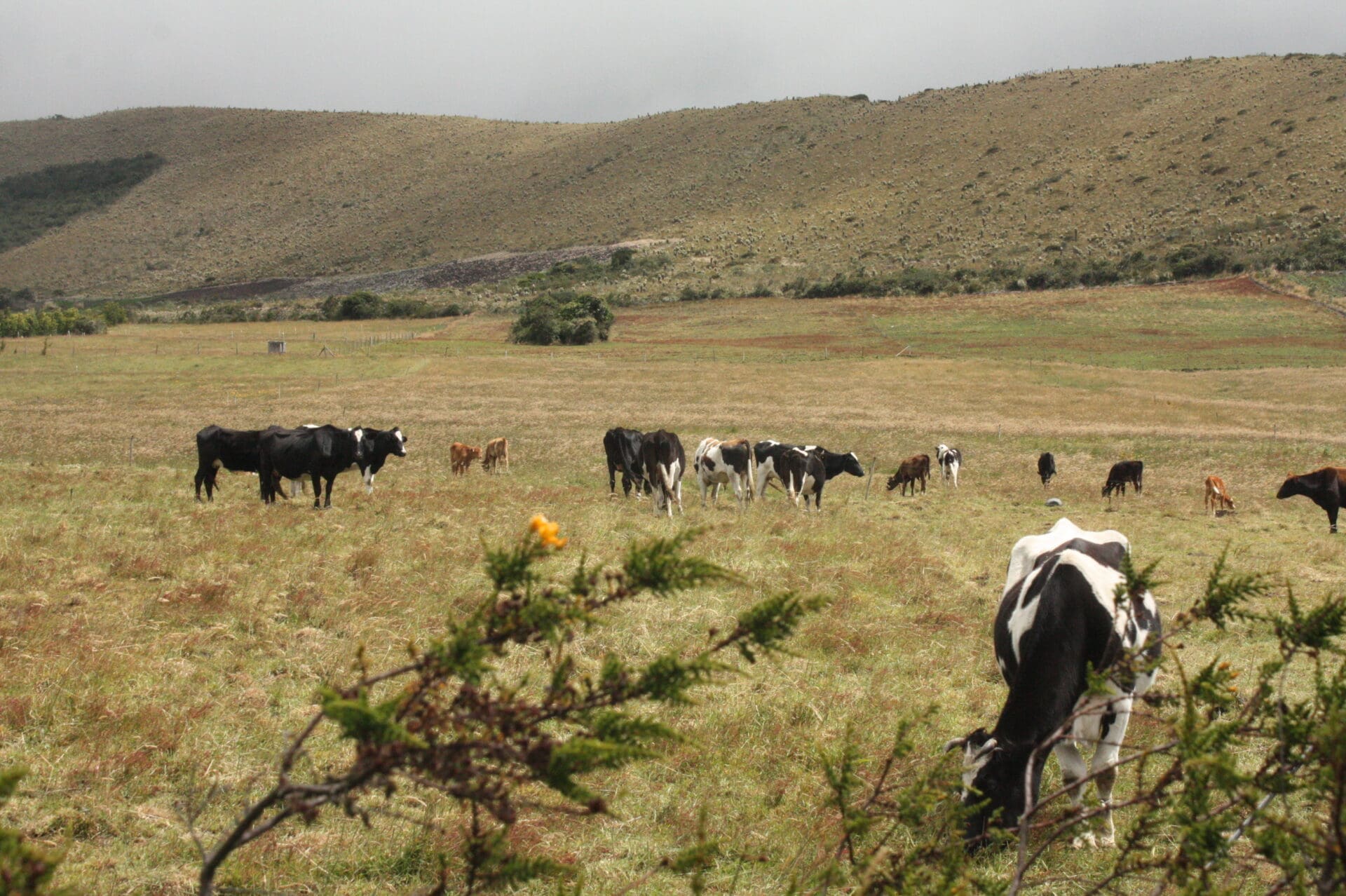
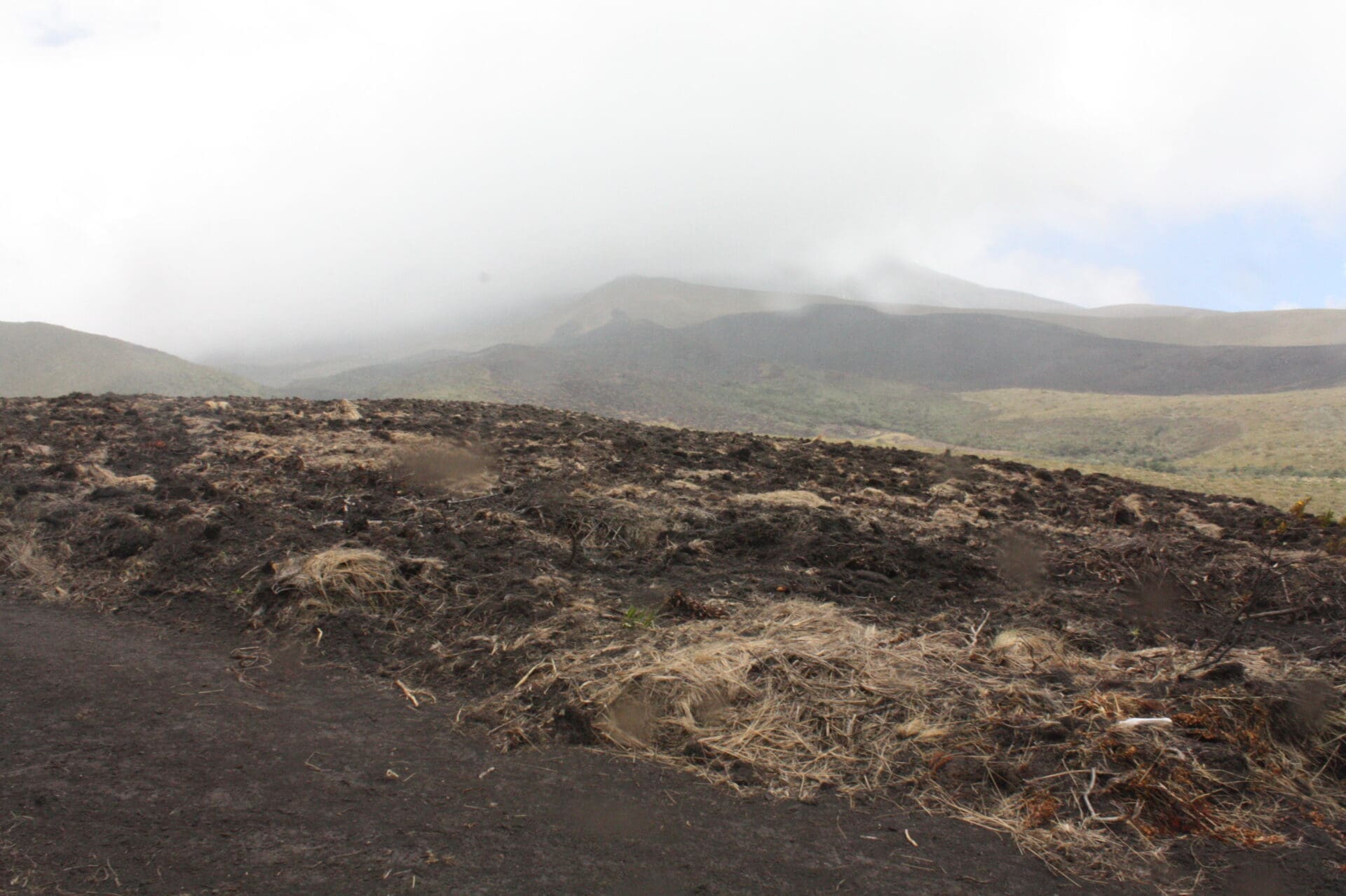
Historically one of Colombia’s most heavily degraded páramos, in the indigenous reservations of the Chiles Cumbal complex, dairy cows and potato crops now occupy pastures at ever-higher altitudes, reaching nearly 3,600 metres above sea level. These are examples of the rapid expansion of the agricultural frontier at the expense of páramos and their neighbouring ecosystem, the Andean or cloud forest, through which water flows on its way to the rainforest. But they are also at the heart of a process of páramo recovery that has seen dozens of its inhabitants set up nurseries for native plants, protect water sources and raise awareness amongst their neighbours about this natural asset, as shown in the photo album by the custodians of the Cumbal páramo, which also forms part of this journalistic investigation.
In 2022, a carbon market project was launched that promised to generate income so that the indigenous Pastos people of Chiles Cumbal could protect these two ecosystems and the environmental services they provide. Most of the funding came from the Colombian subsidiary of US oil company Chevron, which paid to use 1.1 million credits from the initiative known as Pachamama Cumbal – the Quechua term for ‘care of Mother Earth’ – to reduce its environmental footprint.
However, that money has not reached those who should be its beneficiaries. Colombian regulations require such projects to consult local communities and respect their rights, but numerous investigations carried out by CLIP show that these communities have frequently been sidelined.
In Cumbal, this situation has been particularly extreme. The villagers had not even been aware of the existence of the environmental initiative on their land until after the oil company had accounted for these environmental conservation results. Concerned about a project carried out behind their backs, a group of indigenous professionals from Cumbal took the matter to court. Two judges ruled in their favour in first and second instances. They ruled that their fundamental rights had been violated and ordered the project to be suspended.
Despite this legal victory, the people of Cumbal have not received the money to which they are entitled. The Mexican company that structured the Pachamama Cumbal project and sold the credits – which hired its CEO’s former business partners as auditors, as if they were independent third parties – has not published the project documents, as is standard practice in the industry, and hasn’t disclosed whether it finally transferred the money to the reservation. Two years ago, it used the court ruling that suspended the initiative as a pretext to argue that it was legally unable to transfer it. The certifying body that authorised its entry into the market states that it has no record of funds reaching the reservation. The oil company that benefited from those credits argues that it is not responsible for the problem. The auditor that validated the project has not responded. And the Colombian state has said nothing.
All this whilst the indigenous people of Cumbal dream of being able to finance, in the long term, the activities through which they are trying to preserve the páramo – a region whose waters flow into the Pacific Ocean but which receives almost half of its rainfall thanks to the ‘flying rivers’ that come from the Amazon – and thus ensure that the water continues to flow.

I.
Sponges at the tip of the mountains
“The páramos are water factories. We must protect them, because that means protecting water, and water is the most important thing for life,” said Colombian President Juan Manuel Santos when his government demarcated the country’s 37 páramo complexes, which account for half of the world’s total.
It’s not the only metaphor that has gained traction to explain the role these ecosystems play in our lives. The Ecuadorian tropical ecologist Robert Hofstede calls them “sponges”, the botanist Santiago Madriñán refers to them as “water towers”, and the climatologist José Daniel Pabón describes them as “water intermediaries”, which – rather than ‘producing’ it as in a factory – bring it down from the air to the ground.
With these terms, they describe their leading role in a continental water system that circulates between the Atlantic Ocean, the Amazon rainforest and the eastern slopes of the Andes, even irrigating regions as far away as the Río de la Plata basin to the south (as shown in this project’s reports on the sand dunes of Rio Grande do Sul and the fields of Uruguay). Scientists refer to this two-way pathway as the Atlantic-Amazon-Andes hydroclimatic system, or AAA, although in the popular imagination the poetic name ‘flying rivers’ – coined by the Peruvian meteorologist José Antonio Marengo to describe the phenomenon of moisture transport discovered by his Brazilian climatologist colleague Enéas Salati – has taken greater hold. Told from the perspective of the páramos where Spanish, Kichwa or Nasa are spoken, there is a temptation to reverse the name and think of it as Andes-Amazon-Atlantic.
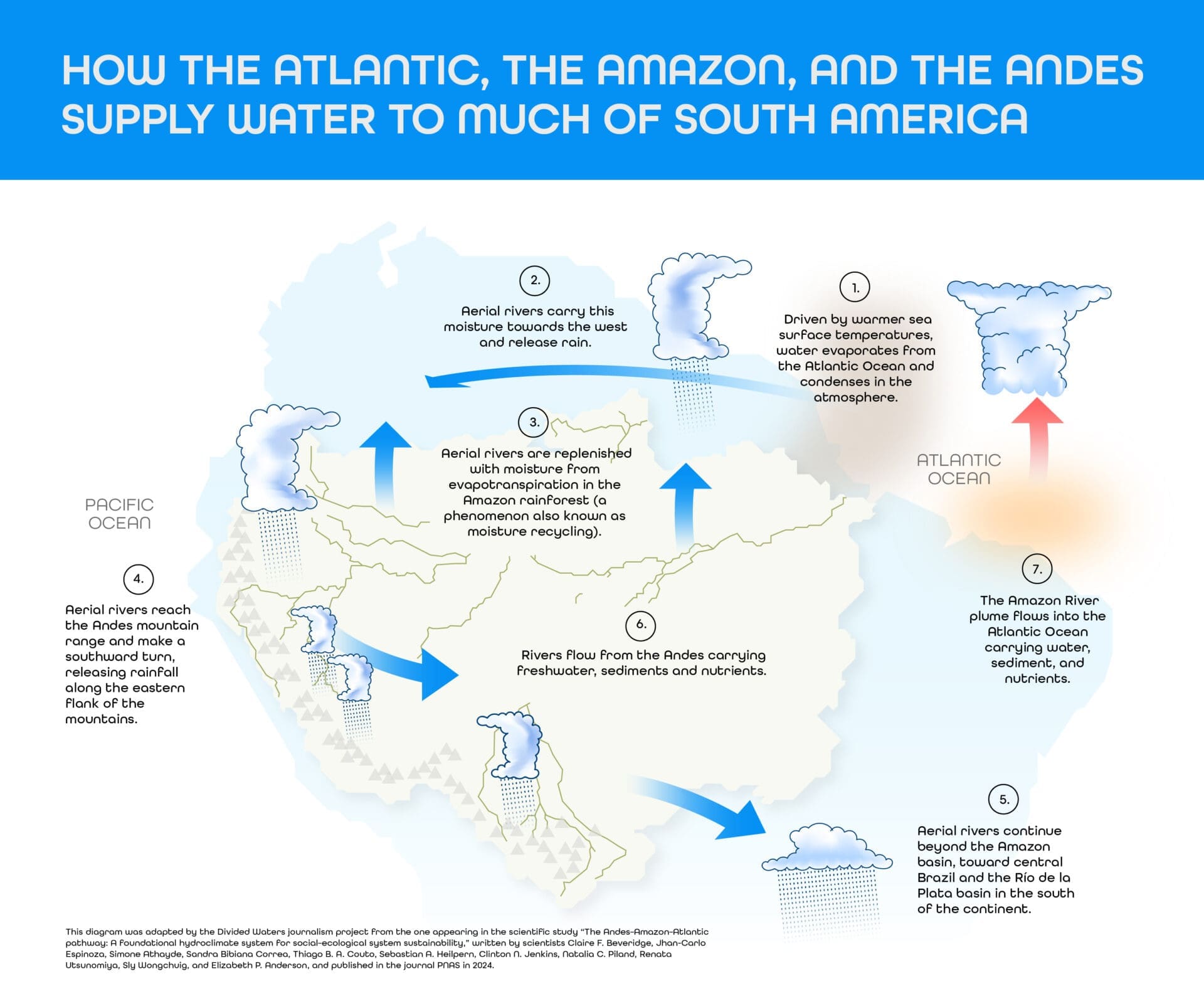
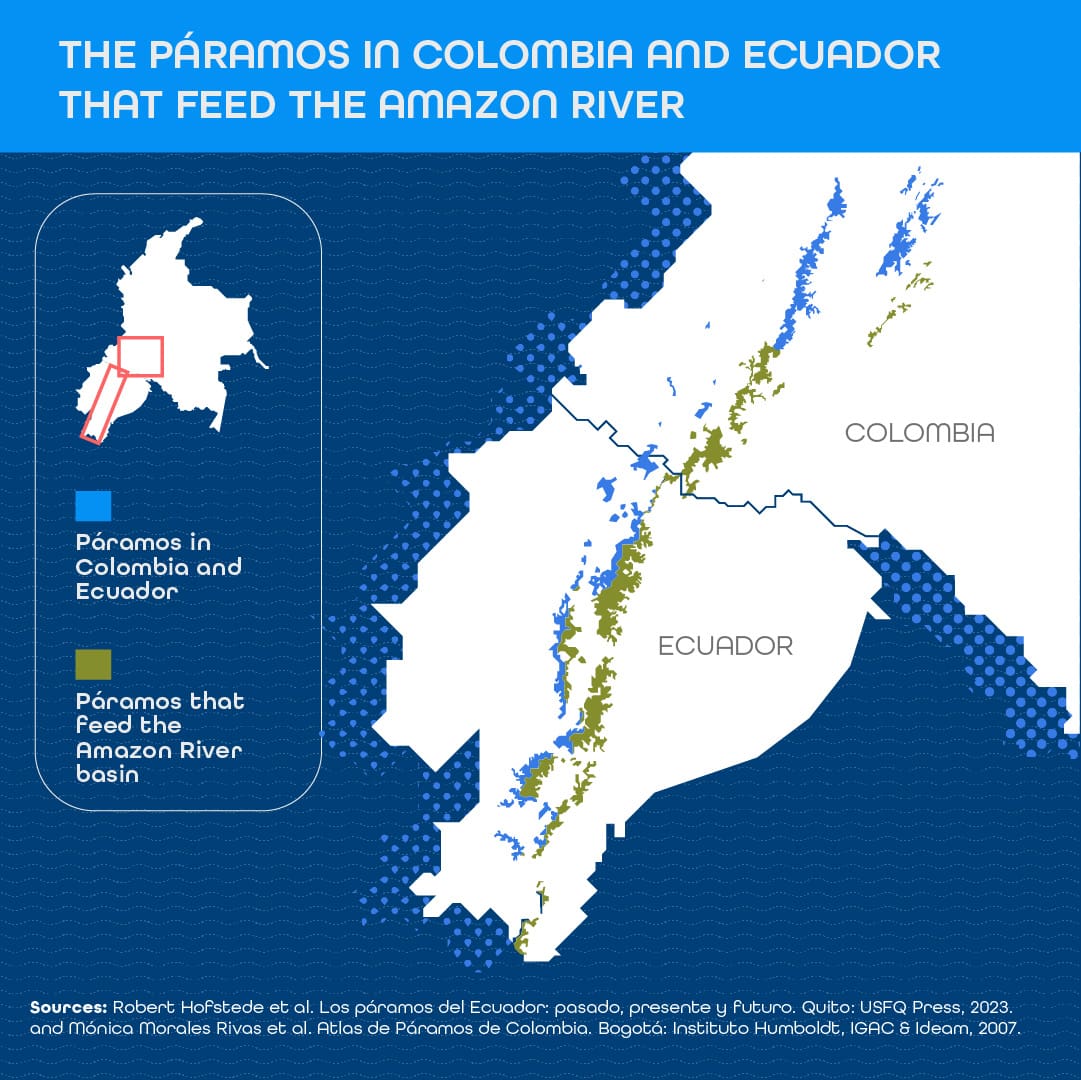
In total, several dozen páramos in Colombia, Ecuador and Peru – where they are known as jalcas – feed the basin of the great Amazon River. The Putumayo River, known to Brazilians as the Içá – a major tributary of the entire system – emerges from La Cocha Patascoy. At las Papas, in the Sotará complex, the Caquetá River (known as the Japurá to Brazilians) is born just 2.5 kilometres from where the Magdalena River – Colombia’s longest – begins its flow towards the Caribbean Sea. The Napo River, which the Spanish conquistador Francisco de Orellana navigated at the start of his journey to the Atlantic, has its source in the Llanganates National Park. And a large part of the páramos of Venezuela and northern Colombia feed the Orinoco River, the third-largest river in the world by volume.

Some 17 million people in Colombia and 8 million in Ecuador depend on the exceptionally high-quality water that flows from these páramos. Bogotá alone receives 14,000 litres of water per second from the Chingaza paramo, and half of the country’s hydroelectric capacity is powered by water from them.
All the elements of the landscape contribute to this system which, in Hofstede’s words, “collects water and regulates its flow”. Its deep soils, known as andisols and histosols, can retain large quantities of water, which they release gradually. Particularly notable are the peat bogs, with their cushions of moss and their mud rich in organic matter that does not decompose due to the absence of oxygen. Several of its plants, such as the hairy frailejones, the paper trees (or Polylepis) which shed their bark like greaseproof paper, and the rosette-shaped páramo stars, intercept water from the mist and channel it into the soil.

Everyone does their bit – or their drop of water – to an environmental system and service that we are coming to understand better and better, but which still holds many unknowns. One of these is how much water, in addition to rainfall, comes from mist, dew or interception by plants such as the paper tree or coloradito – a phenomenon that scientists call ‘hidden precipitation’ or ‘horizontal rain’.
A team led by the Ecuadorian ecologist Esteban Suárez carried out several experiments in the Paluguillo páramo, near Quito, to understand which vegetation best facilitates water infiltration into the soil – a key indicator of the ecosystem’s ability to retain and gradually release water. After burying infiltration rings in the soil and pouring a litre of water over them, they measured the time it took for five types of soil to absorb the water. They concluded that undisturbed vegetation is four or five times more effective. Hence, they warned, preserving the thick layer of plants on the ground is essential for maintaining the soil’s ability to regulate water.
Another group of hydrologists from the University of Cuenca, led by Mateo Jerves, demonstrated that groundwater plays a fundamental role in feeding the paramo streams, particularly during periods of low rainfall. According to their measurements in a stream in the Kimsacocha páramo, the aquifer not only contributed 12 per cent of the flow in the Quinahuaycu micro-basin but – taking into account that it also feeds springs and some histosols – its contribution can rise to as much as 74 per cent of the flow during periods of low rainfall.
“There are research groups in Venezuela, Colombia and Ecuador that are gaining an understanding of the physiology of páramo plants, the hydrology of these ecosystems, and what happens to vegetation cover and carbon. These efforts aim to influence public policy and, above all, how agriculture and livestock farming are managed in the páramos, on why we need to restore wetlands, highland marshes and peatlands, and on how essential it is to retain that organic matter in the soil so that water can infiltrate and be released slowly into streams and subsequently to towns and crops, thereby guaranteeing food and water security for all of us who live there”, says Andrea Encalada, a freshwater ecologist who teaches at the University of San Francisco de Quito and co-authored the research on the relationship between types of vegetation cover and water infiltration into the soil.
Despite these advances, Encalada warns, páramo science still lacks the state support it requires. “These research groups are strong and effective, but they are small and there is little support for research. Despite the importance of what these scientists are doing, it remains difficult to translate this information into public policy, and it is not reaching its intended audience as it should,” she says.
That is why several of them, led by Robert Hofstede and Esteban Suárez, are setting up a scientific panel for Andean ecosystems that aims to replicate the model which has been operating successfully in the Amazon for the past five years. The aim of the Andean Scientific Panel is, like its Amazonian counterpart, to compile and synthesise existing scientific information and to promote its use in solutions adopted as public policy. Part of the initial funding will come from the Development Bank of Latin America and the Caribbean (CAF).
In fact, many páramos are closely linked to the Amazon, even though their waters flow into other catchment areas. This is the case with Chiles Cumbal, whose waters flow down to the Pacific Ocean via the Patía and Mira rivers, but which receives almost half of its rainfall from the Amazon biome.
Between 38 and 46 per cent arrives via ‘direct contribution’ (rain that originates in the Amazon as a result of transpiration by the forest trees and traverses the biome to that point in the department of Nariño) and a further 7 to 8 per cent via ‘indirect or cascade contribution’ (rain that originates in the Amazon, falls in neighbouring regions and is recycled as atmospheric moisture to continue its journey towards the Andes), according to estimates by Sandro Pauli, a physicist at the Federal University of Santa Catarina and a specialist in climate models for tracking atmospheric moisture. A further 19 to 24 per cent of the rainfall comes from the Pacific and between 13 and 16 per cent from the Atlantic.
This calculation of how much the ‘flying rivers’ from the Amazon contribute to Cumbal was carried out by Pauli, who is part of the quantitative ecology training programme at Brazil’s Serrapilheira Institute, a partner organisation in the Divided Waters project coordinated by the Latin American Centre for Investigative Journalism (CLIP) in partnership with eight media outlets in the region. To do this, he used the UTrack computational model, which tracks the trajectory of air masses step by step over a 30-day journey or until almost all that water has fallen as rain. This makes it possible to calculate the direct and indirect contribution at a specific 55-square-kilometre point (0.5 degrees on the map).

II.
People in the páramo
The environmental service provided by the páramos is, however, fragile and can only be provided if they are in good condition.
In Ecuador, for example, 56 per cent of the páramo area has some form of environmental protection, whilst in Colombia the figure is 45 per cent. This includes many of the most iconic national parks in both countries, from Chimborazo and Cotopaxi to the Sierra Nevada de Santa Marta and Sumapaz, the largest páramo in the world.

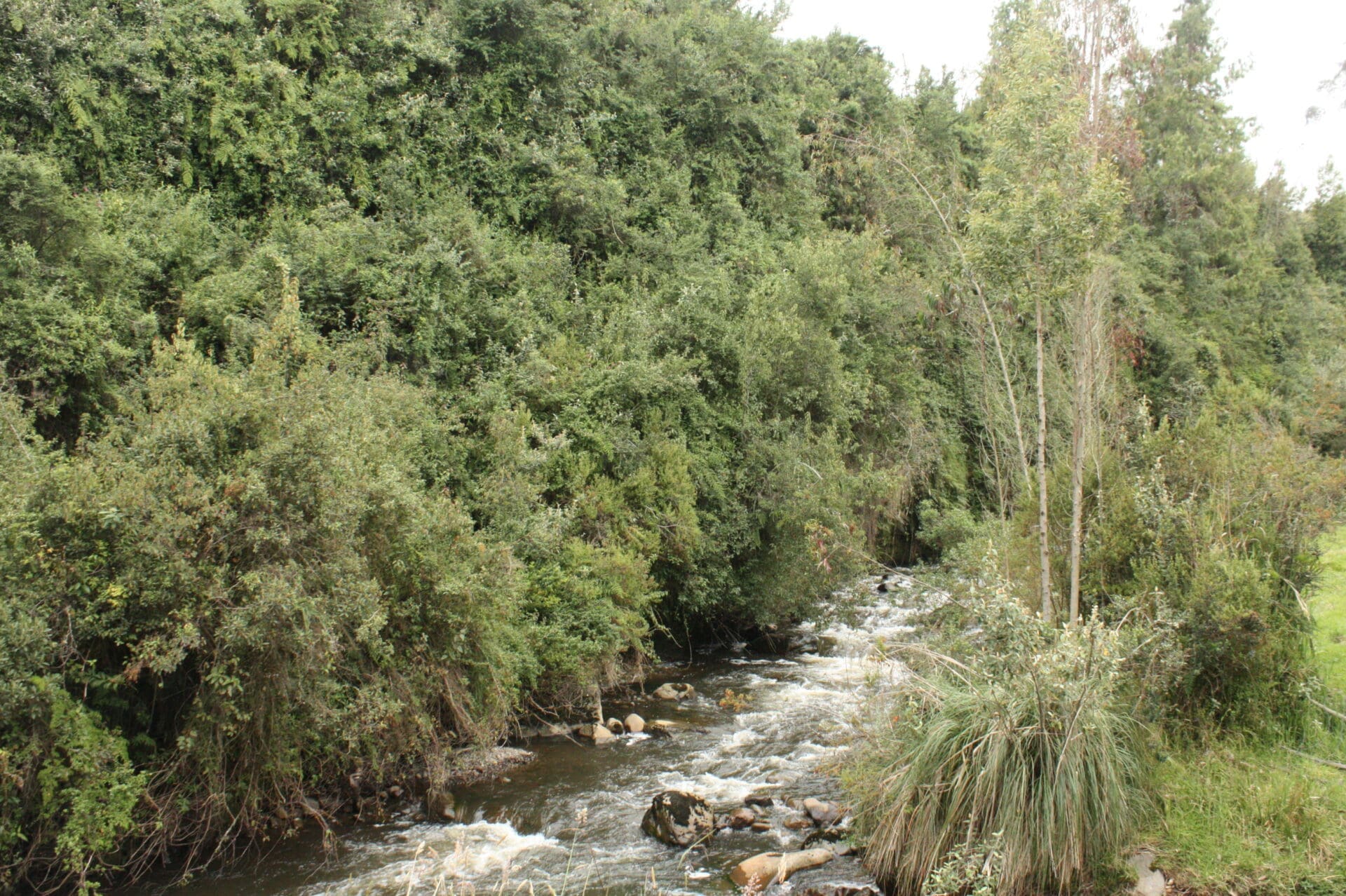
However, outside these protected areas, the páramos must contend with unsustainable practices. Many rural communities have expanded the agricultural frontier, clearing both páramo and cloud forest to raise dairy cattle, grow potatoes or produce charcoal for cooking. In Colombia, most ‘parameros’ are owners of smallholdings and are poor, according to data from the National Agricultural Census. Non-native species such as eucalyptus and patula pine – voracious consumers of water – have also gained ground.
In some páramos, such as the aforementioned Cumbal and Cocuy in north-eastern Colombia, satellite imagery already reveals cattle pastures at altitudes of over 3,500 metres above sea level, as documented by geographer Germán Bravo of the University of Nariño.
This human footprint not only reduces vegetation cover and affects the proper functioning of these ecosystems; it also compromises water and soil quality. Tilling the soil with tractors causes these areas to shift from being carbon sinks – and perhaps methane sinks (as recent research in Costa Rica has shown) – to releasing these greenhouse gases into the atmosphere, exacerbating the climate crisis that, when healthy, they help to mitigate. With no fences along the streams, cows defecate in the water and pollute it at the very source. The same applies to pesticides and fungicides used on crops.

Gold and coal mining also pose a threat. Colombia, aware of the importance of its water resources, banned mining and fossil fuel extraction in páramos in 2016, although it had to contend for a decade with three legal challenges brought by foreign companies that were conducting exploration in the Santurbán páramo. In the end, it won the cases. In Ecuador, the project by the Canadian mining company Dundee Precious Metals in Kimsacocha – a páramo that supplies water to Cuenca and whose history is documented in this film, which forms part of the project – sparked a serious socio-environmental conflict. Something similar had occurred with other mining plans by the Chinese company Junefield Ecuagoldmining near Cajas National Park. In total, 7.49 per cent of the páramo in Ecuador is covered by mining concessions.

Scientific evidence already exists for some of these problems. For example, the Ecuadorian hydrologists Bert De Bièvre and Vicente Iñiguez demonstrated that reforesting the páramo with Patula pine – a species native to Central America and widespread across Colombia and Ecuador – reduces the flow of the rivers that originate there by up to 50 per cent. This drop in water flow, they warned, could jeopardise the water supply and becomes particularly significant during periods of drought. Another study found that soils cultivated for more than two years in Ecuador’s páramos lose 16 per cent of their water-retention capacity.
These scientific studies agree that a reduced capacity of the páramos to supply water is usually linked to the loss of their soils rich in organic matter or their vegetation.
The risk is that, during periods of intensification of the hydrological cycle – characterised by more prolonged droughts and extreme rainfall – there may be times when less water flows than our countries need to function, or when too much water flows without the ecosystem being able to regulate its flow.




III.
Living better in the páramo
Over the past two decades, hundreds of scientists and environmental technicians have been devising ways to encourage more sustainable ways of living in the páramo. In Colombia alone, several programmes have been implemented, funded by a mix of public resources and international aid: Páramo Andino, Proyecto Páramos, Páramos y Bosques, Páramos para la Vida, as well as the public policy to demarcate them on a scale of 1 to 25,000…
These initiatives have gradually refined a toolkit aimed at achieving what the Páramos Act, passed in 2018, termed ‘integrated management’ of the ecosystem. Broadly speaking, it targets four simultaneous objectives: working with the communities living there to strengthen their governance and devise solutions; preserving areas that are in good condition; restoring those that are degraded; and making productive activities more sustainable than they are today.

“When we make life easier for local people and management decisions come from them – rather than solely from the state – we achieve changes in perception and improvements in quality of life which, in turn, lead to greater environmental wellbeing,” says biologist Felipe Rubio Törgler, who was director of the national park in the Iguaque páramo and has been involved in almost all programmes in Colombian páramos.
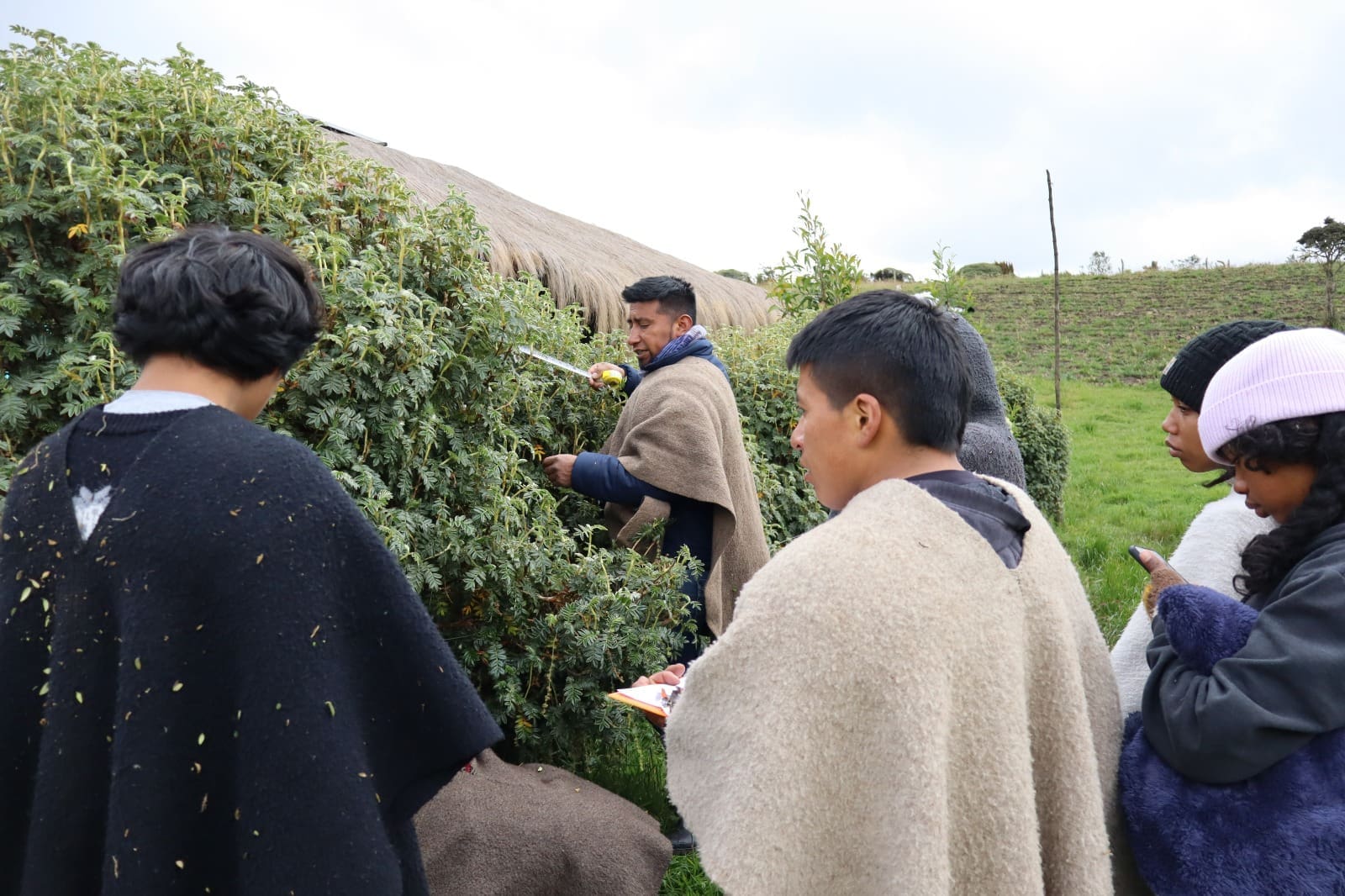
It is this integrated approach that enables what the Humboldt Institute – the Colombian public body that studies biodiversity – has termed “socio-ecological transitions towards sustainability”: changes in ways of living and producing that help to preserve ecosystems and reduce inequality. In Cumbal, dozens of farmers have translated this concept into specific tasks, ranging from the firefighter who puts out forest fires to the farmer who propagates the most challenging seeds, as well as those who monitor pumas with camera traps or the moth that infests the frailejón (and whose profiles you can read about in this other story from the project).
Initiatives of this kind have been implemented in many Colombian páramos, but there are still two obstacles preventing them from reversing decades of degradation: one relating to connectivity and the other to scale.
“What’s the point of having a perfectly preserved páramo if we cut down the entire cloud forest, through which that water then flows? It’s not a question of a single ecosystem, but the sum of several. We must view them as a system,” says geographer Carlos Sarmiento, who led the demarcation of the 37 páramo complexes at the Humboldt Institute.
“We’ve had dozens of good pilot projects, but we still face a problem of scale. These pilot schemes don’t change the whole picture, but they provide us with very valuable insights. It’s just that the scale of territorial impact faces structural barriers where market forces get the better of us,” says Rubio Törgler. In his view, this problem can only be resolved by working in partnership with sectors such as agriculture and mining to promote alternatives such as agroecology (reducing the use of chemicals and tractors) or other productive activities. The 2018 Páramo Act sets out this coordinated approach, but it has not been implemented yet.

IV.
The carbon project behind the backs of locals
In the paramo of Cumbal, on the border between Colombia and Ecuador, someone appared with the capacity to bring the scale and funding needed to make the leap from pilot schemes to an entire territory. It was so ambitious that it promised to provide “employment opportunities and direct and indirect benefits for 37,033 residents across 38 villages” over 100 years – a figure later reduced to 75 years – until 2092.
This is a carbon market project across the four indigenous reservations that share the southern part of the Chiles-Cumbal páramo complex. Its objective is “the protection and conservation of ecosystems dominated by high and sub-Andean forests, as well as an extensive páramo region in the southern Colombian Andes”, as stated in its monitoring report. In addition to Cumbal, home to some 18,000 Pasto indigenous people, the project includes the neighbouring reservations of Chiles, Panán and Mayasquer, which are home to a further 10,000 Pasto people. The total area of the project is 42,413 hectares – equivalent to the size of the islands of Barbados or Curaçao.
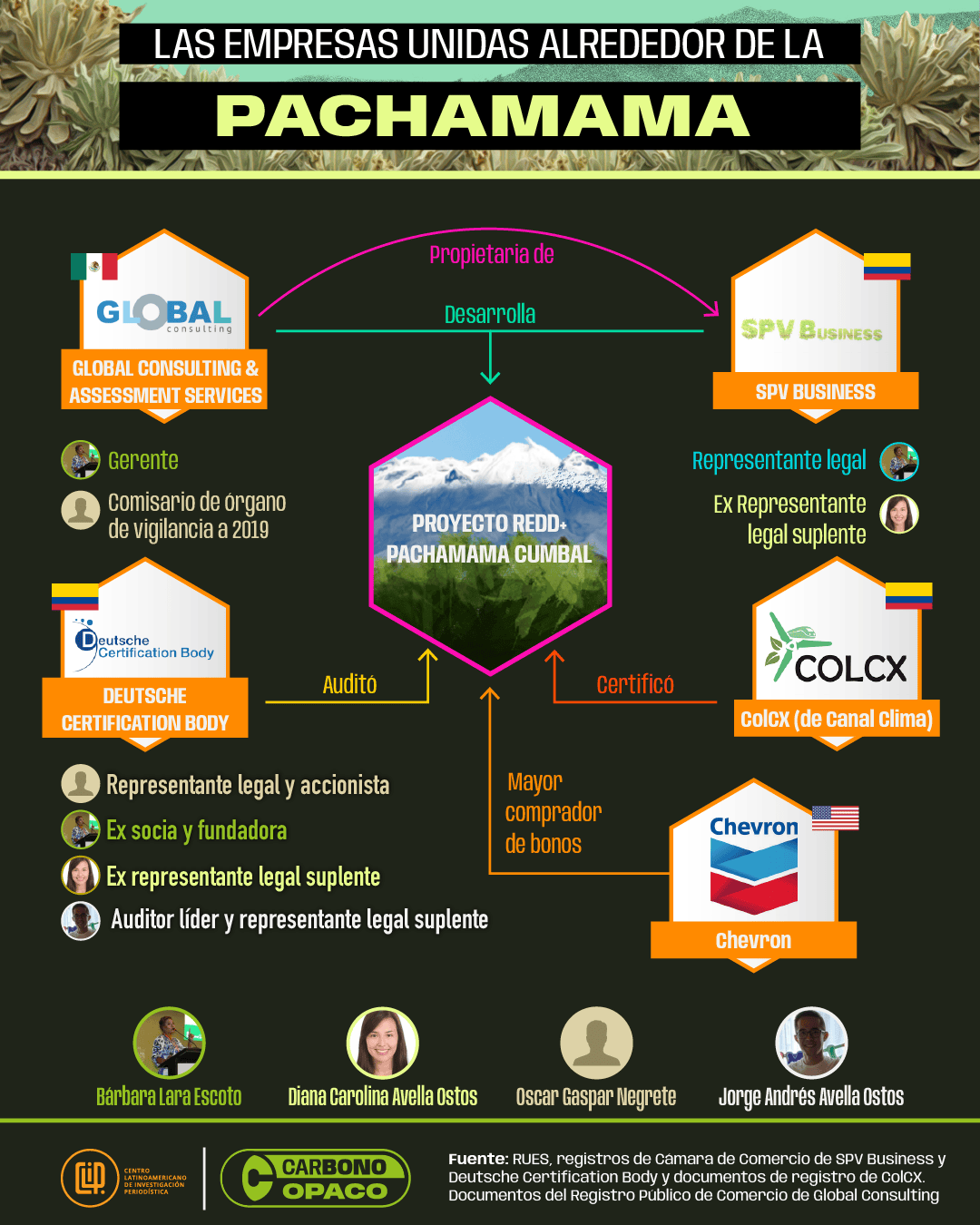
Led by the Mexican company Global Consulting and Assessment Services S.A. de C.V. and its Colombian subsidiary SPV Business S.A.S., the Pachamama Cumbal REDD+ Environmental Protection Project was approved under the Colombian ColCX certification standard and entered the market in October 2022. Like other REDD+ projects, it connects local communities that safeguard strategic ecosystems to help mitigate the global climate crisis with companies that purchase their carbon credits to offset their own use of fossil fuels. Each credit is equivalent to one tonne of carbon dioxide — one of the greenhouse gases that drive climate change — which, as a result of this conservation effort, will no longer be released into the atmosphere.
Its project description outlines the activities already being carried out by many residents of Cumbal. Although it is difficult to tell from the document alone whether the initiative takes a holistic approach to páramo management, it largely aligns with what environmental scientists in Colombia have been recommending.
In fact, its key areas of focus are very similar to those of the government’s ‘Páramos para la Vida’ programme: strengthening indigenous governance, preserving ecosystems in good condition, restoring degraded areas, and promoting sustainable agricultural practices. Within this framework, it proposes environmental education activities, community-led vegetation monitoring, community-run nurseries to propagate native plant species, and the fencing off of areas for forest recovery and enrichment. Less ambitious is its proposal for the transition from an extensive livestock farming model to an agro-silvo-pastoral one: it highlights the importance of protecting water sources, rotating pastures, establishing forage strips with nutritious plants for cows, and planting hedgerows of native species to achieve higher milk production in a smaller area and better connect forest patches, but describes these activities as ‘additional’.
Overall, the project is very confident in the ability of carbon projects of this kind to change conditions in the páramos. “Currently, without concrete alternatives such as those that can be achieved through the implementation of REDD+, it is impossible to change the economic model of high-altitude livestock farming, monocultures in the páramos (e.g. potatoes, garlic, vegetables), mining, the over exploitation of timber for construction, handicrafts and firewood, and the periodic burning in the region,” states its project description document.
Very quickly, a company showed interest. Chevron Petroleum Company, the main Colombian subsidiary of US oil company Chevron Global Energy Inc. and owner of 460 Texaco-branded petrol stations in the country, purchased credits from the project just seven days after its approval. Between October 2022 and June 2024, the US oil company purchased and used 1.1 million carbon credits from it.
The problem is that those who should have been its counterpart – the indigenous community at the heart of the project – knew nothing about it. They were unaware of its planning or its implementation. Nor were they aware of its activities, even though these coincided with what many of them were already doing. They were also unaware of the funds to which they were entitled, given that in Colombia indigenous territories are collectively owned.
Under Colombian regulations, REDD+ initiatives – which monetise efforts that are effective in preventing deforestation and forest degradation – must obtain the community’s free, prior and informed consent, provide them with transparent information, guarantee their effective participation, provide financial accountability to them and distribute the benefits fairly. They must also build their capacities, respect their traditional knowledge and strengthen their governance structures.
Eight key conditions that have not been met in Cumbal.

V.
A system that failed across the board
How could a project that was unknown to the majority of residents of the Cumbal reservation be certified, reach the market and sell credits?
The answer is a novel-like plot full of opacity, potential conflicts of interest and checks and balances that failed to fulfil their duties.
Firstly, the developing company, SPV Business, signed a contract with the then governor of the Cumbal reservation, Ponciano Yamá. Dozens of members of the Cumbal reservation agree that they were not informed of this contract nor did they participate in its internal approval, as detailed in a previous investigation into this case carried out by CLIP.
The document underpinning the project, which is usually made public but which, in the case of Pachamama Cumbal, was not available until early 2026, states that an “internal consultation process” was carried out in the four reservations and that the contracts signed “reflect the unanimous decision of the organisational and governance structure of the aforementioned indigenous reservations and, therefore, compliance with the requirement for free, prior and informed consent for the proper implementation of the project”. (This journalistic alliance downloaded three reports from the ColCX certification body’s platform on 23 February 2026; these were no longer available at the time of publication. As we consider them o be in the public interest, we are publishing them here, here and here. When asked why they are no longer available there, ColCX replied that “regarding your enquiry about the files you mention on the platform, we would like to clarify that these documents are not available due to contractual confidentiality obligations established for the information and documentation associated with the project”).
Secondly, after structuring the project and as part of the certification process, Global Consulting commissioned a Colombian company called Deutsche Certification Body S.A.S. to carry out an independent audit. However, as revealed by CLIP’s initial investigation, there was a fundamental problem: the CEO of Global Consulting, the Mexican Bárbara Lara Escoto, had been a shareholder and founder of Deutsche Certification Body. In other words, she hired a company in which she’d been a partner to carry out work in which that company was required to “remain impartial with regard to the activity being validated or verified, as well as free from bias and conflicts of interest”, as stipulated by one of the international standards governing the work of auditors and applicable in Colombia.
According to the auditor’s validation report, the project involved public consultation sessions in which “the concerns of the members of the indigenous reservations have been addressed and all the details of the project, the purpose of the activities to be carried out and the benefits to be gained following its implementation have been clarified”. It included a list of 45 people from the Cumbal reservation who were interviewed about “the information, activities, conditions and timelines” of the project.
This journalistic alliance contacted four of the people appearing on the list. Hugo Tarapués and Wilson Chalpar said they were not interviewed by any auditor, do not know why their names appear on the list and have not been beneficiaries of the project. “They’ve just put my name down. We have no information about that money,” says Chalpar, who is the coordinator of the reservation’s indigenous guard and a member of the community forest brigade that controls fires. “To be honest, I have no idea about this: I became broadly aware of the carbon credits through the legal action and the ruling, but I’ve no idea who implements it or who evaluates it,” says Tarapués. Vanesa Termal, whose parents Beatriz Taimal and José David Termal are listed, makes a similar point. “No auditor has come here, no interviewer. They did ask us to sign some documents once, but we heard nothing more and they didn’t give us anything,” she said.
Subsequently, the Colombian certification body ColCX – which forms part of the Valorem group, one of the country’s largest economic conglomerates – stamped its seal of approval on Pachamama and authorised it to issue credits. In a 2022 interview with CLIP, its director, Mario Cuasquen, and its technical manager, Catalina Fandiño, acknowledged that they “had not heard” of the relationship between the developer and the auditing firm, and that they didn’t have a conflict-of-interest handling procedure in place at that time. After first and second instance judges ordered the suspension of the project, Pachamama now appears on its platform as ‘certified’, albeit with a note stating that the credits “are being withheld as a result of legal requirements”.
To round off this far-fetched saga, the Colombian government has washed its hands of the problem and has taken no action to rectify it.
The purchasing company, Chevron, has defended itself by arguing that it was confident the project had “the necessary permits and approvals from the relevant indigenous government authority and also (…) the relevant consultation processes”, and by insisting that it has a robust due diligence process to ensure it invests in high-quality initiatives. However, following court rulings that confirmed these issues, the oil company purchased and used further credits from the same project. It also purchased 1.3 million credits from another project in the Colombian Amazon involving the same developer, auditor and certifier, despite the rulings on Pachamama. In that reservation, known as Cotuhé Putumayo, situated on the Putumayo River which flows into the Amazon, the Tikuna indigenous people were also not consulted, as revealed by another CLIP investigation in 2025.
This journalistic alliance asked Global Consulting whether it had transferred the funds to the Cumbal reservation and whether it could provide a list of the people there who had benefited financially from each area of work. It did not respond to the emails sent on 30 July and 6 August.
We also asked the five governors of the Cumbal reservation who have held office since the Pachamama Cumbal project began whether the funds to which they were entitled had finally been transferred following the court rulings. None responded: neither the current governor, Juan Carlos Cuaical, nor Ponciano Yamá, who signed the original contract, nor the three – Héctor Villacriz, Antonio Cumbal and Jorge Puerres – who served as governors in between.
When asked whether it had at any point verified that the funds had been transferred to the reservation and how many people had benefited, the purchasing company, Chevron, replied that it had been involved in the project until August 2024 and that “since that date, we have had no relationship with Global Consulting and, therefore, we have no knowledge of the project’s current status, progress or activities”. It did not state whether it had at any point verified whether the funds had arrived or to whom they had been transferred.
The certifying body, ColCX, replied that it has no record of any payments made by Global Consulting and that “for the period officially monitored up to 2022, no specific number of people from the Cumbal reservation is reported to have received direct financial benefits derived from the project”. Given the court order against the project, it explained, “as long as the suspension remains in place and the credits are withheld, the Cumbal reservation has been unable to obtain financial benefits arising from the sale of those credits within the framework of the project”. ColCX added that it had suffered a “financial impact” as a result of the legal suspension.
The auditor, Deutsche Certification Body, did not respond.
Meanwhile, several of the potential beneficiaries of the carbon project who work on related environmental initiatives say they have not received a single peso from it. “We don’t know where those funds are going,” says Luz Dary Chirán, leader of the community forest fire brigade. “We agree that the money should go to the community and support the projects. But we know nothing about it,” says plant nursery owner José Miguel Aza.
Although it is ultimately difficult to ascertain whether Pachamama Cumbal’s activities were merely a shopping list or a comprehensive plan, or whether their implementation was well planned, on paper they encompass much of what science and environmental public policy recognise as effective in restoring these high-mountain ecosystems and safeguarding their capacity to supply water to thousands of people.
As Irma Chinguad, an agroecological grower of native potatoes, puts it, “It looks good on paper, but how do we know that the resources are actually reaching those of us who are actually looking after the páramos?”

Scientific references
Claire Beveridge et al. “The Andes–Amazon–Atlantic pathway: A foundational hydroclimate system for social–ecological system sustainability”. Proceedings of the National Academy of Sciences (PNAS), 2024.
Walter Buytaert et al. “The effects of afforestation and cultivation on water yield in the Andean páramo”. Forest Ecology and Management, 2007.
Robert Hofstede et al. The páramos of Ecuador: past, present and future. Quito: USFQ Press, 2023.
Robert Hofstede et al. The páramos of the world. Quito: Global Peatland Initiative, IUCN and EcoCiencia, 2003.
Mateo Jerves et al. “Unravelling the role of surface water–groundwater connectivity in the Andean páramo”. Hydrological Processes, 2026.
Santiago Madriñán et al. “is the world’s fastest evolving and coolest biodiversity hotspot ”. Frontiers in Genetics, 2013.
Carlos Sarmiento et al. “Inhabited páramos: challenges for environmental governance in Colombia’s high mountains”. Biodiversity in Practice: Humboldt Institute Working Papers, 2017.
Esteban Suárez et al. “Influence of vegetation types and ground cover on soil water infiltration capacity in a high-altitude páramo ecosystem”. Advances in Science and Engineering, 2013.

This project is the result of a collaboration between Latin American journalists and scientists, spearheaded by the Serrapilheira Institute in Brazil and the Latin American Centre for Investigative Journalism (CLIP), to explore the Atlantic–Amazon–Andes water cycle and the disruptions to the environmental services it provides to the continent.
.


